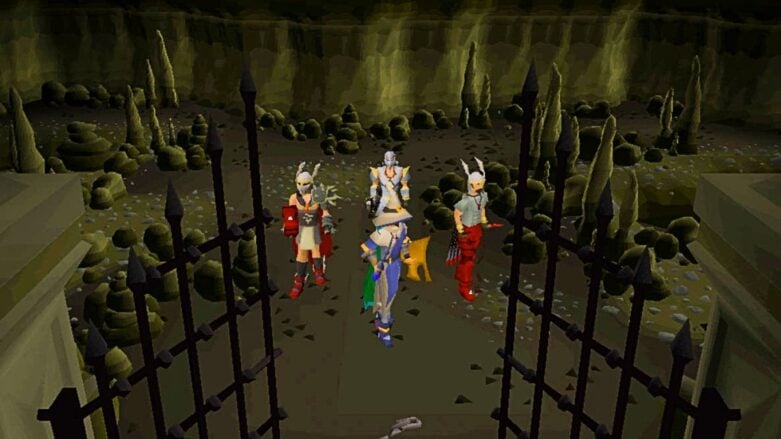
The UK’s Advertising Standards Authority (ASA) recently ruled against three major gaming companies: Jagex, Miniclip, and Electronic Arts (EA). This is because they showed misleading ads that didn’t mention the inclusion of loot boxes in their games. After being reported, the ASA found the companies had indeed misled viewers by withholding lootbox information.
Leon Y Xiao, a researcher who has studied loot boxes and their regulation in the past, raised the complaints originally and was right (thanks, Eurogamer). These rulings show that loot boxes in the gaming industry are under close examination, and they can’t get away with hiding lootboxes. The ASA decided that paid ads for EA’s Golf Clash, Jagex’s RuneScape, and Miniclip’s 8 Ball Pool broke advertising rules.
The ads were supposed to clarify whether in-game purchases like loot boxes were involved. EA said it was a human mistake, while Jagex argued they didn’t have enough space to put the details in the ad. Miniclip defended its ad, stating that its game is free to play and doesn’t push users to buy anything.
EA, despite its history, has the only good response, in my opinion. Human error is understandable the first time. Not following the law because it’s inconvenient is Jagex’s reasoning, which is bad. Then there’s Miniclip, who is still trying to make it seem like Lootboxes aren’t real, which is ridiculous.
“The ad must not appear in the form complained of. We told [the companies] to ensure that ads for [their games] disclosed the presence of in-game purchases, including random-item purchases (loot boxes).”
UK’s Advertising Standards Authority rulings for Miniclip, Jagex, and EA
The ASA dismissed everyone’s arguments, stating that including loot boxes is crucial information for consumers, regardless of whether the game is free or not. The three companies are now prohibited from using the ads and have been cautioned to comply with advertising rules in the future. This is essentially just a slap on the wrist for knowingly breaking the rules.
These companies are huge and boast big legal teams. It’s hard to imagine they didn’t know the laws put into effect. However, it’s not like we can ask the ASA to fine the companies. The ASA cannot fine a company on a whim, but there’s more to it than that. There is a legal recourse that will end with a fine if the ASA feels strongly enough, but typically, their adjudications are more than enough.
“The negative publicity generated by an upheld complaint may not only produce bad press in the short term, but that adjudication will also be among the top hits when a consumer searches for your brand over the next 5 years. Class action lawyers in the United States will also see it.”
Lewis Silkin
So, while the ASA decisions don’t come with fines, they remind game companies to be upfront about in-game purchases, like loot boxes. It feels like a slap on the wrist, but the next time these companies make that mistake, it will likely be far worse for them.

Comments