
Blade Chimera is a new Metroidvania title that breaks the mold and hits you with nostalgic vibes. Interesting mechanics and great worldbuilding await at an incredibly fair price, with a decent pace and a difficulty that makes the game accessible to new players while still appealing to genre veterans. However, some die-hard Metroidvania fans might find certain aspects of the game more mid-tier, and players without a controller may want to grab one or skip the game altogether.
If you’ve read any of my reviews before, you’ll know the Metroidvania genre—games inspired by the gameplay stylings of Metroid and Castlevania—is not a personal favorite of mine. While I often find certain gameplay elements in these games repetitive or unappealing, I always praise their consistent visual excellence and original worldbuilding. Not only does Blade Chimera continue that tradition, but it also makes some interesting improvements on mechanics I personally dislike.
The game follows the story of Shin, a professional demon hunter in a haunted sci-fi version of Osaka. Tasked with hunting down demons, which take the form of yokai from Japanese mythology, Shin ends up bonded with a demon himself. This bond gives him the ability to manifest a spiritual blade and reverse time, two abilities that become essential in the trials ahead.
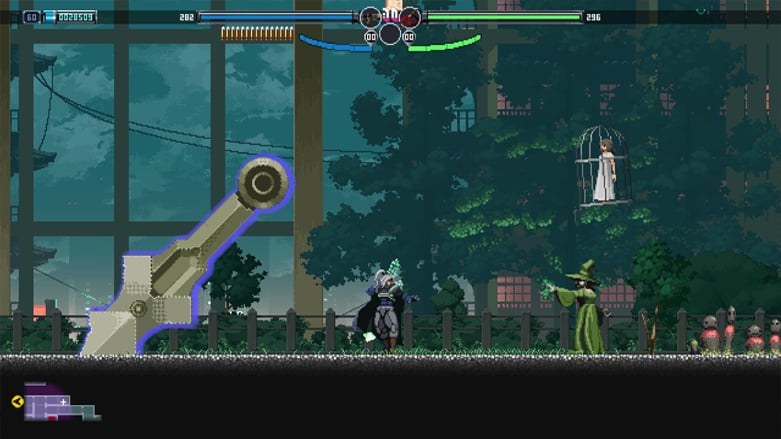
I was instantly enamored with the setting. While I wasn’t particularly impressed by the designs of some of the main characters, I found myself quickly immersed in the world as a whole. The retro-futuristic Osaka reminded me of early PlayStation games, with Metal Gear Solid particularly coming to mind. The cold, militarized aesthetic and the intentionally designed character portraits during video call segments added to the nostalgia.
Although I wasn’t thrilled with the character designs, I found the enemy designs, simple as they are, quite charming. As mentioned earlier, the enemies in Blade Chimera take the form of Japanese yokai, often dressed in traditional garb, outdated clothing, or just rags. This visual contrast against the game’s dystopian, futuristic backdrop made the demons feel like haunting intruders who don’t belong. That said, the enemy variety is lacking, and the repetition can become noticeable as the game progresses.

All of this is portrayed through incredibly well-done pixel art, continuing the trend I noted in my recent Final Knight review of modern pixel games being stunningly designed.
Mechanically, Blade Chimera is very similar to other Metroidvania titles. You’ll find basic combat, a skill tree system, and lots of side-scrolling platforming. One notable change, which veterans of the genre might love or hate, is the reduction of backtracking—something that’s usually a staple of the genre. Personally, I prefer it this way, as backtracking often feels tedious to me. However, this choice also makes exploration feel underutilized and somewhat underwhelming, giving the game more of a Metal Slug vibe, where the focus is on constantly pushing forward rather than exploring.

A standout mechanic is Shin’s demonic blade. While it serves as a weapon, it’s primarily used in platforming. Whether creating an extra platform mid-jump, swinging across gaps, or restoring barriers and platforms from the past, the spirit blade adds fun and creative options for navigating levels.
The game also places heavy emphasis on ranged weapons. Shin is primarily armed with a gun, which changes the approach to combat compared to the melee-heavy systems typical of the genre. I found this made the game smoother and faster, as you can clear enemies from a distance and focus on platforming without worrying about ledge campers or tight spaces.

Blade Chimera feels like an old arcade game you’d pump quarters into at a pizza parlor, so much so that playing it with a slice in hand gave me a comforting sense of nostalgia. That said, the game’s dedication to this vibe comes with drawbacks. It’s clearly designed to be played with a stick, and trying to navigate with the default keyboard controls can feel rough. While I haven’t tested it with a regular controller, I’d recommend using one—or better yet, a stick—over the keyboard.
Blade Chimera offers a fresh take on the Metroidvania genre, blending retro-futuristic visuals with unique mechanics that keep the gameplay engaging. Its focus on fast-paced action over backtracking may not appeal to all fans, but it creates a streamlined, arcade-like experience. However, the limited exploration, repetitive enemies, and keyboard control issues may detract from the overall enjoyment for some players.
The Final Word
Blade Chimera feels like a breath of fresh air for the Metroidvania genre, standing out with its gameplay and design choices—though keyboard players may want to grab a controller for this one.
Blade Chimera was reviewed on the PC. Find more detailed looks at popular and upcoming titles on our Game Reviews page! Blade Chimera is available on Steam and Nintendo Switch.

Comments