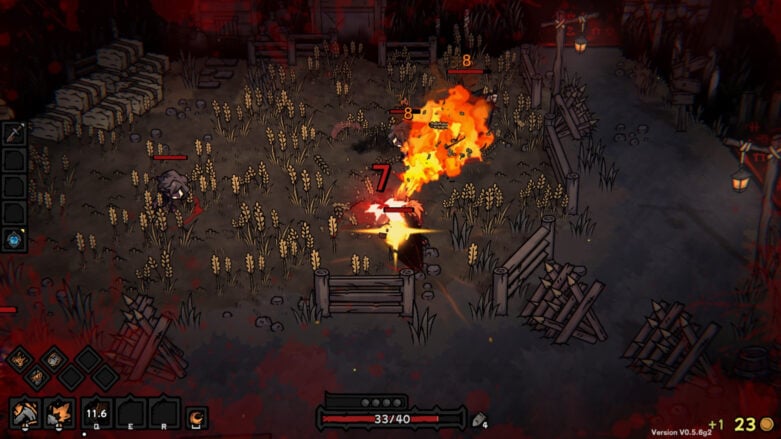
The roguelike genre is defined by its high replayability, with games often featuring huge loot pools and procedural generation to make every run different, incentivizing you to keep playing even long after you’ve found everything the game has to offer. In my humble opinion, these games are made or broken by how well the developers handle this loot pool. There needs to be not one, but several viable builds that can show themselves to you during a run and, ideally, infinite possibilities of combinations that are fun, even when not the most viable. If your loot pool has over a hundred different skills to discover, but 99 of them are just boring stat increases that don’t combine for interesting or even zany effects, then your roguelike has failed to capture my imagination, and I probably won’t play it for long.
This is certainly not a problem with Cinderia, a new roguelike title entering Early Access that absolutely succeeds in the build department, and one that I found a lot of fun to play.
Cinderia follows the story of a land plunged into eternal flame by its new queen, the spawn of a witch seeking revenge for her mother’s death. The land, now fittingly and titularly called Cinderia, is in a state of turmoil (unsurprisingly, since everything is on fire), and it’s up to you to stop it.
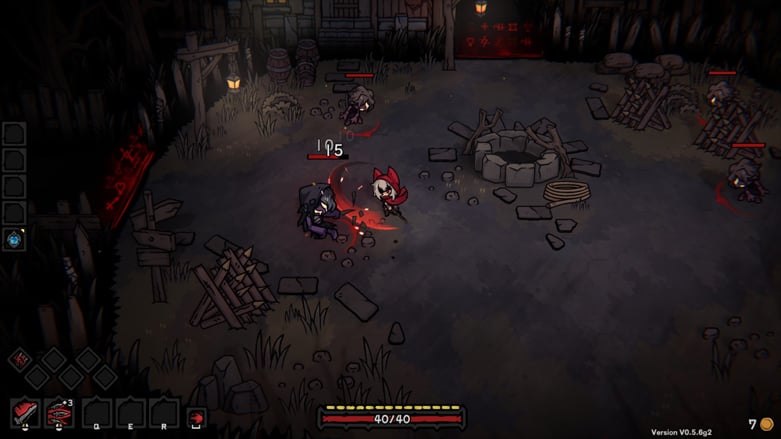
I will admit that not all of the story beats in Cinderia made complete sense to me. English is not the game’s native language, and some translations in this Early Access version are less than perfect, which can occasionally make dialogue and exposition harder to decipher. This isn’t news to the developers and is one of the first issues they address about the game’s Early Access state, with clear plans to improve upon it as development continues.
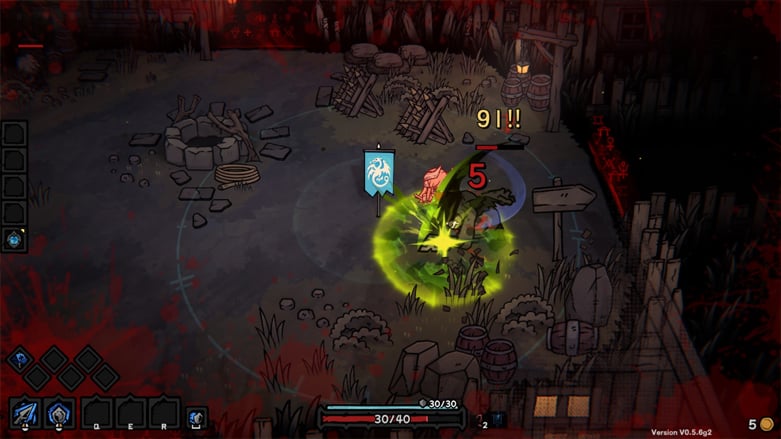
Mechanically speaking, Cinderia is your typical roguelike with some beat-’em-up style combat. The combat arms players with a basic repeatable attack, a dodge, and several abilities, the first of which you start out with and the rest you must unlock through the game’s loot pool. The beat-’em-up combat pairs really well with the game’s 2D art style and rewards players who can manage to flank enemies for sneak attacks. However, the inability to roll through larger enemies can make the dodging a bit tricky and the whole sneak attack system harder to execute.
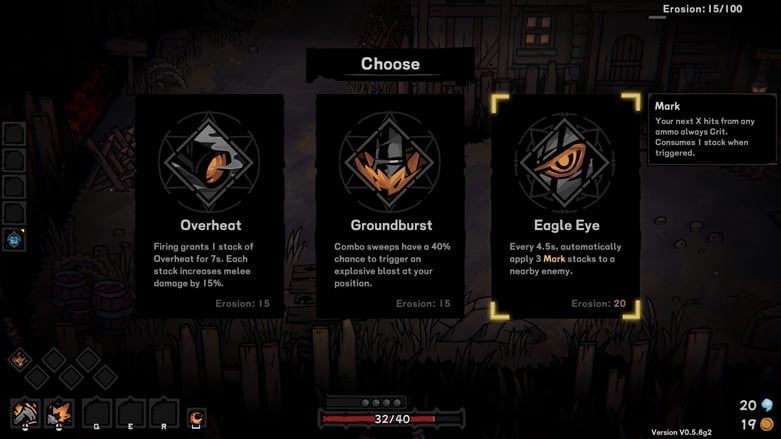
The loot pool is really impressive in Cinderia, with each of the game’s four characters having 180 skills to choose from alongside the other procedurally dropped power-ups and equipment. It’s not just a wealth of items to choose from, but the impactfulness of them all that really makes Cinderia a charming game to play.
Each skill and power-up in Cinderia, with very few exceptions, feels like a meaningful change to how you play the game rather than a simple, boring number or statistical increase. Little differences, like changing your fan of knives into a harder-hitting chain of blades, summoning a banner at the start of combat that buffs you, or even equipping Rivet (my personal favorite character) with a full-blown flamethrower, are just some of the meaningful changes to your playstyle that can be discovered during your runs. Many of these power-ups and abilities feel inspired by powers in other games in the very best way: allowing you to play with some of your favorite mechanics from other titles that are still different enough to justify their existence in Cinderia.
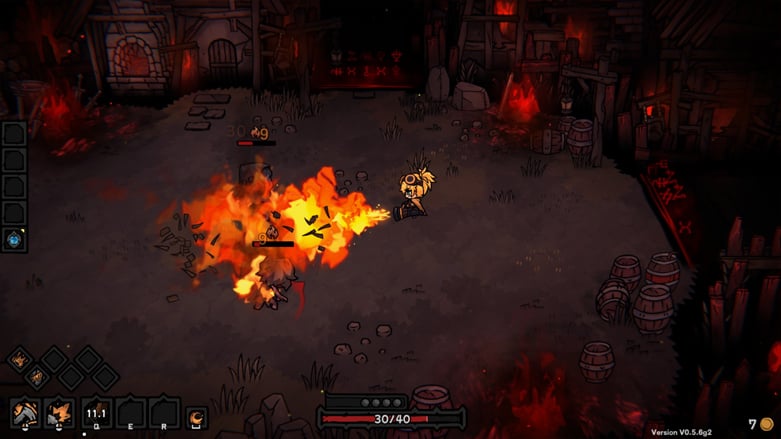
There is not just an abundance of variety, but clearly defined build and playstyle differences in each of the game’s four characters. This is definitely where the game shines the most, with each cast member being a template from which you can create a variety of fun-to-play, powerful builds, all of which are mechanically and spiritually different from the others. The characters also have clearly defined personalities, even with the dialogue being at times hard to interpret, and you are sure to fall in love with them the same way I did. I would love to see the game expanded beyond the cast of four with even more playable characters, because the developers clearly have a real strength for making them.
Cinderia‘s excellent mechanics are paired with the game’s gorgeous hand-drawn art, which is heavily stylized in an anime style, creating a juxtaposition between cute girls and terrifying monsters. As much as I like the art, I will say the game definitely suffers from “anime protagonist syndrome,” with the main characters standing out pretty hard from the NPCs.
Being that the game is in Early Access, Cinderia is clearly not in a perfect state. Aside from the translation issues I mentioned, you may run into areas where the balance feels off or experience occasional bugs or visual glitches. While there were moments where I felt like I might be experiencing some of these, they were never serious enough to be memorable. While you can definitely feel the unfinished nature of Cinderia, it’s far from an alpha test or an unplayable mess, and it has a lot to offer players who want to check it out and support its development.
It’s safe to say that Cinderia impressed me. Though it has its Early Access flaws and the game is definitely unfinished, what is there is charming, well-designed, and downright fun to play. The game does an especially good job at delivering unique, highly customizable playstyles across its cast of four highly personable characters, showing that the developers have a clear understanding of playstyle identity and have a great knack for making likable characters to boot. Give the game a try and support its development, because I’m sure the full release will wow you.
Pros:
- Beautiful, hand-drawn 2D art
- Great mechanics with a strong focus on build flexibility
- Fun characters with strong identities, both personality and gameplay-wise
Cons:
- Translation errors
- General EA bugginess to be fixed as the game continues development
- Generally unfinished, with more content to come
TryHardGuides was provided a Steam code for this PC Early Access Review of Cinderia. Find more detailed looks at popular and upcoming titles on our Game Reviews page!

Comments