
Cooking Simulator 2: Better Together is the long-awaited sequel to Cooking Simulator, giving players an immersive experience running a kitchen and preparing high-quality meals for customers while trying to build a thriving business. While newcomers might find the experience charming despite some flaws, returning players may find this sequel a downgrade from the original, drastically changing direction, cutting down on player-favorite mechanics, and delivering an altogether different tone from what came before.
If it still isn’t clear from the title and that opening paragraph, Cooking Simulator 2: Better Together is a restaurant sim that challenges players to run a successful establishment. Said restaurant, by the way, is the absolute worst kind, with the game placing you into these disgustingly gentrified, “hip” establishments, where I was shocked to see that a simple plate of fries wasn’t charged at some ridiculous price like $25, tip not included.
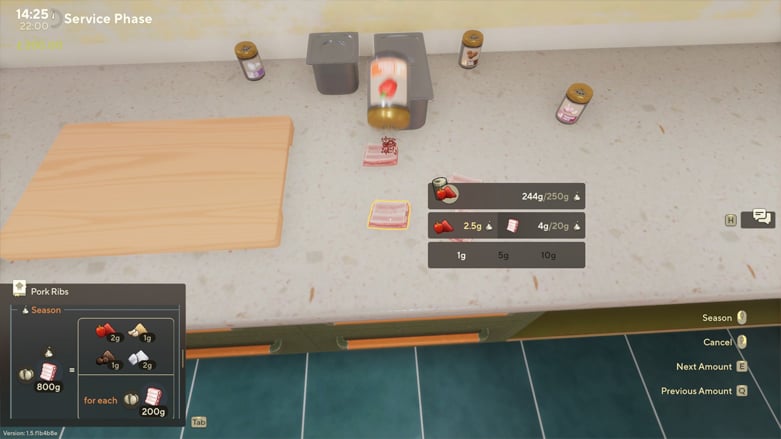
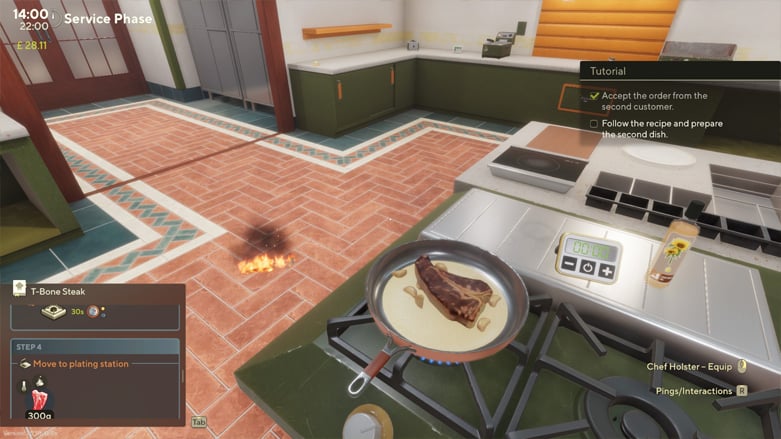
That little tangent out of the way, you can probably imagine what lies in store for you in a campaign game of Cooking Simulator 2: Better Together. Customers will show up to your restaurant at designated hours, when a menu of your design will be available for them to choose from, with you preparing each dish step by step in a process that can really feel involved. In the food-preparation simulation, the intricacies of chopping vegetables and seasoning meat are so finely tuned that you must be careful not to boil the oil in a pan when searing a T-bone steak.
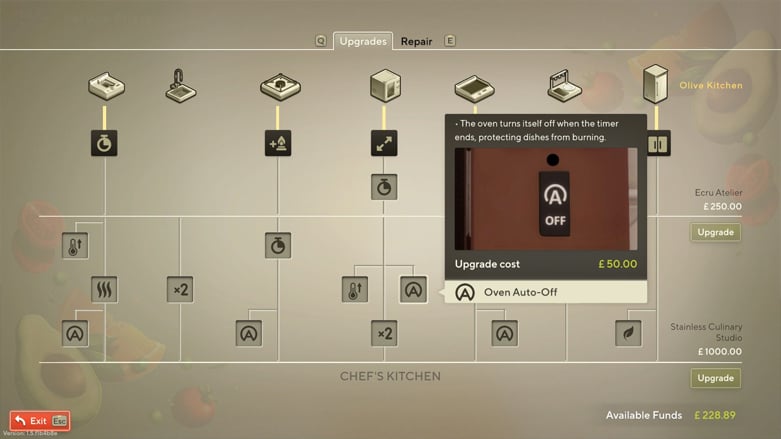
Aside from cooking, the game has you manage your restaurant by ordering supplies, upgrading appliances, and creating your own recipes. There is certainly a lot to do, and the fantasy of being a chef running your own kitchen is one you can easily simulate. As the name of the game implies, the experience is only better with other players. I can imagine. I wasn’t able to find an online game during my playtime, and I wasn’t given a second key to try it out with a friend.
I found some of the recipes to be a little strange. I don’t know who in their right mind would pair BBQ ribs, which aren’t even cooked on a barbecue, with 100 oz of chopped, raw lettuce, but whatever. This is where the ability to make your own recipes comes in handy, I suppose, as I wouldn’t serve some of the game’s plate combinations to my worst enemy.
The immersion in the game is great at face value, but is quickly challenged by some of its quirky design choices and bugs.
For example, you’ll often find that you can’t place objects straight onto most countertops, with weird, seemingly superficial blockages that make it so you have to search for the “sweet spot” on a wide-open counter to place something down. The tutorial, which is lengthy and requires a lot of reading, explains many very obvious systems, but, in my opinion, doesn’t do a good job of making clear that you can only do certain tasks in specific locations. You can put a knife and a block of lettuce on the counter, but you can only chop the lettuce on the cutting board. When you pick up multiple objects, they’re displayed on a baking sheet, but they must then be transferred to yet another baking sheet before going into the oven.
These small eccentricities are paired with the odd choice of removing many of the fun features from the original game. No longer can players cut freely with the knife, and instead have to play this little minigame where you align the knife at sometimes odd angles to chop food up. Dishes no longer shatter, despite how hard I threw them at the wall in frustration, and, for some reason, my metal spatula caught fire while flipping a steak that ended up cooked perfectly.
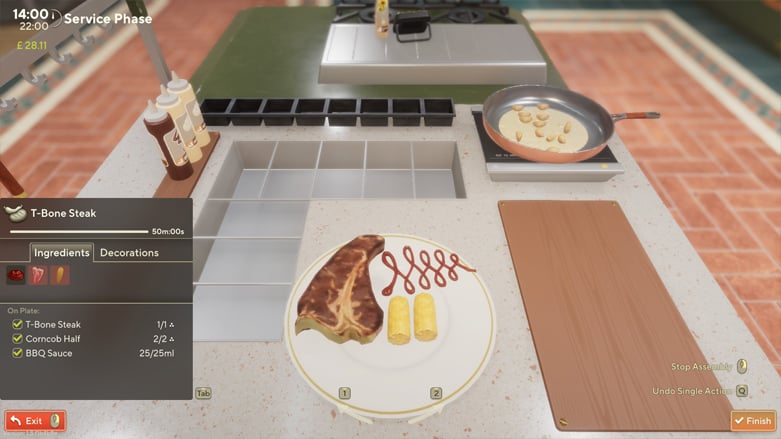
These odd choices are paired with outright bugs, the most noticeable of which comes from plating. While in theory it’s a fun mechanic where you can plate food however you want, increasing the appeal of the dish in question, in execution, the food never ends up where you want it to be, and just floats about a foot in the air after you pick up the plate. This isn’t so much a problem for the customer, who never actually eats the food, and instead just gives you a thumbs up and digs a spoon into the air a few times before leaving.
Cooking Simulator 2: Better Together would be in an interesting, promising state if it were in Early Access. Instead, as a fully realized game, it serves as a disappointing sequel, one that sharply changes the tone and direction from the more chaotic original to be a safer, less hectic, straightforward cooking simulation game. While the cooking mechanics can be pretty involved and interesting, they’re hindered by small design choices, flaws, and bugs that fight the experience altogether.
If these bugs and choices are something you can live with, you will probably enjoy Cooking Simulator 2: Better Together for how involved the restaurant simulation can be. However, I recommend buying another copy for a friend because, in the solo experience, the game’s flaws are far more noticeable and much less charming. Given the community’s response to the game, I find it hard to imagine you’ll have much luck finding a matchmade game.
The Final Word
Cooking Simulator 2: Better Together has intricate cooking and recipe creation mechanics, and its campaign mode will likely appeal to those who want a nice, involved restaurant simulation from the perspective of the chef. However, it differs drastically from the first game and is full of bugs, odd design choices, and an overall unfinished feel that might keep returning fans away and make it harder for new fans to immerse themselves.
Try Hard Guides was provided a Steam code for this PC review of Cooking Simulator 2: Better Together. Find more detailed looks at popular and upcoming titles on our Game Reviews page! Cooking Simulator 2: Better Together is available on Steam.

Comments