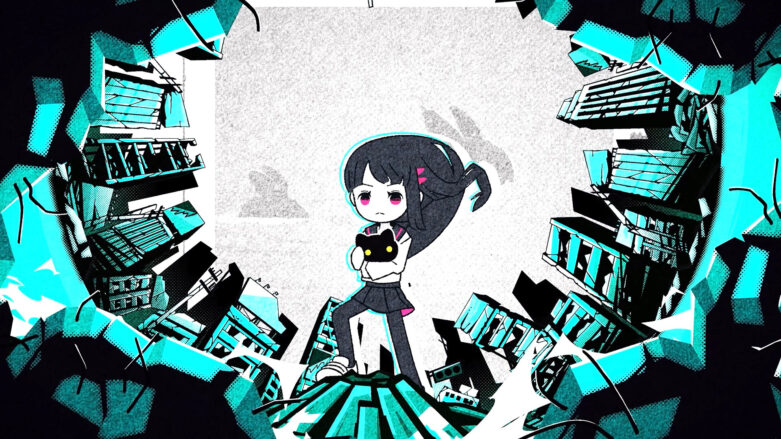
Though I never really got into either, Digimon has always stood out to me over Pokémon and other related media for the uniqueness of its character designs and its slightly edgier tone. It was therefore with some excitement that I took the opportunity to review Digimon Story Time Stranger, a game that promised to be a monster-catcher set in the Digimon universe and the first video game in the franchise that I’ve played. Unfortunately, it didn’t quite live up to my hype; while the elements I thought I would enjoy were certainly there, they were spread thin between what felt like filler content, and I was left disappointed by the game’s choice of priorities.
Starting with the good, or at least what I liked about the game, Digimon Story Time Stranger is, in fact, a Digimon-franchised creature collector. The game gives you the chance to encounter, battle, and eventually capture and evolve (or digivolve, for those who are fans of the franchise) 450 different monsters from the Digimon library.
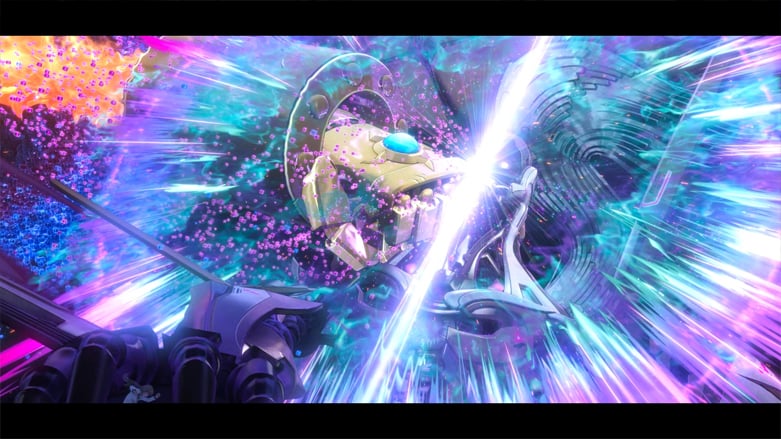
Battles are turn-based combat encounters using your party of three (six with your reserve Digimon) through a simple ro-sham-bo counter system layered on top of a more complex elemental resistance and weakness mechanic. Your Digimon gain levels and stats by winning battles and can be greatly customized with different move sets, as well as personality modifiers that vary based on your own skills and how you interact with them. The whole personality system can feel complex at first, but to sum it up you have a lot of ways to personalize your Digimon in a way that isn’t really present in other games in the genre.
Also, unlike other games in the genre, you unlock new Digimon by defeating a certain number of them, a system that slowly builds up a data percentage on each one you fight until you can eventually summon them to your inventory. The higher your understanding of a Digimon (the more of them you’ve defeated), the stronger they summon. While you can summon one at 100 percent, you typically want to wait until you get to 200 percent if it’s a Digimon you plan on using.
The core gameplay loop of collecting, training, and evolving your Digimon is one hundred percent what I wanted from the game. Discovering the roster and evolving my team is the best part of the game, and one that should have been more core to the experience.

Unfortunately, Digimon Story Time Stranger is far more interested in its story than its gameplay, featuring an uneven ratio of dialogue segments, cutscenes, and “walk to point A then to point B” style quests to actual monster-taming gameplay.
In my opinion, a game in this genre should be built around the monster-taming element. It’s hard not to invite the Pokémon comparison, the franchise that arguably defines the genre, and one that understands the formula. A Pokémon game builds its story around the progression of your collection, often throwing you against a series of Gym Leaders that serve as both the centralization of the story and a gate for your party’s leveling and evolution. It’s a more open-world experience where you spend the majority of the time engaging with the elements of the genre we enjoy best, and take on the story as you see fit without it getting in the way.
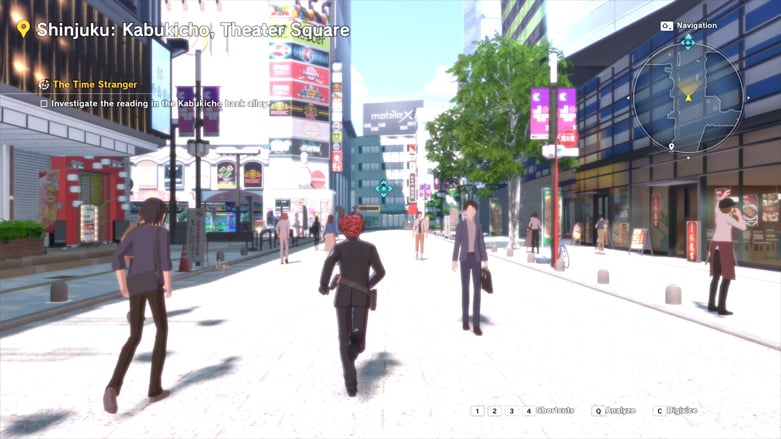
The story in Digimon Story Time Stranger, unfortunately, gets in the way of its gameplay in every way. It’s not just that it takes up the majority of the player’s time with long conversations, pointless filler quests, and constant cutscenes, but it appears to be what the entire game was designed around. The actual monster leveling and collection isn’t something you can engage in at any time but is instead delegated to small dungeon-like segments you encounter as part of the story.
The story also actively blocks the progression of your party. Nearly every digivolved version of your Digimon is locked behind your “agent level,” a form of progression that only increases by completing quests, mainly story quests, for the majority of the game. This essentially ties the progression of your monsters to story progression rather than the battles they’ve fought or the leveling you’ve given them.
When you tie this element to the limited way in which players are allowed to interact with the battle and progression systems, it makes Digimon Story Time Stranger feel sluggishly linear. You are not incentivized to go out of your way to make your party strong. Battles are essentially always fought out of necessity, because the end of a quest is at the other end of a long hallway with several monster encounters waiting in between. You will almost always be at the exact level of your current mission, as the game moves you between meticulously designed encounters back-to-back, and your main form of progression is locked more to finishing the story than actually engaging with the systems you are progressing.

It feels like Digimon Story Time Stranger doesn’t know its own genre, putting focus on story for reasons that could either be a lack of confidence in its core loop or too much confidence in its writing. I have a feeling it’s the former, because the story and characters simply did not interest me and often felt like a wall keeping me from engaging with the parts of the game I actually wanted to play. While I understand the desire to be something other than a Pokémon-style game with the Digimon IP, I doubt this is the kind of game die-hard Digimon fans want to play, and it certainly isn’t what will draw in new fans.
The Final Word
What could have been an excellent entry in the creature-collection genre is spoiled by a bizarre focus on story padding and content that feels like filler. While the fun of collecting, battling, and evolving the Digimon cast is there, it’s executed in a way that demands players really dig to get to it, with odd design choices that undercut the progression system and the overall fun that could have been.
Try Hard Guides was provided a Steam code for this PC review of Digimon Story Time Stranger. Find more detailed looks at popular and upcoming titles on our Game Reviews page! Digimon Story Time Stranger is available on Steam, Xbox, and PlayStation.

”It feels like Digimon Story Time Stranger doesn’t know its own genre”
It’s a JRPG in a series called Digimon *Story*. The focus is the story. I mean no hater towards your review, i just kinda lost why you find strange that game with story in the title , in fact, has a story and it’s focused on it. It isn’t trying to be like Pokemon.
It’s more like Shin megami tensei or Persona, than Pokemon. I think the Digimon World series might be more up your alley because it’s entirely focused on the systems and monster taming. Digimon World Re:Digitize and 1 are my recomendations.
Thank you for your comment. I’ll be sure to check out Digimon World when I get the chance!