Dreams of Another is a game that is as esoteric and beautiful as it is difficult to give a scored review.
It is important, before we get into talking about the game, that readers understand exactly what Dreams of Another is, because it defies many gaming conventions by its very nature. It’s less of a “game” meant to be conquered and more of an experience—an art exhibit with a heavy focus on striking and thoughtful visuals, quotes, and philosophy meant to make you think, and tone and meaning that are meant to be bestowed upon someone through personally experiencing it. It isn’t like many “artistic” titles, where a core gameplay loop is introduced while a gorgeous story plays around it. Every element in Dreams of Another, including the mechanics, is deliberately designed to evoke feeling and impress meaning upon the player. It is, by its very definition, art, and art is hard to judge.
It is especially difficult to judge art by the same merits you would use to judge a “regular” video game. Because of this, as I venture forth into this attempt to review what can be considered the unreviewable, I emphasize that this is just one player’s experience and subjective opinion based on his own playthrough. That, of course, can be said about all of my reviews, but it’s important to double down on this fact when reviewing something like Dreams of Another, an art piece that is by design a personal experience. You will feel different emotions when you play, and your opinion of it will be shaped by how much you appreciate engaging in an interactive art piece that can hardly fit into the same category as other games I regularly review.

It is also hard to say that many of the points I bring up in this review, which compare Dreams of Another to traditional gameplay elements, are valid. It is, therefore, my imperative to warn you that this title is not for everyone, because it is not designed for the same purpose or audience as a typical video game. Once again, my rating of this esoteric title is based on my own opinions and experiences with the game, and many of the points I bring up are not objective. You should honestly play Dreams of Another yourself if it’s something that appeals to you, using my review as a vague guideline of whether or not you might enjoy it rather than an infallible determination of the game’s value.
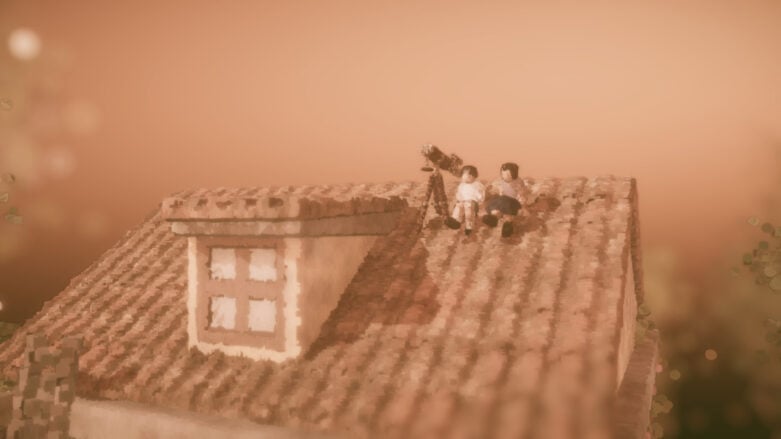
Dreams of Another is an art piece exploring the theme that there is “no creation without destruction.” It follows players as they venture through a dream world, encountering the various stories of other residents while being challenged on their perspectives of life. Beautiful landscapes are shaped from clouds of nothingness as you interact with strangers and are whispered philosophy by inanimate objects.

The concept of creating through destruction is portrayed as you use various firearms to create the environment around you from nothing, with each shot forming a scene rather than destroying it. This is done using cloud-point technology, which anyone who has played a LIDAR game might be familiar with. I’m not totally sure how it works in Dreams of Another, but from my experience, it feels less like you point invisible walls with orbs to take shape and more like, by shooting floating orbs around you, you send them into the locations they’re meant to be, creating beautiful scenes with a dreamlike, watercolor feel.
The philosophy in Dreams of Another is genuinely thought-provoking. Of course, opinions will vary from person to person, but I found most of it to trigger some fairly insightful thinking. In my case, though, I found a lot of it to feel awkwardly delivered. This is due to the writing, which feels like a direct translation from what I presume was Japanese, leading to some clumsy sentence structure.

The voice acting is also, to put it nicely, amateurish. This is usually not something I complain about, but the voice actors deliver their lines with such a dull monotone that it often undercuts the tension or insightfulness of a moment. It can really take the wind out of a scene, listening to some of the English voice actors speak. While I applaud them for their effort—and I know everyone has to start somewhere—I can say that, in my experience, it took away from the game more than it added. I would have preferred the game to have limited to no voice acting, which may have added to the dreamlike feel overall.
The final thing I can say to guide you toward buying or avoiding Dreams of Another is that the game is, by design, slow. There are a few short puzzles here and there, and you can collect different weapons to increase the speed of the LIDAR-like painting, but overall, the slowness is an inherent part of the experience. You are meant to take your time, shape the environment, and absorb the stories and philosophy as they come to you.

For some, this will be an integral aspect that draws them to the game. For others, you’re going to find yourself bored out of your mind and jumping back into a round of Hades II. Again, your appreciation of Dreams of Another depends on your understanding and interest in what it is; if you want a relaxing, thought-provoking, artistic experience, you will likely enjoy this game. If you’re looking for something that feels more like a “game,” you’re not going to find it here.
The Final Word
Dreams of Another is a beautiful experience, albeit one that is sure to be polarizing. If you’re looking for a relaxing, thought-provoking, linear experience that feels like a virtual art exhibit, you’ll likely enjoy this game. For those looking for more of a traditional “game,” however, Dreams of Another can feel slow, repetitive, and is probably something you’d want to skip.
Try Hard Guides was provided a Steam code for this PC review of Dreams of Another. Find more detailed looks at popular and upcoming titles on our Game Reviews page! Dreams of Another is available on Steam and PlayStation, with PSV2 support.

Comments