I try to remain objective when I review games. Oftentimes, when you just finish a game you enjoyed, it can be easy to look at it through rose-colored goggles, and there are certainly a couple of titles I covered earlier in my career that, in hindsight, I would score lower or otherwise be more critical of. At the same time, I don’t like to nitpick small, subjective elements of a game just to fill space on the page. If there is something in a game that I personally don’t enjoy, but I feel as though it’s just a matter of personal taste, and I imagine the intended audience would enjoy it, I tend not to comment on it at all.
Attempting to strike this balance of fair coverage can occasionally make me feel like I’m being too harsh on a game, even when I’m trying to stay objective. On the complete opposite end of the spectrum, it can at times make me feel as though what I’m playing is a little too good to be true, leaving me with the strange feeling that I’m searching for something to complain about just to keep my review sounding unbiased… and failing.

This was the particular case with Fallen Tear: The Ascension, a JRPG inspired Metroidvania that, despite my personal lack of interest in the genre, felt like it was too good, too solid, and overall just too well put together for a game in Early Access… and yet I wasn’t able to really find any substantial flaws with the game to prove otherwise.
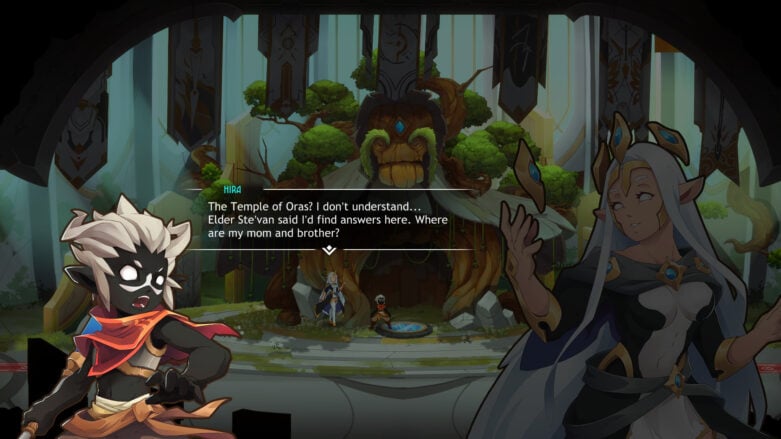
Fallen Tear: The Ascension follows protagonist Hira, a stranger in the land with a mysterious curse even he doesn’t fully understand. When ancient evils awaken, this curse forces Hira away from his home and family and out into the world, where he must use his brief training as a monster hunter to help those in need and uncover the mystery of that fateful day when everything changed for him.

The first thing you’ll probably notice about Fallen Tear: The Ascension is how beautiful the game looks. The entire experience is built with incredible hand-drawn art assets that are animated in a gorgeous, fluid style that simply looks fantastic in motion. It’s downright impressive, and I’m not surprised that, given the genre’s history of showcasing incredible artists, the visuals are front and center and vital to what Fallen Tear: The Ascension is trying to accomplish.
There were times when I worried that the game’s heavy focus on animation might lead to unresponsive controls. There were a few cases, as a keyboard player (which the game doesn’t recommend; you should really get a controller), where my button inputs on certain actions felt delayed. However, this was limited to interacting with NPCs and navigating conversations, effectively meaning I had to press the “continue” or “interact” buttons a few times before they actually responded. Everywhere that mattered, however, the game was buttery smooth, with attacks and platforming not only feeling solid but having animations that matched the speed of quick inputs while still looking great.

Mechanically speaking, Fallen Tear: The Ascension isn’t too different from many other Metroidvania titles. It presents a solid, albeit familiar, take on the genre, with a few twists here and there. The most notable addition is how the game combines your relationship with NPCs and your special attacks. Having a “bond” in your party essentially summons the character you formed that bond with into the fight, allowing them to perform a unique special attack. It’s a fun way to combine abilities with character personality and make you feel like you have a party without the characters actually taking up space on the screen.
The story is very character-driven, with the strangers you meet definitely being the highlight of the narrative. Outside of them, I personally found the game’s story to be on the weaker side. Not bad, but a bit generic in places, and just not the most exciting I’ve experienced.

Even in Early Access, there’s a lot to enjoy about Fallen Tear: The Ascension. The gameplay is solid, the animation is gorgeous, and the characters are thoughtfully brought to life by some impressive voice acting. It already feels like a fully realized game, at least within the content that’s currently available to players.
The Early Access element of Fallen Tear: The Ascension mainly comes down to the amount of story content currently available. Players have access to just under half of the completed narrative, alongside the game’s already implemented gameplay systems. In essence, it feels like a complete game mechanically, but one that’s missing a large portion of its story content. The result is a strange impression of something that feels both fully fleshed out and incomplete at the same time, more akin to an extended demo than many of the Early Access titles I’ve reviewed.
Even with half of the story still missing, Fallen Tear: The Ascension rarely feels like an unfinished product. The game has a sense of completeness, feeling thoughtfully designed and already offering a substantial amount of content despite how much is still to come. I have little doubt that fans of the genre will enjoy it, and even I struggled to find much to criticize during my time with the game.
What’s more, the Early Access version of Fallen Tear: The Ascension is being sold at a discount. So even if you aren’t planning on playing the game until it fully releases sometime in the next quarter, I would still recommend picking it up now.
Pros
- Incredible art and seamless animation
- Interesting characters with incredible voice acting
- Solid, if familiar Metroidvania gameplay with a few twists
- Tons of content already available for players
Cons
- Occasional input delays on keyboard, and overall a much more controller-friendly experience
- Somewhat generic storytelling
- Technically an incomplete, Early Access experience, with much more to come
TryHardGuides was provided a Steam code for this PC Early Access Review of Fallen Tear: The Ascension. Find more detailed looks at popular and upcoming titles on our Game Reviews page!

Comments