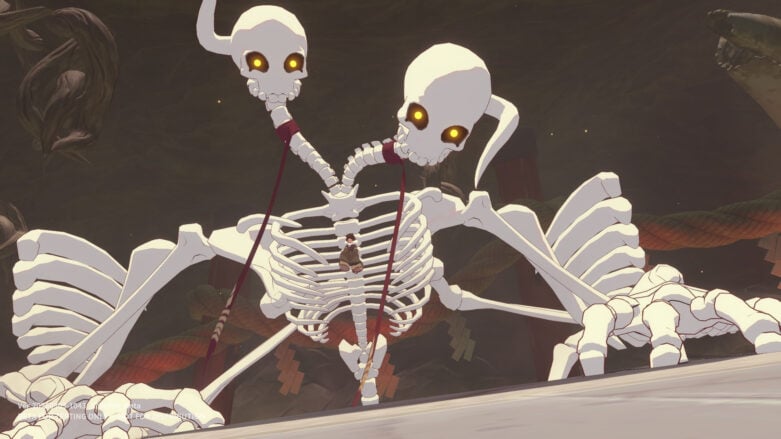
Homura Hime is a linear-level action slasher where you play as the titular exorcist, helping to rid the world of demonic spirits that embody strong emotion. The game has an overtly anime style in its world, character, and enemy designs, and it uses a genre-mixing style of combat that quickly grew on me during my time with the game. Tightly designed around some great boss fights, players should have a good time with Homura Hime, though it might not be quite as long of an experience as you may hope.
The hack-and-slash action of Homura Hime seems a bit simple at first. The game arms you with light and heavy attacks, which can be weaved into combos you unlock over the course of the game, a dodge mechanic, and the ability to parry enemy attacks and projectiles if timed correctly. Parrying also builds up charges for abilities, which can be powerful additions to your combos, but they do not hit quite as hard on their own when compared to just unleashing a flurry of attacks on your enemy.
Like I said, it feels very simple at first. Passable, sure, fun, yes, but very simple. I did not quite get the depth of the combat in Homura Hime until I realized the parry mechanic can be used on essentially everything your enemies dish out at you.
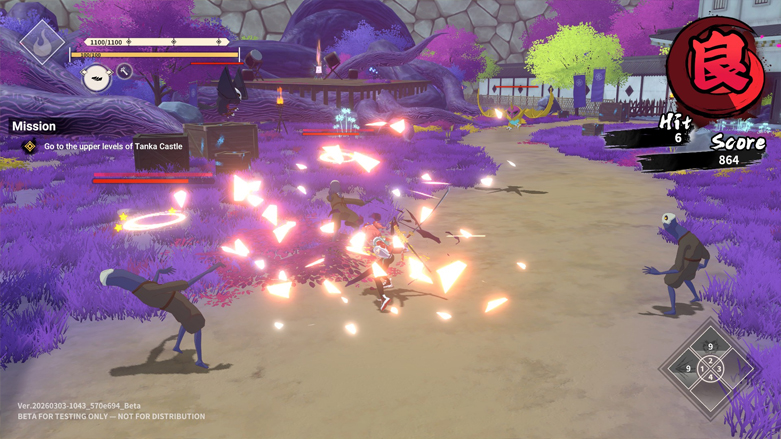
There are, of course, specific attacks that must be dodged, but those are fewer in number and usually amount to bullet hell segments during boss fights. Beyond those, big hits from giant skeletons and eviscerating beams can be perfectly parried by our titular exorcist’s blade. They not only can be parried, but you quickly realize they must be, as trying to avoid a lot of these attacks will get you killed. The game subtly pushes you toward an almost rhythm-game-like mastery of timing, and once you get it, you find yourself way more invested in combat and the game’s aggressive playstyle.
It was here that I realized that Homura Hime was essentially Metal Gear Rising: Revengeance meets anime girls and bullet-hell mechanics, and I started having a lot more fun.
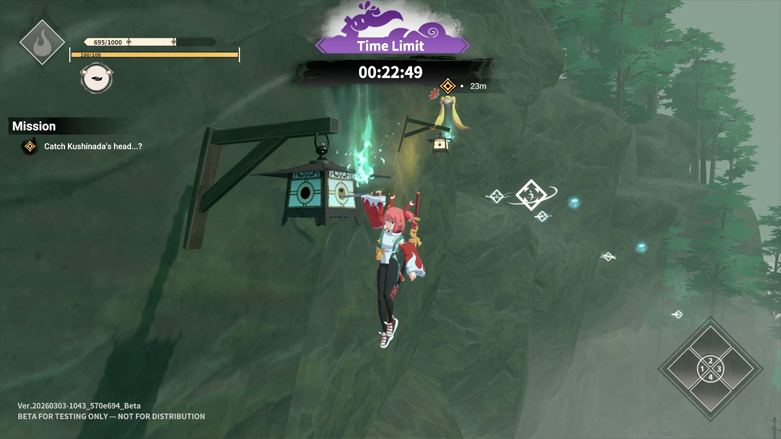
Once you embrace that fact, you realize how the game is meant to be played. Small enemy encounters and platforming segments serve as warm-ups for huge boss fights that challenge you to weave through bullet-hell projectiles and perfectly time your parries on big attacks, essentially outlasting a barrage from a boss until they give you an opening to unleash devastating combos, racking up points and clearing the level in style. It becomes less about simply surviving and more about performing well, chasing higher rankings, and cleaner clears.
The gameplay in Homura Hime is fun and is definitely built around those larger-than-life boss fights, with the encounters that come before feeling more like set dressing or, again, practice before you get to the thematic demon girl at the end of the level. The game is clearly designed to be replayed, going back to previously cleared levels with new upgrades and combos to try and earn higher scores against bosses you have already faced, now with more knowledge of their move patterns and timing. There is a satisfying sense of improvement as fights that once felt chaotic start to feel almost choreographed.
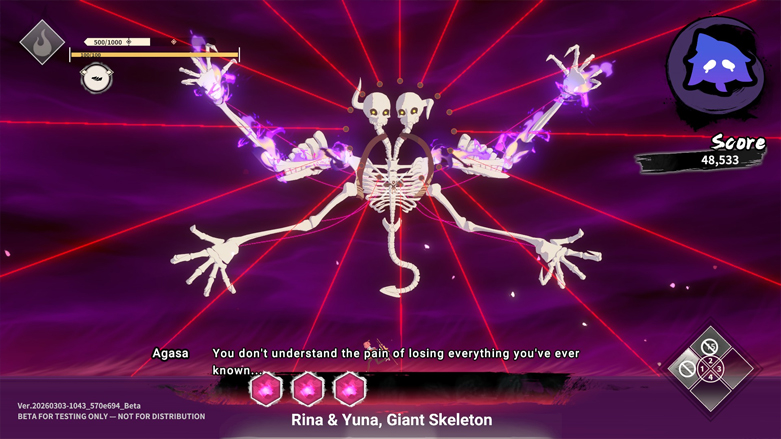
While I can see some finding the story interesting, I personally could not get very invested in it. The boss characters were cool, as were the elements of hauntings and death, but I was not very invested in the other characters of the game, their dialogue, or the way the game paced its exposition.
If we make the comparison to Metal Gear Rising: Revengeance again, both feature very linear level design with interspersed combat and platforming segments, but the mini-fights in Homura Hime feel less cleverly designed and, at times, can be a bit repetitive with the lack of enemy variety. The levels also lack the same fast-paced, exciting feeling. I found many of the dialogue and storytelling moments felt more like interruptions that threw off the pacing of levels, and they often felt like they were being used to pad out what were otherwise rather short experiences.
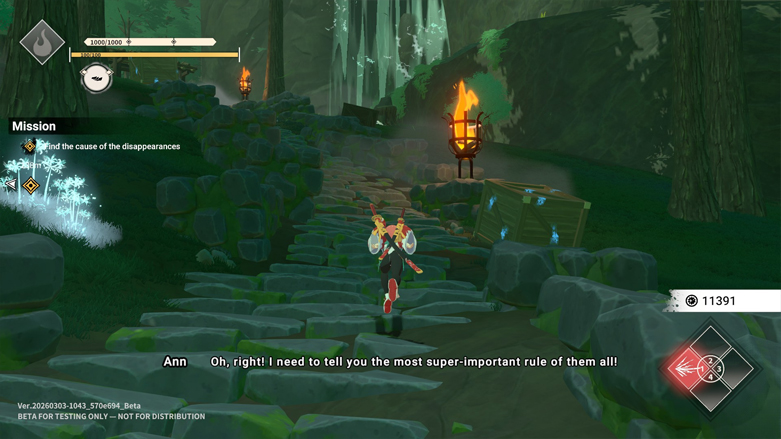
Players might be surprised to find just how short of an experience Homura Hime actually is. Again, the levels are meant to be replayed more than once, with new abilities, stats, and knowledge of their layout and boss patterns, but a first-time player can clear the game in one sitting if they really want to. While not as long as I imagine most players would want it to be, the 25-dollar price tag of the game, or 22 dollars during the introductory sale, feels pretty fair for what Homura Hime has to offer.
I definitely found myself enjoying Homura Hime, especially when I realized what the inspirations of the title were and how it was meant to be played. While the levels can feel kind of slow, with enemy encounters being a little repetitive and exposition interrupting the flow of progress, things really open up when you get to the boss fights, which are exciting and really test your understanding of the mechanics. The game itself is not very long, but it feels fair for the price it is asking, and it has plenty of replayability if you are the kind of player who likes to go back and challenge yourself to clear stages with higher and higher scores.
The Final Word
Though the pacing can feel like it is padding for time, and its smaller fights can be a little repetitive, Homura Hime really picks up in its exciting boss fights, serving as a parry-heavy hack-and-slash game with cinematic moments and bullet-hell elements that challenge your mastery of the mechanics. Though a bit short, Homura Hime is well worth its asking price and should especially appeal to fans of its anime aesthetic and score-chasing design.
Try Hard Guides was provided a Steam code for this PC review of Homura Hime. Find more detailed looks at popular and upcoming titles on our Game Reviews page! Homura Hime is available on Steam.

Comments