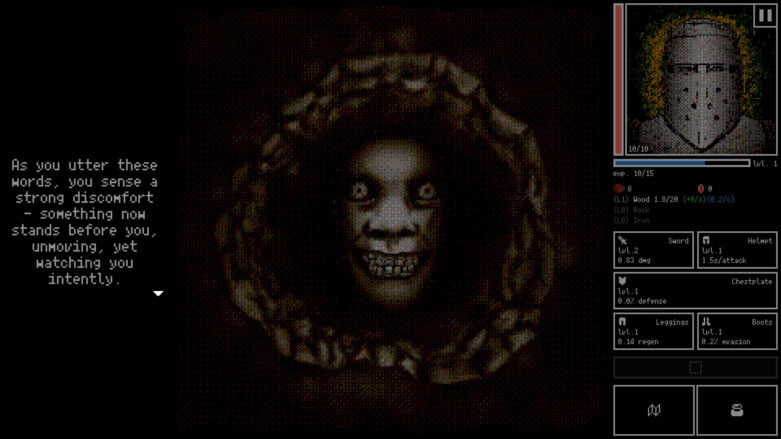
Horripilant is an odd, flawed gem: a game I couldn’t hate, but one I struggled to love.
To understand why this title earned such a mixed reception from me, you first have to understand what exactly it is. Horripilant is an idle game with a dungeon-crawling element and an overarching horror theme. The game plunges players into the depths of a horrific dungeon, where terrifying monsters must be slain in the name of a twisted god in order to find the answers to a mysterious past we seek.
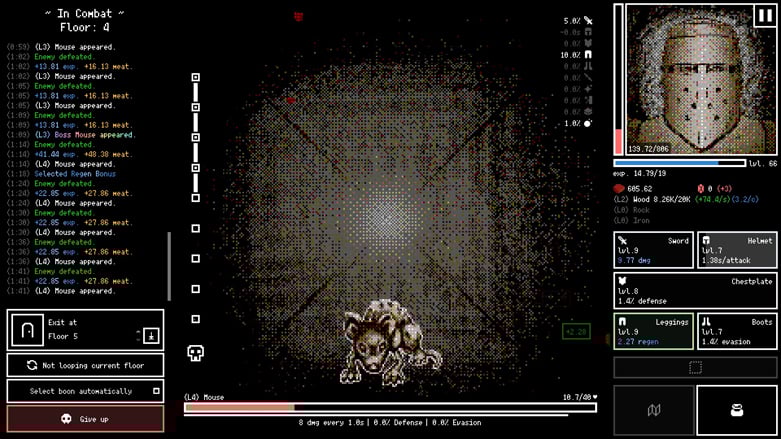
The visual element is no doubt what draws most players into the game. Horripilant employs some gorgeously unsettling pixel art and an overall old-school computer look to create an unsettling, low-tech, and downright creepy feeling. The game excels in its eerie depictions of long, dark hallways and horrific creature designs above all else, and it’s an especially fresh take for the genre. I can honestly say I don’t know of another title in this genre that attempts to do a genuine horror theme, much less one that succeeds as well as Horripilant does.
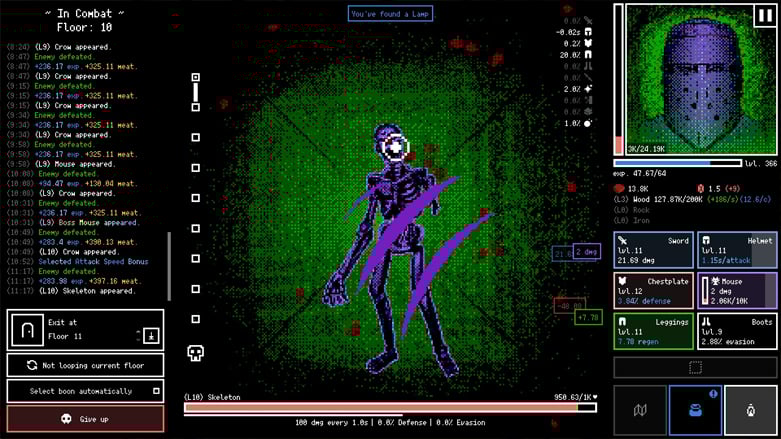
That being said, I found a lot of the game’s horror to be surface-level, scary designs that are meant to unsettle you upon first seeing them, but which quickly lose their oomph when you realize there’s no substance to back them up. The game is a series of still images that have very little story, if any, beyond their introduction. The nature of the game also has you visiting a few of these scary characters over and over and over again, and overexposure is the easiest way to kill the mystique of your creepy horror character.
The aforementioned nature being, again, an idle game. You may be surprised to hear me describe Horripilant as “Cookie Clicker with a traumatic paintjob.” That is, in fact, probably the best way to describe it, as the gameplay follows a meticulously designed and overly familiar loop, split into two activities: resource harvesting, where you click on the screen to gather wood, stone, or iron until you have enough to purchase passive production or stat upgrades to your gear, and the main activity, which involves automatically fighting through a series of dungeon floors, with the enemies getting progressively harder as you go along. Both mechanics are designed in such a way that you can continue to do them while offline to accumulate resources to help you progress.
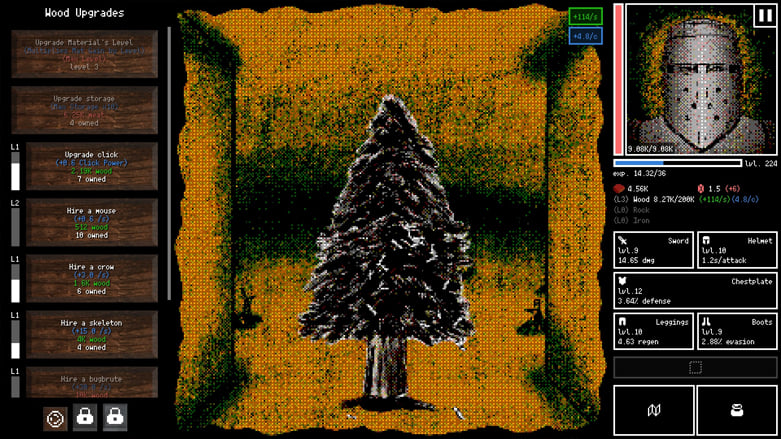
I won’t pretend like this isn’t an addictive gameplay loop, as this genre is popular for a reason. Each activity also plays into the others very well: explore the dungeon to get meat, use meat to upgrade your resource production, and use your resources to upgrade your gear and survive in the dungeon longer. It’s a gratifying loop, albeit one that inevitably rewards and in fact incentivizes you to step away from the game. The “idle” part in idle games kind of downplays the game’s incredible art, as you’ll find yourself struggling to stay on the screen while you wait for two million wood to pile up or for an especially tanky boss to finally die.
What’s especially disappointing about the gameplay loop, however, is the lack of substance in it. The gameplay quickly becomes repetitive and, again, idle when you realize that there isn’t much for you to do outside of occasionally spending your resources on upgrades, which are just flat passive stat improvements. Like any idle game, Horripilant quickly becomes a title meant to play itself and be checked on every now and then; however, the game falls behind others in the genre when you realize that your upgrades aren’t all that meaningful or interesting, and even clearing through dungeons becomes a slow, repetitive slog.
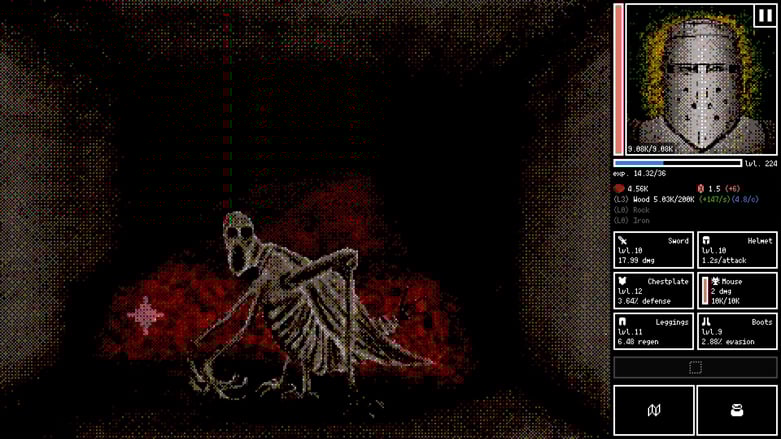
This is in no small part due to the fact that the game has an awful lack of enemy variety. There are a total of 16 enemy types in the game, with bosses just being recolored versions of these foes. Of these 16, it took me almost two hours, ten dungeon floors, and four hundred level-ups before I found anything beyond the first two. Fighting rats and crows over and over again really further incentivizes not being present for the game, and again, if you’re not really playing, then what’s the point?
Horripilant is an idle game with phenomenal art direction and a fun, unique theme. However, the game’s lack of substance and agonizingly slow progression system quickly encourage you to engage in the “idle” side of idle gaming, which takes away from the enjoyment of the game’s art, ambience, and setting. If Horripilant were a demo or a free game, I would be far less disappointed. While $8 isn’t a steep entry price, it definitely feels like you’re just paying for the game’s art. Mechanically, Horripilant, in a lot of ways, felt on par with something I would download for free while waiting for a connecting flight.
Yet, the game does have an overwhelmingly positive rating on Steam at the time of writing this review. While I certainly believe there are issues, they don’t seem to be enough to take away from the game’s hype, so hopefully you can enjoy it too if you decide to give it a try. My recommendation, however, is to wait about a year and see what comes to the game by way of updates.
The Final Word
Horripilant is a flawed gem: its horror theme and atmosphere are great, its art incredible, and its foundational mechanics and loop are strong. However, the game quickly becomes repetitive due to poor pacing and a lack of substance, especially when it comes to enemy variety. While not the worst way to spend $8, I would personally recommend giving the game some time to see what updates may come.
Horripilant was reviewed on the PC. Find more detailed looks at popular and upcoming titles on our Game Reviews page! Horripilant is available on Steam.

Comments