
Katanaut is a side-scrolling, Metroidvania-inspired roguelike with a great sense of style, fast-paced combat, and a stylish OST that is sure to enthuse players quickly. Its unique approach to combat mechanics makes the fights feel methodical and strategic while still being fast-paced, and the flashy pixelated graphics manage to build the hype while still feeling retro. This style comes with a bit of a cost, however, as readability is not the game’s strong suit, and fans of the roguelike genre might not love how this title handles its modified approach to the otherwise familiar formula.
Katanaut tosses you into a cyberpunk hellscape where some kind of horde of demon, zombie, cyborg-alien monstrosities have infected the world, leaving you to clean it up. Katanaut doesn’t really have incredibly strong storytelling, with dialogue options being short and cutscenes appearing as unlockable moments you find throughout the game, but it doesn’t need to tell a strong story to be engaging. It makes up for it in style and substance.

The style comes through Katanaut’s incredible pixelated cyberpunk art and soundtrack. Technopunk beats pound the eardrums as you swing laser-bladed katanas through cybernetically modified freakazoids, collecting computer chips to buy upgrades from your cyborg allies. The game looks great and plays off its setting well, with strong pixel art and character designs that make every NPC, enemy, and background interesting to gawk at. What I especially enjoyed was how blood splashes generously across the background as you slay enemies, painting the whole room red after a meaty encounter.
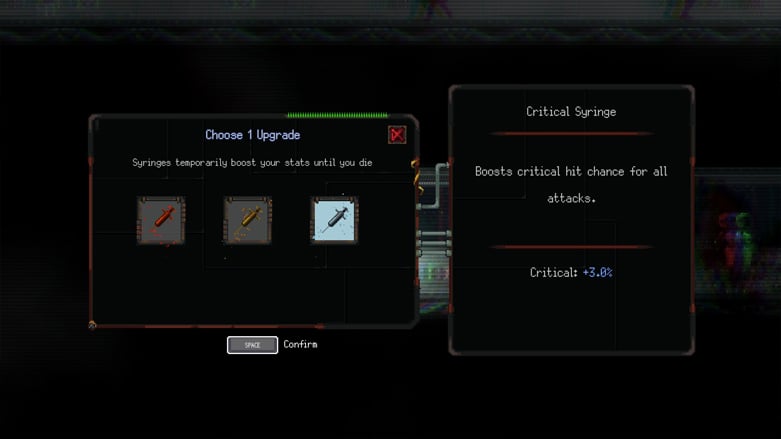
The substance comes from the mechanics, which are inspired by Metroidvania and roguelike titles alike. Players travel across a Metroidvania-styled side-scrolling map, collecting upgrades and new weapons along the way. Fans of the roguelike genre may not like how the game dishes out upgrades, with them being more random finds throughout the map or dropped from enemies rather than being a sort of “checkpoint” earned at the end of a challenging room. The way power-ups and weapons were handed out here didn’t feel all that natural to me, and it took a while to get used to it.
Some fans, like myself, won’t like the Metroidvania-style map at all. The game has a big reliance on backtracking and exploration, something that can be great when there is something to explore. However, I found my runs lacking in reasons to want to 100% clear the map, without any real lore drops or secrets that wouldn’t come from just killing enemies. While there are portals to allow fast travel between zones, I feel this genre really benefits from direct, straightforward map progression. Backtracking with new upgrades doesn’t feel quite as engaging as pressing forward into stronger enemies and more dangerous environments. That being said, I was never much of a Metroidvania fan myself, and fans of that genre will likely enjoy it more than I did.
Combat is a melee/ranged system where players use powerful ranged attacks on an ammo system, which is refilled through melee hits. Melee weapons probably have the most diversity in their playstyles, with each one having its own attack pattern and behavior that makes your chosen katana a vital strategic choice. Of the early katanas I had the option to play, I found the iron katana worked best for my playstyle, giving me slower attacks but allowing me to parry hits if timed correctly.
The thing to understand about combat in Katanaut is that it happens incredibly fast. I’m not just talking about the TTK (that’s time-to-kill for those who don’t know) of enemies, who are chopped down quickly by your katana, but also our hero’s equally squishy health bar. You have a total of three hits before a run is over, and as far as I can tell, there aren’t any invincibility frames.

While this certainly gives the game a strong sense of speed, power, and vulnerability, it can have its drawbacks. The standard enemies, even those on the more difficult end of the spectrum, often aren’t what will kill you in Katanaut, or at least that was the case for me. Instead, what often killed me were smaller foes, usually those that dropped from the corpses of previously slain enemies as little additional threats.
This was less because of an inherent difficulty spike and more due to what I believe to be a developer oversight. I don’t have the best eyesight, but I figure anyone would struggle to see these tiny foes as they blend into the busy background. Often, these enemies even match or closely mimic the colors, shapes, and particle effects of the environments, so the only warning an attack is coming will be an exclamation point. Even this I often missed in the chaos of battle, the signals lost under the flurry of attack effects from our main character and enemies alike.

Other projectile attacks or entities can get lost on screen when things turn bloody, as they closely match the shade of red that splatters the background. While I can understand why the developers allowed these visual problems to slip by, as the enemies themselves are not that hard to spot, it is particularly the heat of battle that can draw your eye away from danger, and this, for me, was often a fatal error. A bit of additional clarity added to monsters would certainly be appreciated by this reviewer.
The Final Word
Katanaut is a stylish, bloody, and fast-paced roguelike with a strong identity and straightforward mechanics. While its visual and audio flair excites, the game can feel held back by readability issues and an adherence to the Metroidvania format, which emphasizes backtracking in a game that otherwise wants to feel fast.
Try Hard Guides was provided a Steam code for this PC review of Katanaut. Find more detailed looks at popular and upcoming titles on our Game Reviews page! Katanaut is available on Steam.

Comments