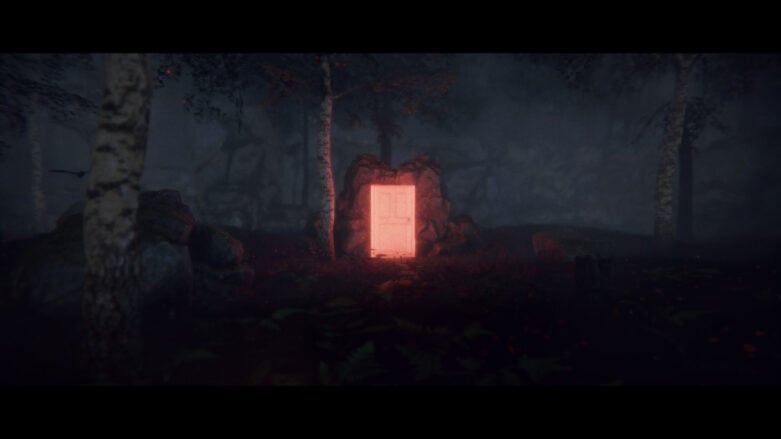
I’m a firm believer that video games can, and should, be considered vessels by which great works of art can be delivered. I also believe that there can sometimes be a clear difference between games designed to be games and games designed to be art. I made the argument that A Cat Named Mojave, a striking and strange indie horror title that made me feel far more than perhaps even the creator intended, was a more unconventional example of the aforementioned artistic title. If that is indeed the case, then Project Songbird is the convention.
That isn’t to say that the game is conventional; I think art, by its very nature, defies convention. Project Songbird just ticks all of the boxes I imagine when I think of a game designed to invoke a feeling before it was turned into a fully playable game; it features a heavy, incredibly relatable story, striking visuals, and is chock-full of metaphor and emotion, while the gameplay side of things is a little lighter and less creative than the whole itself.
This distinction is not made to disparage the game, but to make it clear what it is you’re getting into; Project Songbird is more of an experience, made to make you feel something over one playthrough, and less of a mechanically engaging title that’ll steal your attention for weeks to come.
Project Songbird follows the story of a young, silver-record-rewarded musician who, after a tragedy, finds themselves disconnected from the music they once made. The shift in their style doesn’t resonate with their fans, and the label is getting desperate for sales. Our protagonist heads out into the woods to stay at a cabin known for revitalizing the passion of past musicians who stayed there, but as writer’s block continues, mysterious events force our protagonist to reconcile with trauma… in the most violent ways possible.
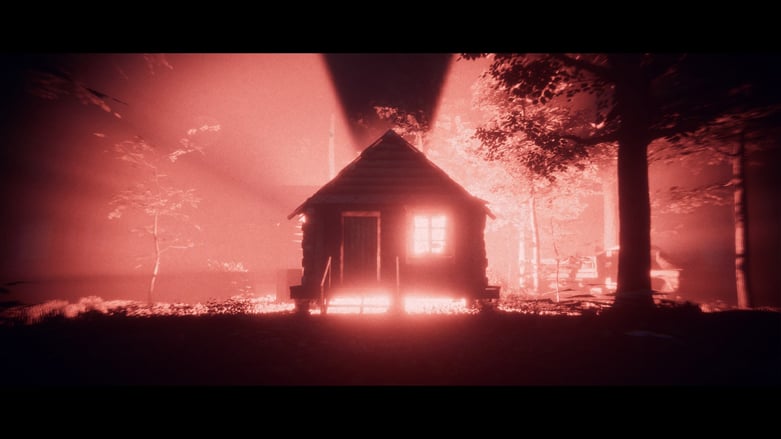
Project Songbird has a lot to say. It contains messages about the creative process, creative blockage, and dealing with past trauma that can feel insurmountable to get over. I won’t ruin the game by spoiling anything in this review, both because the publisher asked me not to and because I truly believe that discovering the message yourself is the most important part of playing the game.
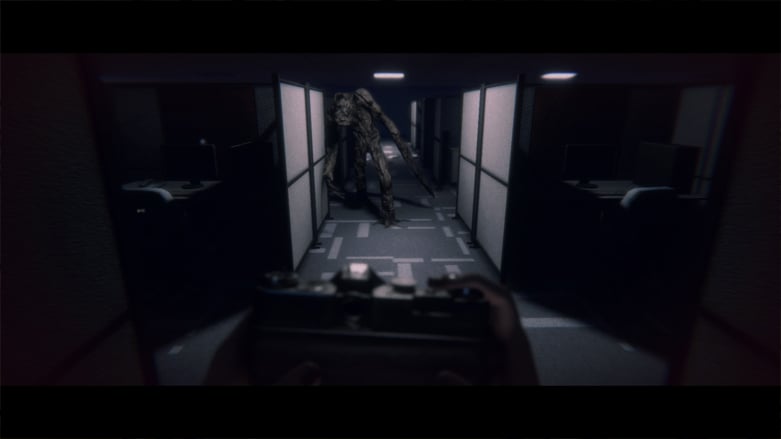
Needless to say, Project Songbird is packed full of symbolic and artistically crafted imagery. Every scene is thoughtfully designed to evoke feelings, rather than merely serving as creepy set pieces that complement the horror. I think nowhere is this more obvious than in an early segment where our protagonist finds themselves reliving the life they left to pursue music… navigating a literal maze of cubicles that seems to stretch on beyond belief and unsettles with its uniformity.
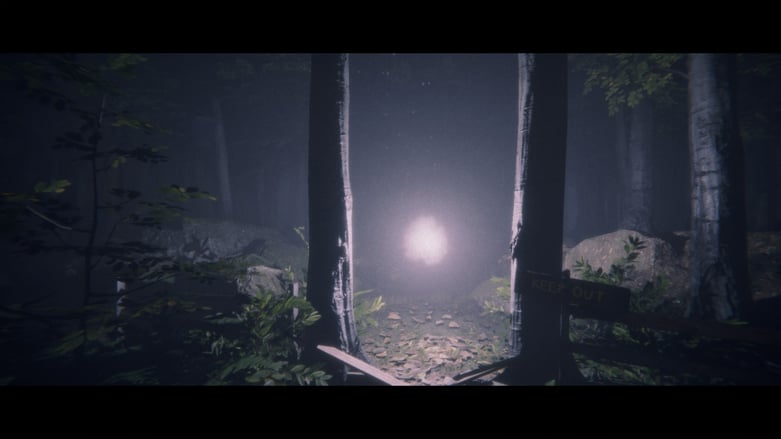
You’ll also notice for yourself that the game is played, or meant to be played, in a very unique filter. While this is optional, the game itself insists that you keep it on, because the precise message of the imagery is important. The section where the creator tells you not to turn the filter off outright spells out for you that everything you see in the game is designed with purpose, and that the very way you see things has meaning.
As far as the actual gameplay goes, Project Songbird is a good, if familiar, horror game. It tasks you with using some light stealth, occasional puzzle solving, and item collection to navigate the warped world our protagonist finds themselves in. There isn’t a whole lot to do, mechanically: it’s your standard walk-around-and-interact horror game, where you will occasionally run or hide from monsters. The game wants you to invest yourself more in the stunning visuals and purposeful scenery instead of doing anything too complicated mechanically.
The biggest flaw in the game’s mechanics is that Project Songbird lacks any direction, which is clearly an artistic choice; there are no quest markers, objective text, etc. While this isn’t intrinsically a problem, some of the ways to progress in Project Songbird are less than obvious, and you will find yourself occasionally lost, unsure of what to do, and tasked to head in a direction that might not be your first thought or instinctual choice. I did spend an uncomfortable amount of time in areas not really knowing what I was doing, just pressing the E button over objects I thought I might be able to interact with, until eventually I was able to interact with something.
Beyond that, I would say the game is also slow-paced… at least at the beginning. It took me about an hour, partially because I kept getting confused as to what to do and partially because my ADHD made me lose interest a few times, before the story really picked up and I got to experience the horror firsthand. This isn’t a flaw so much as a subjective note: I actually thought that, for the story being told, the subtle introduction to the horror was nice, though it could have trimmed a bit of the fat, and not much would be lost from the experience.
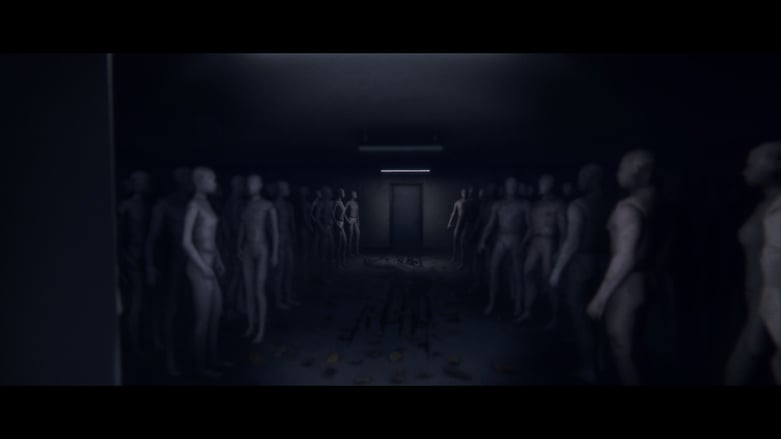
Project Songbird is an interesting, artistic experience that will challenge you and make you feel. While the gameplay isn’t the most creative or mechanically stimulating, every aspect of the game, from its visuals and soundtrack to the pair of enemies you’ll face, is composed of thoughtfully, purposefully designed elements that come together to tell a cohesive and important story. The game will, without a doubt, leave an impression upon you, but if you’re not into story-driven experiences, don’t expect the game to hold your attention as well as something like Resident Evil.
The Final Word
While the pacing can be a bit slow early, the mechanics feel somewhat uninspired, and the lack of direction can hinder you at times, Project Songbird still manages to be a great horror game, one with incredible artistic merit and deep symbolism. Come for a story worth experiencing, and leave with a lasting memory.
Try Hard Guides was provided a Steam code for this PC review of Project Songbird. Find more detailed looks at popular and upcoming titles on our Game Reviews page! Project Songbird is available on Steam, Xbox, and PlayStation.

Comments