Quartet is a turn-based RPG that manages to both stay shockingly true to the classic and introduce new mechanics of its own. This JRPG-style game from the creators of Shadows of Adam is packed with charm, and though it may feel slow in areas (a genre problem more than anything else, if you ask me), it rewards those with the patience to stick it out and play through. Fans who have been eagerly awaiting the release of Quartet will not be disappointed, as this love letter to the genre is as memorable and fun to play as the classics it was inspired by.
As you might imagine by the name, Quartet is a game that plays around a lot with the number four.
The game begins with a contextless raid on the castle of some evil emperor who plans on cursing the world to continue his reign, with four heroes joined together to stop it. This very stereotypical JRPG ending serves as a prologue to our story, which warns that something catastrophic is about to happen to the world’s magic.

The actual story begins a great deal of time later, in a world where magic has long since vanished, to the point where many believe stories of its existence to be nothing more than fairy tales. We learn this after playing through one of four introductory stories to our main characters, which can be played in any order, and introduce us to different ways in which magic has returned to the world. The first one I chose to play through featured one of our protagonists, Alex, struggling to take care of her sick mother and finding a magical deck of cards during a shady robbery.
These four character stories, once completed, lead into the game’s actual story, where your now a party of eight fights to stop a war and save the world.

Though I found a lot of the time spent on these early stories to feel slow, dragging on a bit longer than I would have liked, it’s probably the best way the developers could have introduced the game’s bigger concept of adventuring with a party of eight. In fairness to the title, the game really opens up and becomes more interesting once you reach this point, with the greater story becoming more gripping once all of the introductory build is done.
Mechanically, Quartet is a fairly straightforward turn-based JRPG. Different characters have different attributes and skills, and elemental abilities can be used to exploit specific enemy weaknesses. To make room for the game’s cast of eight heroes, you have the ability to switch your heroes in and out of battle, with four being present on the actual battlefield at once and the four in reserve getting an increase to their ability point restoration. The game essentially plays like the ’97 Final Fantasy VII if you could swap Cloud out for Vincent at any time mid-battle to make use of their specific abilities.

Outside of the swapping mechanic, there isn’t a whole lot done differently or incredibly originally in the combat system of Quartet. If you’re not a fan of turn-based combat, the mechanics in this game aren’t going to magically change that.
Something that is sure to have mixed reception is how the game handles bosses, who don’t have health bars but rather an unknown amount of health. When they’re lower health, they show it with an injured sprite, but beyond that, there’s really no way to tell how much health a boss has. It can give fights a sort of increased tension, and it began to grow on me, but it was definitely a slight roadblock in my strategic planning that I didn’t appreciate as much early on.

As far as the game’s writing and story go, I think Quartet is an exceptionally written RPG that manages to be especially interesting in its second half, albeit one that is rather slow in its introduction. The parts of the game that felt the worst to play, for me, were definitely the character introductions, whenever I was stuck in a dialogue selling someone soon-to-expire milk or investigating train robberies. While these moments feel slower, they don’t overall detract from the experience, and if you hold out through them, you’ll find yourself really appreciating the story once all the characters come together.
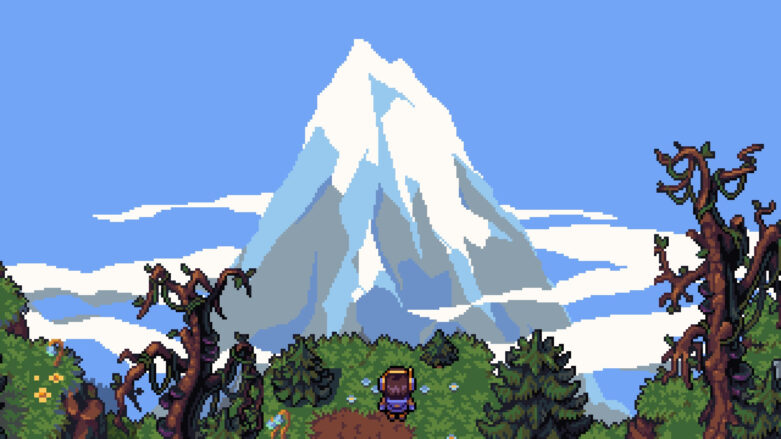
The game’s pixel art is gorgeous, but also almost hilariously enemy-sided, with your foes having full-body renders while your party is portrayed only as little pixel-chibis. While this is very reminiscent of classics in the genre, I did find myself wishing we could see more of our protagonists. Regardless, the art is incredible, and the enemy designs are especially interesting, only becoming more so the further into the game you get.
Quartet is an interesting and exciting turn-based RPG inspired by JRPG classics, and as nostalgic as it can feel, it can also show its age. Particularly, I found that the game didn’t work very well when alt-tabbing. Tabbing out and back in can occasionally break the WASD movement controls or have the “loss of focus” popup get stuck for a moment. While intrusive, these issues were fixed by just tabbing back out and in a few more times until the issues went away.
The Final Word
For a game all about the number four, Quartet packs in way more than four reasons to play it. The story builds into something surprisingly big, the combat has just enough twists to stay fun, and the characters feel alive in ways that matter. The first hours may test your patience, but stick it out and you’ll find yourself hooked. As classic as Quartet may feel, it is just as memorable as its inspirations.
Try Hard Guides was provided a Steam code for this PC review of Quartet. Find more detailed looks at popular and upcoming titles on our Game Reviews page! Quartet is available on Steam.

You should submit your review to OpenCritic so that the dev’s get even more visibility!
You can use Zikaron’s “Clairvoyance” to reveal boss HP bars, so it’s not totally obscured.
I knew something was nagging at me when I wrote that part. Thanks for the reminder!