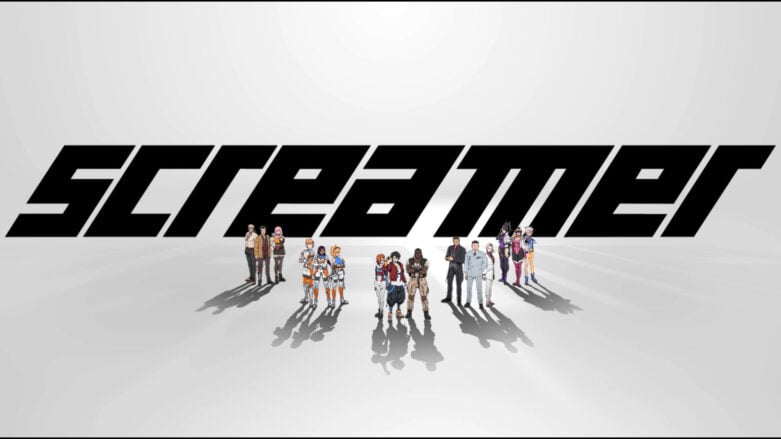
Speed Racer meets Tokyo Drift in Screamer, a high-octane racing game that delivers intuitive, arcade-style controls and a dramatic story featuring an incredible cast of racers. This title took me by surprise and quickly became my favorite in a genre I’ve always appreciated but never felt overly competent with as a player; in the process, it made me feel more in control of my car than I have ever felt in these games, without giving me the impression that I was being handicapped. The story captured my attention, the characters stole my heart, and I have no doubt they’ll do the same for you.
Screamer follows the story of an illegal street-racing tournament filled with the titular Screamers, which are highly modified and incredibly dangerous racing machines piloted by a cast of racers all competing for a one-hundred-billion-dollar reward. Much more than money is on the line, however, as each team entering the race has its own personal motivations for participating: longing, revenge, ambition, and more drive our colorful cast as they put it all on the line for a chance at victory, both esoteric and literal.
And what a colorful cast they are. I was immediately sold on the game’s huge cast of characters, each as flavorful and bursting with personality as the next. It’s hard to overstate just how incredibly interesting the racers of the game are, as each driver is more than an archetypal stand-in for the driver behind your wheel. Every team of three participating in the tournament has its own story, its own motivations, and its own styles, which are aspects that carry with them outside of the story mode and stick with you as you play them in arcade or multiplayer races.

The races themselves employ a combination of realistic vehicle control and arcade-style suspension of disbelief to create fast, hectic-feeling experiences. Tracks are well-designed with winding turns and incredible backdrops that capture a real sense of speed. The game also encourages you to bump, push, and crash your opponents off the track to create an outright dramatic feeling, especially in the later races of the story mode.
Something Screamer does that I found pretty intuitive is the way the game uses separate, independent controls for steering and drifting, handled by both the left and right sticks of a controller (I wouldn’t play this game with a keyboard and mouse). While I would never claim to be an expert in the racing genre or in how the games within control, I can say that Screamer made me feel more in control of my car than any game I’ve played previously. It didn’t feel like it was holding my hand, either; every failed turn or over-drift that sent me into the wall still felt like my fault, but I had the feeling that I knew how to correct myself and got a little better with each race.

Smooth controls are paired with an arcade take on shifting, which the game calls “semi-auto transition”. With your foot on the gas, you will shift up and down through gears according to how you build speed, but manually shifting while your speed is in a specific sweet spot rewards you with a speed boost. Paired with a nitro-like boosting system that rewards you if you complete a small quick-time event, the racing in Screamer feels much more involved than just keeping your car on the track. There’s almost a rhythm to the racing, and it’s one that seems to pair itself well with the incredible soundtrack blasting as you speed past the competition across the finish line.
Everything Screamer has to offer is paired with this incredible 3D anime style that builds a retro-futuristic, 90s-esque aesthetic, making the game stand out from other titles in the genre. There are certain areas where I think the lighting is a little too realistic and clashes with the aesthetic somewhat, but most tracks look incredible, and anything set in a city is bound to blow you away with just how gorgeous and stylized it looks.

Screamer starts out a bit slowly, using its first hour or so to introduce you to the mechanics and characters of the game, jumping you between perspectives and tutorial races as it allows you to get a feel for everything the title has to offer before really putting you to the test. Once you get past the extended introduction and really get into the game, however, I struggle to think of anything significant to criticize.
One thing worth noting is that players may need an Epic Games account to access the game’s multiplayer features. This is at least the case for those playing on Steam, and I imagine it will also be true for Xbox and PlayStation, though I don’t know that for sure. While it is a bit frustrating, I don’t think it’s a significant enough problem to warrant reducing the game’s score.

Screamer is a phenomenal racing game with mechanics that felt great to me personally and a cast of characters that are easy to fall in love with. Some fans of more realistic racing titles might not vibe with the anime aesthetic, but I struggle to imagine them not enjoying the game’s excellent racing mechanics and sense of speed. It’s a title that’s extremely hard not to appreciate and has become my new personal favorite in the genre.
The Final Word
Built upon the iconic and highly stylish tradition of racing anime, Screamer delivers high-octane, arcade-style racing with intuitive controls and an incredibly dramatic, colorfully cast story about a super-illegal, high-stakes super-race. Undoubtedly, my new favorite racing game of all time, I do not doubt that Screamer, like a shooting star, will fly out past the competition at high speeds and leave a long-lasting memory in the process
Try Hard Guides was provided a Steam code for this PC review of Screamer. Find more detailed looks at popular and upcoming titles on our Game Reviews page! Screamer is available on Steam, Epic Games, Xbox, and PlayStation.

Comments