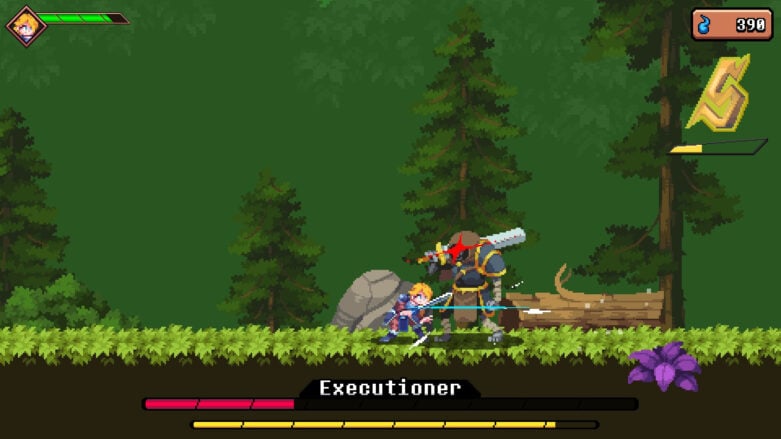
A lot of people will heroically say that they are, or wistfully wish for, a partner who would fight for them. A heroic person who loves you so much that they would stand back-to-back with you and fight off the world if they had to. I, however, believe we should all strive to wish for the kind of partner who would avenge our death; that is a whole different and romantically dramatic level of dedication that we all deserve.
Such is the dedication of the protagonist of SoulQuest, a grieving warrior who sets out to conquer the goddess of death herself to bring back the soul of her fallen lover.
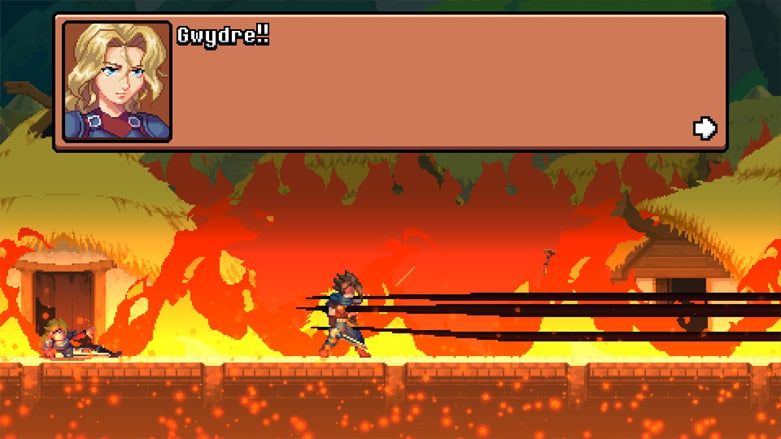
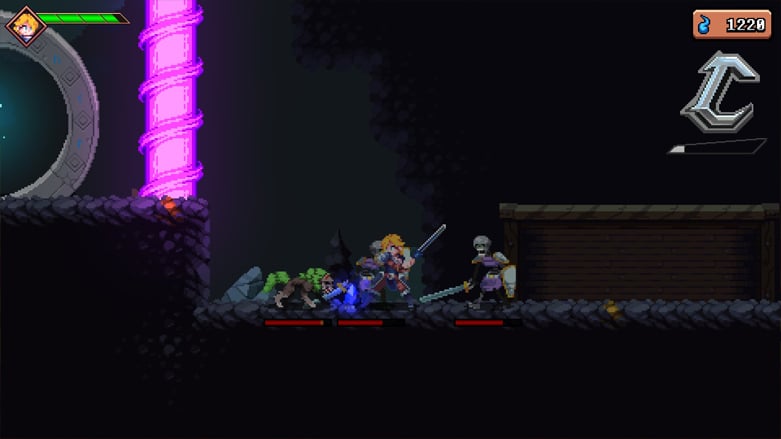
SoulQuest is a hack-and-slash character-action game that cleverly combines the score-rating mechanics of titles like Devil May Cry with the side-scrolling action and platforming of the Metroidvania genre. Each level takes you across a uniquely designed layout and challenges you to avoid traps and scale platforming pitfalls between epic fights against hordes of enemies.
This genre of game is made or broken by its combat system, and I am happy to report that SoulQuest actually features some incredible beat-’em-up combat. The style system wouldn’t work if the game didn’t have an intricate combo system, making creative use of light and heavy attacks for a variety of fun chain attacks. Mid-air combat is also exceptionally well done, and this was one of the few games where I actually really enjoyed juggling enemies in the air, rather than it feeling like a chore or flying enemies feeling like out-of-reach annoyances.
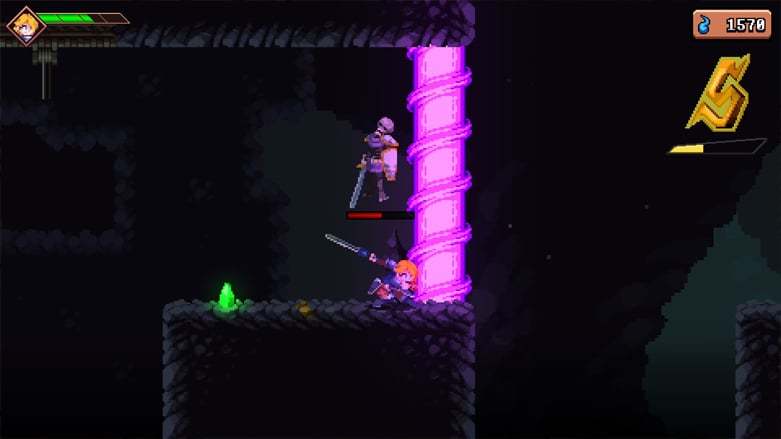
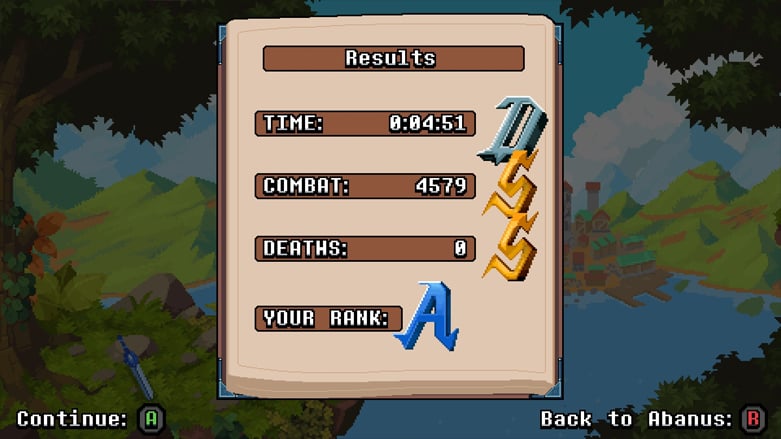
I keep alluding to the aforementioned Devil May Cry-like style system, which is a mechanic SoulQuest uses both in its currency and end-game score tracking. Pulling off flashy combos in SoulQuest rewards you with an ever-rising letter grade, which is your rank at the end of the level, as well as a multiplier that rewards you with souls for defeating enemies. Getting hit or taking environmental damage reduces your score, incentivizing you to strike a balance between flashy aggression and measured defense, dodging telegraphed enemy attacks and watching for falling rocks and other hazards not only to stay alive, but to top the charts in score and get all the souls you can get.
The gameplay as a whole is really fun and especially shines in the early game; however, later levels struggle with a design problem that can make the title exceptionally frustrating and may even push some players to give up on the game.
Namely, later levels have an issue of space. Small rooms become the location for big fights, where multiple large enemies that cannot be staggered swing heavy attacks with big hitboxes toward you, while you contend with many smaller mobs and a plethora of environmental traps at the same time. It can feel unfairly stacked against the player at times, and again, it is not a challenge that I think every player is going to be okay with facing.
It just wouldn’t surprise me if you played through these levels and told me that you felt like too much was being thrown at you all at once. The soul system, which is entirely reliant on your style points, can also feel like you’re being punished when you aren’t doing incredibly well. I personally wouldn’t change how the soul or style systems work, but again, I can imagine where it would frustrate a player already stuck on a difficult spot.
The platforming isn’t particularly difficult, but the game could use more checkpoints, especially on longer levels. On the rarer occasion that you do miss a platform and fall, it can be a little frustrating just how far back the game sends you.
While the overall gameplay is pretty solid, balance issues notwithstanding, I would highly recommend you skip out on SoulQuest if you don’t have access to a controller or can’t pick one up to enjoy the game with. It just simply doesn’t feel quite as responsive or fun on a keyboard: it is a game meant to be button-mashed on a controller, and you won’t get the full experience, in my opinion, without it.
The art is incredible, and I think it shines the most in the attack animations and effects. Big, wide-arched sword swings and flashy spells and special attacks fill the screen and are gorgeous without being too distracting. I wish I could have captured it better in my screenshots, but the combat is so fast I wasn’t quick enough to hit my screenshot button when I really wanted to. Check out some videos, as the game looks way better in motion.
Though I have my criticisms of SoulQuest, I can’t say that they overly affect the enjoyment of the game. Yes, the difficulty spike later in the game can put some players off, and it has a habit of being frustrating because of design flaws. These segments can feel like they punish you solely because they’re cheap, rather than offering a real, manageable challenge. Regardless, I still feel like a lot of players are going to enjoy SoulQuest: the combat is solid, the pacing in most levels is really good, and the less-than-perfect level designs later in the game are a problem that you don’t have to face for a while and one that not every player will hate quite so much. Definitely check the game out if it’s caught your interest, because I do think it’s worth your time.
The Final Word
SoulQuest presents excellent beat-’em-up action mechanics, serving as a unique and exciting new entry to the character-action game genre. Though some later levels can have some cheap-feeling difficulty spikes, the game in general is solid and very worth your time if it’s caught your interest.
Try Hard Guides was provided with a Steam code for this PC review of SoulQuest. Find more detailed looks at popular and upcoming titles on our Game Reviews page! SoulQuest is available on Steam.

Comments