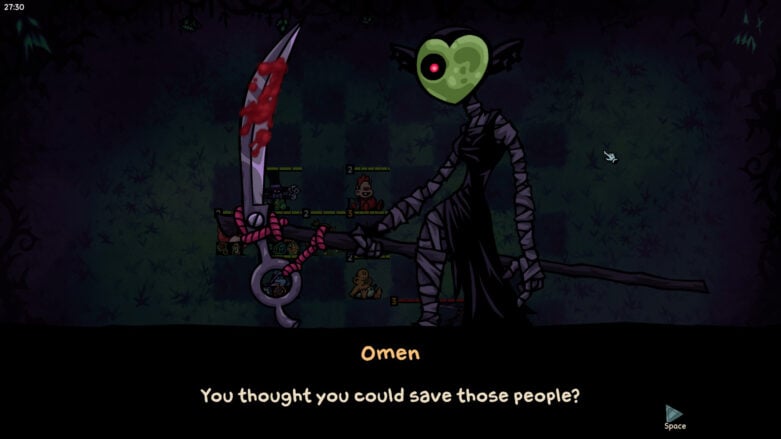
Underboard is a roguelike auto battler set within a twisted game played in the underworld. The second title released by two-person indie developer Headless, the game features great hand-drawn art, fun character designs, and even some nice references to other media that reminded me of the spirit of old Newgrounds classics. This is paired with a synergy-heavy, character-collection-driven auto battle system that rewards careful positioning and thoughtful investment into the characters you pick up, with RNG being a big factor in how you build a team.
There are quite a few auto battlers out there, and while all of them are different in their own way, it’s safe to say that a few follow similar formulas. In the case of Underboard, I don’t think it’s unfair to compare the title to the popular Riot auto battler Teamfight Tactics. Both games share a sort of mechanical DNA, where characters have “traits” that contribute to a team-wide synergy, their own unique stats, and a special ability that triggers by filling a resource bar in combat. These characters can also be enhanced by items that improve said stats or add additional traits.
One big difference is that in Underboard, traits are not character-specific, but rather each time you discover a character during your runs, they have different, randomly assigned traits.
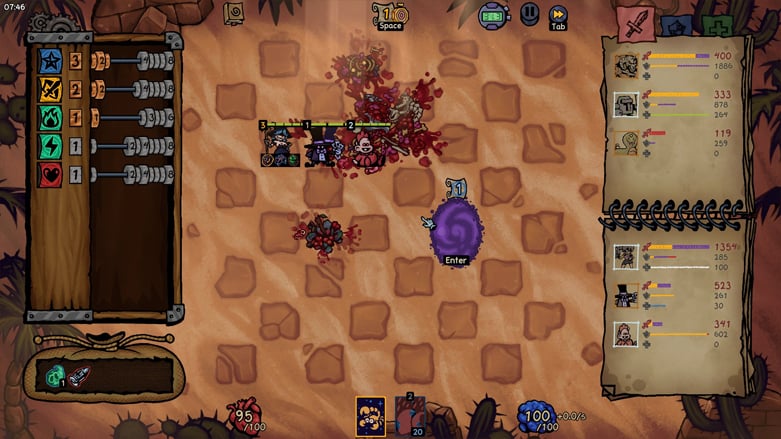
This can both be a bane and a benefit for a run, and it adds a lot of additional RNG to the rewards you find. While a player building a skill-power-heavy team might like picking up a character with direct synergy to that build, others might want the character clearly designed for melee attacks and crits to not have traits that buff casting spells or tanking. Thankfully, the game is fairly generous with reroll rewards, so with a little work, you can turn the RNG in your favor without warping your builds too much.
While the game has a lot of items and synergy possibilities to keep your builds interesting, I think it kind of suffers in the area that is most important for a title of its kind: character variety. Underboard has a total of 14 characters, not counting the special form each character gets when hitting level 3, but a handful of these characters are so rare that you’re not likely to see them in your runs. While it’s cool that these special characters are Easter eggs referencing other media, the game quickly becomes stale when you’re running with the same characters over and over again.
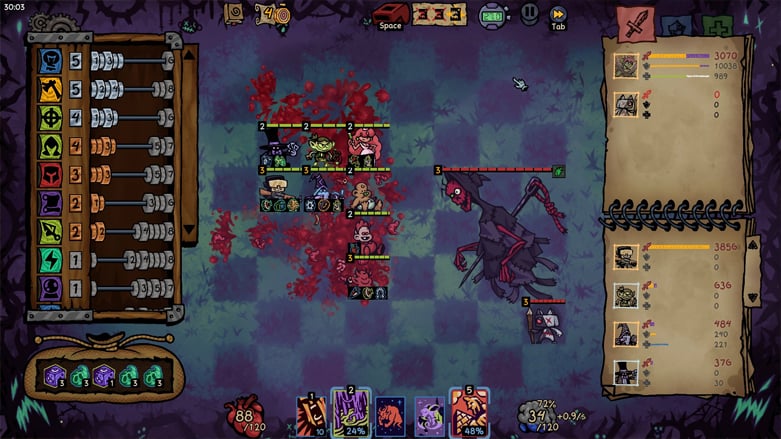
Considering how fantastic character and enemy designs are in this game, I really would have liked to see even more available to collect and try new synergies with. Instead, I was essentially running Ninja, Baby, and Nurse in almost every run.
Progression within your run is also pretty underwhelming, stunted by how the game chooses to handle character levels and XP.
Each character can get to level three, which greatly upgrades them and turns them into the powerhouses you build your entire party around. However, XP and levels are sort of just handed to you, not earned. XP is given after each battle, but you can only fight a certain amount of them per stage before you have to fight the boss and move on, turning the level-up system into more of a finite currency, of which you’re given the same amount in each run. It’s not a reward for choosing to take extra battles, and it often is more valuable as a tool used to reroll rather than level up your characters.
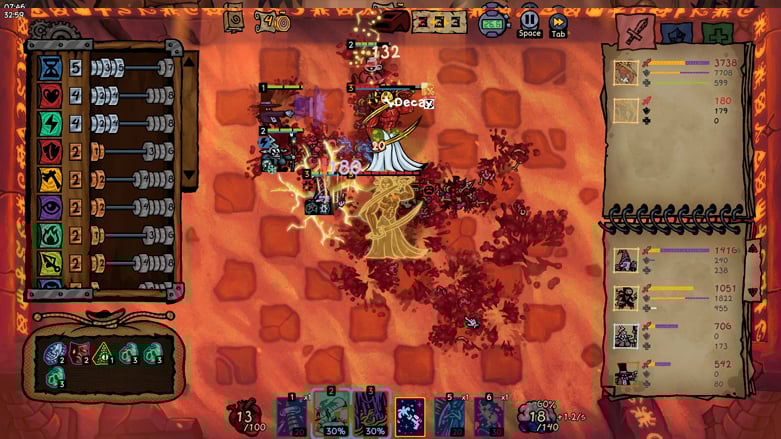
What’s worse is that said XP can only be used to level a character from 1 to 2, with the third level being an even more finite reward delivered to you upon clearing each boss.
With very few exceptions, you are essentially always getting the same XP per run. While choosing to spend it on levels or rerolls is something of a strategic decision, it doesn’t feel like it has as big of an impact as it should, nor does it feel like a reward actually earned based on performance. Because you get the same each run, you will essentially always have the same number of levels when you get to the final boss, making your strategic choice more about positioning and team composition than how much time you took to prepare your party before arriving. There is no risk-reward system for taking battles because the battles have no reward, making them feel more like tedious roadblocks to the boss fights rather than a rewarding endeavor.
Underboard is a fun auto battler, especially in the first few hours. Unfortunately, I did ultimately find myself disappointed when I found that I had discovered everything there is to discover early on, especially when it comes to new characters. With character design being the strongest point of the game, I would have hoped that there would be a lot more to find and play with, similar to Vivid World, which I reviewed last November. I also found that the way the game chose to handle its progression made my runs feel too same-y and didn’t challenge me, or even allow me, to take extra risks for better rewards.
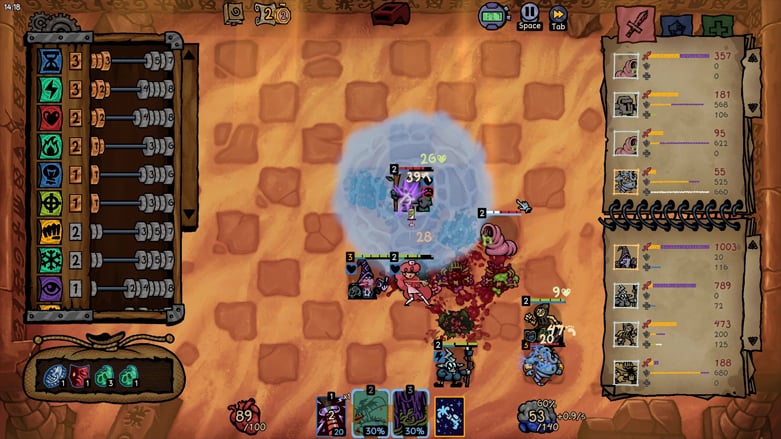
That being said, I continued to have fun with Underboard, testing out synergies and rolling for those rare few characters until I finally found myself hard-stuck on a later boss. Though I would say those aforementioned aspects of the game felt disappointing, the disappointment was never due to the game being buggy, poorly designed, or unfun, but rather it felt like there were areas in which the game simply could have done more to live up to its potential.
While the game is a fully released product, I would like to come back to it in a few months to a year and see if anything new has been added. If it’s caught your interest now, though, I highly recommend you give it a try.
The Final Word
Underboard is a strong roguelike auto battler, featuring some fantastic art, great character designs, and fun-to-execute synergies. While I wish the game had a few more characters in its playable roster and some better progression, I still enjoyed the time I had with it and I’m delighted to see what comes from these developers next.
Underboard was reviewed on the PC. Find more detailed looks at popular and upcoming titles on our Game Reviews page! Underboard is available on Steam.

Comments