
There is an episode of Black Mirror where a video game tester tries out a new virtual reality horror game that uses the user’s own personalized fears to scare them. While I am sure it is not the first piece of media to use this concept, it is the first one I think of when I imagine “AI makes a personalized horror game” as a scary story prospect. Take that prospect and turn it into an actual video game, and you have A.I.L.A.
To be clear, A.I.L.A. is not an AI-driven horror experience that reshapes its world around your own personal fears and biases. That would be terrifying. Instead, it is a horror game built around that promise. You play as a video game tester who is playtesting the A.I.L.A. system, an AI driven video game that adapts itself around the user’s shared information and decisions. You will play through several different horror scenarios as the machine begins to figure out exactly who you are and how it can scare you.
A.I.L.A is a game with as many strengths as it has weaknesses. The game has an incredible start and sets the tone for what could have been one of my favorite horror games of all time. Unfortunately, it does not carry this baton all the way to the finish line, fumbling hard in the second act.
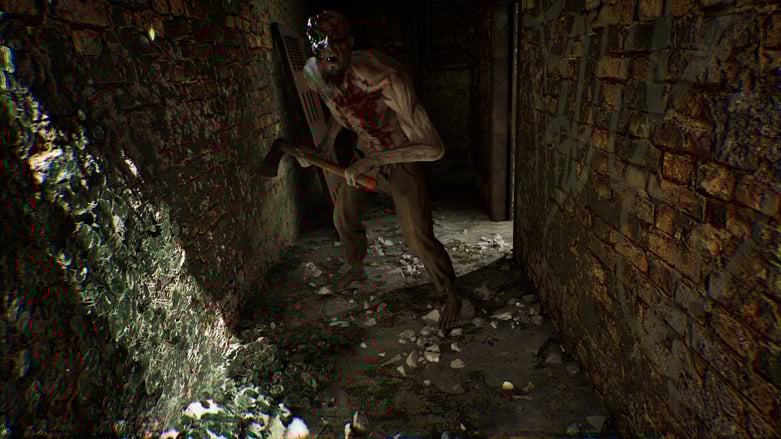
Starting with its strengths, A.I.L.A has some incredible set design. Some of the best moments in A.I.L.A felt like going through a haunted house at Universal Studios, and I mean that in the best way possible, with tight, well designed sections full of scares that actually got under my skin and preyed upon that hesitation to move forward.
Nowhere was this more true than in A.I.L.A‘s first horror segment, a sort of abandoned hospital setting that never took up more space than a few rooms and a hallway. This area was so cleverly designed and so masterfully executed that it set my expectations for the rest of the game very high.
This section of the game was heavily saturated with psychological horror. It not only messed with my brain, establishing that anything could happen, which legitimately gave me a fear of the unknown, but also asked me questions that lingered throughout my playthrough. This is by far where A.I.L.A was at its best and should have continued to be this way throughout.

The fact that A.I.L.A uses a video game as its setting allows it to explore multiple genres of horror, from slasher flicks to alien invasions and P.T.-like sanity horror. This on its own is a really great idea and is executed well throughout the game as far as visuals and physical level design and set design go, especially in the very first segment. It would have been clever for A.I.L.A to switch up its gameplay from segment to segment, but it quickly starts to follow the same formula after the game’s second act.
Unfortunately, this second act not only sets the tone for the rest of the game but feels like it was created by an utterly different team.
While the sets remain solid moving forward, I am reminded of the game’s store page, where A.I.L.A claims to be “THE NEXT GENERATION OF HORROR” with an “immersive, photorealistic experience that takes the player to the edge of horror.” I then remember watching the janky, awkward animations on the human models, with fingers that do not function like fingers and arm movements nobody would make, and I am left questioning that statement.
The biggest issue with A.I.L.A after its first act is that the game completely drops its psychological horror elements and instead becomes an action game. The fear of moving forward through tight, cleverly designed spaces with smart puzzles that force you to make yourself uncomfortable to complete is replaced by guns, easily dispatched hordes of enemies and, I kid you not, boss fights.

Again, this is such a dramatic change of pace that I cannot imagine the same teams were involved with each part of the game.
Without the incredible level design and fear inducing psychological elements of the first level, all of the cracks in A.I.L.A start to become more visible. You begin to notice the amateur, though not terrible, voice acting more than you did before. The production value seems to fall apart, and you start to notice errors not meant to be caught by the player’s eye, like enemies T posing and freezing up during cutscenes when they are not supposed to move. The writing seems to become predictable, to the point where the segments feel like horror tropes more than homages. Everything just becomes so much more awkward so quickly and does not go back to the quality of the first act.
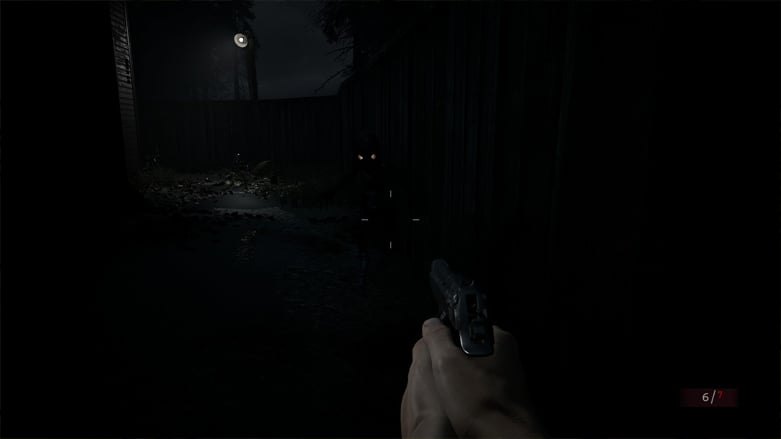
What is so much worse about the game’s decision to suddenly become an action game is that the controls are not built for an action experience. Moving is slow, the combat is clunky and unexciting, and the guns do not even feel good to use. The experience is not balanced to remain scary despite the character being armed, as in, say, Resident Evil, with enemies that are either easy to dispatch or are bullet sponge bosses that feel very video gamey rather than threatening.
The tragedy of A.I.L.A is that it is not a bad game; it just sets itself up to be better than it is. You could play it through to the end and probably have a decent enough time throughout. It is not, however, the next generation of horror, and it fails to live up to the incredible standards set by its very first act. If you want to give the game a try, I still recommend it, with the caveat that about an hour or so in, you might find yourself losing interest and deciding to watch the story on YouTube or something instead.
The Final Word
A.I.L.A features an incredible first act filled with psychological horror and clever puzzles, making for one of the better horror games I’ve played. Everything after, however, is just a fine, bordering on boring and clanky action horror game that simply fails to be as good as what came before. Still worth a try if the game caught your interest, you just might find yourself disappointed after the first hour.
Try Hard Guides was provided a Steam code for this PC review of A.I.L.A. Find more detailed looks at popular and upcoming titles on our Game Reviews page! A.I.L.A is available on Steam.

Comments