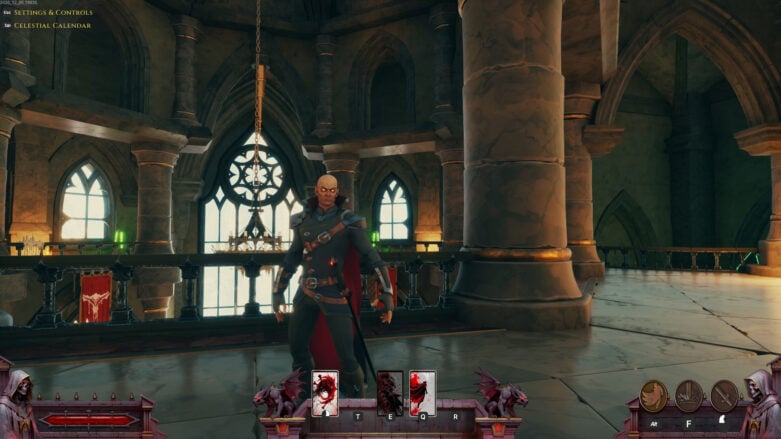
Deadhaus Sonata is, perhaps, one of the most interesting titles I’ve had the chance to review in my time as a gaming journalist. This is due in no small part to the massive legacy the game carries on its shoulders, being directed by Denis Dyack, the creative mind behind Blood Omen: Legacy of Kain and Eternal Darkness: Sanity’s Requiem, and being very open about its connection to these past projects in its marketing. When you pair this legacy with the game’s supreme ambition, as described by the Early Access roadmap on the Steam page, Deadhaus Sonata quickly paints itself as a game with a lot to live up to. While I’m certainly curious to see if it does, the current Early Access build left me cautious, albeit optimistically, about its ability to be everything it says it will be in the relatively short 18 months it promises to deliver.
In my recent reviews of the Legacy of Kain remasters, I’ve said (multiple times and very emphatically) that while the upscaled graphics are nice, I would love to see an actual full-on remake or even a reboot of the games, bringing their iconic style and mechanics into the modern era. I can definitely say that Deadhaus Sonata is the closest thing we have to a modern Legacy of Kain remake now and probably for the foreseeable future.
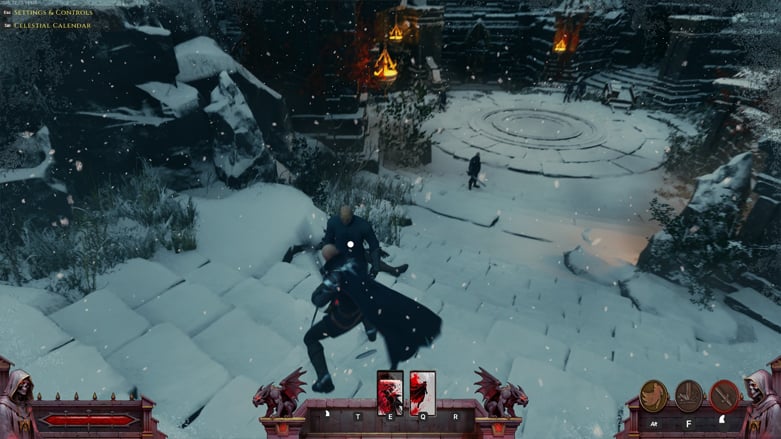
Everything about the game feels like what it is: a modern title built by one of the creative minds behind the original franchise. The combat, the world, and its gorgeous, unapologetically gothic style, and its brutal depiction of vampires all allow players to really feel like they’re in the shoes of a villain, not a morally grey protagonist or a so-called antihero who forgot to stock up on the “anti.”
Mechanically speaking, the game should feel right in the hands of anyone who played the classics, albeit with some modern reinterpretations, such as the ambitious tarot card system (which, if I’m being honest, I couldn’t properly describe to you, the reader) and the almost roguelite way in which it handles missions, allowing you to venture out into small, story-driven levels from a central hub rather than through a more traditional campaign. The title is also multiplayer, with several playable classes coming later; the vampire is just the first dark creature you can play as. I’m really looking forward to what else the game depicts for our villainous protagonists.
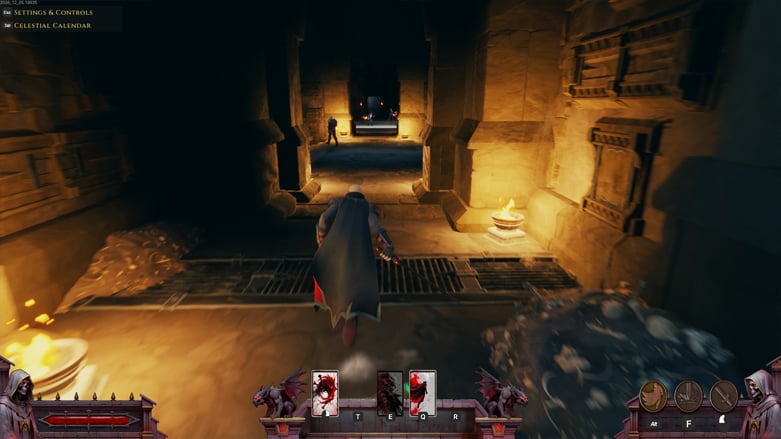
It’s safe to say I’m looking forward to much of the content promised in the Early Access roadmap. It would appear that Deadhaus Sonata not only wants to be a fun campaign title, but an extremely ambitious, community-driven title with endless player-created support. It boasts the future ability for players to create dungeons, cities, and items, essentially allowing for endless community content that would give the game an almost timeless nature. This is, of course, on top of areas in which the game is promised to improve as well, with new enemies, more levels, “hundreds” of upgrades for your weapons, and many more features, all on top of the game being completely free, with just cosmetic purchases paying for it all.
It is incredibly ambitious, and as I said in the first paragraph, I am cautiously optimistic about the game’s development. I would love to see the title go in all the directions it promises to, and to see all of this content come to life. However, the impression the current playable version of Deadhaus Sonata gave me didn’t fully convince me that all of this could be delivered in just the 18 months it was promised.
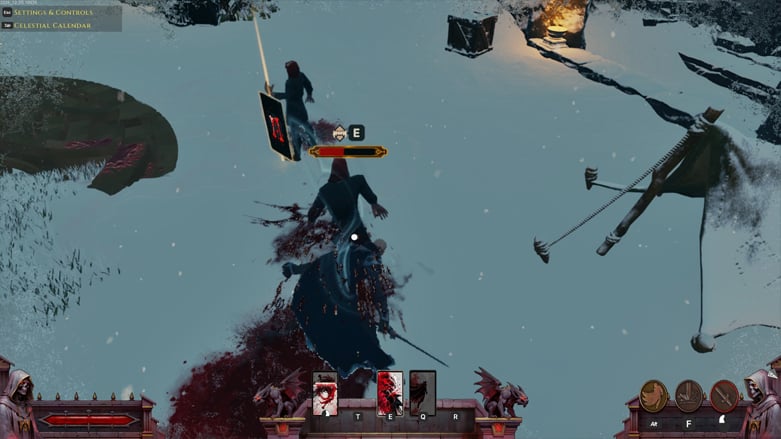
The current build of Deadhaus Sonata, like any Early Access game, has its problems, the most notable of which is the game’s performance, as it is very poorly optimized and was almost impossible for me to run on my rig in any area with snow and a lot of enemies. This, alongside the placeholder UI, is obviously something I imagine they will address very early in development, so I’m not worried about it. Still, you are, of course, reading this review for an account of how the game currently is, not what it will be down the line.
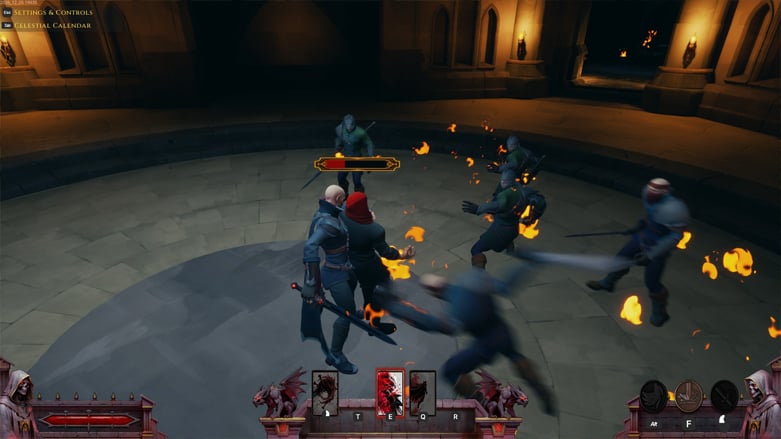
The game’s combat shows a lot of potential, but in its current state, it is very underwhelming and unpolished. It feels a lot like the dated combat of the original Legacy of Kain games, with the addition of admittedly very fun abilities, which is where it shines the most. Outside of these abilities, though, it’s a lot of mindless hack and slash with little to no feedback: enemies don’t appear to stagger (or if they do, it is very inconsistent), making your supposedly powerful vampire strikes feel, at times, like smacking a punching bag with a rolled-up newspaper. It does not help that enemies are often very tanky, making combat against certain foes and larger groups feel like you’re trying to punch through a concrete wall that occasionally interrupts you by punching back.
The already simplistic combat is made worse by the fact that I found dodging, one of a handful of interactions possible in melee, to be an almost pointless mechanic. Often, I found myself swarmed by a horde of enemies in Deadhaus Sonata, and rarely did I feel the need to disengage or do anything besides spamming my attacks. When in doubt, jumping between enemies with finishers or bites restored my health and trivialized the already feedback-starved combat.
Combat feels the best when using the creative abilities and executing finishers. However, finishers are easy to abuse in large crowds, and often the animations are interrupted, not by being hit, but by some invisible force I simply couldn’t see or by me spamming the button to trigger more. Since these finishers give you invulnerability frames and restore your health anyway, I think the combat would be much stronger if enemies had smaller health bars, physically reacted more to your hits, and died faster. The difficulty can come from harder hits or large area-of-effect attacks, incentivizing your dodge mechanic and killing foes quickly. I personally believe this would feel a lot better than the game’s current state, where you just bash crowds of high-health-pool enemies until you can chain heal off finishers.
I know I’ve said it a lot, but the way the combat currently lacks any feedback to attacks is certainly the most disappointing aspect. It makes every swing feel weightless, lacking any kind of impact, and really kills the brutal fantasy the game is going for.
Besides this, the game is missing small but important quality-of-life choices and mechanics that you simply need in a game like this. Tracking your mission objectives within a level is just something you can’t really do, which can make progressing hard unless you properly interpret the prose-heavy narrator when he tells you to do something. Bugs abound, which is of course to be expected in an Early Access game, and my playthrough of the roughly three hours of gameplay present was cut short when I ran into a large invisible wall preventing me from going further into the level.
Deadhaus Sonata is ambitious. I do believe, given time, that the title can meet all of its goals as well and become a truly incredible and nostalgic game, a real spiritual successor to the Legacy of Kain franchise. However, I’m not totally convinced it can do it in just 18 months, and there are significant changes I would want to see made to the game as it is before the more ambitious additions get added. I will say it once more: I am cautiously optimistic about the game’s future, but I would warn interested players about jumping into the Early Access build so early, as what the game has to offer now might give you a bad first impression of what there is to come.
Pros:
- The truest modern successor to the Legacy of Kain franchise
- Nostalgic gameplay and worldbuilding with modern twists
- Promising multiplayer potential with the upcoming addition of more classes
- An incredibly ambitious roadmap that promises lofty community creation support in addition to expanded game content
Cons:
- Missing some content in the current Early Access version, with more to come
- Bugs and poor optimization in the current build
- Combat in the current build is underwhelming, with admittedly fun abilities but poor standard mechanics and a lack of much-needed feedback and balance.
- With a lot of work to be done and an incredibly ambitious roadmap, I foresee delays on the game’s promised 18-month development time (though I would love to be proven wrong)
Try Hard Guides was provided a Steam code for this PC Early Access Review of Deadhaus Sonata. Find more detailed looks at popular and upcoming titles on our Game Reviews page!

Comments