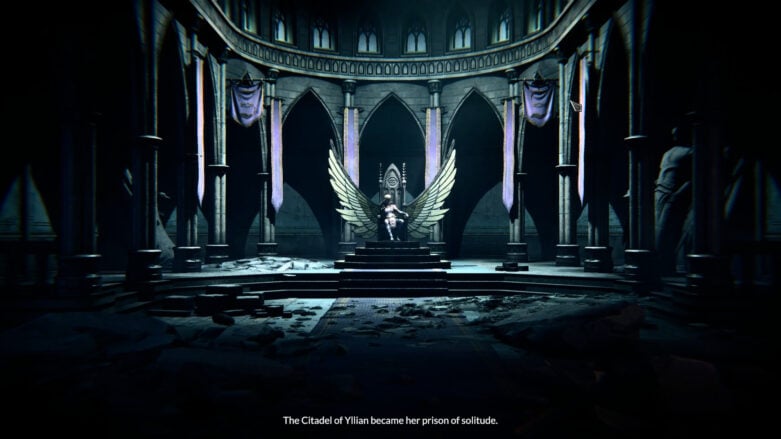
Disciples: Domination is a turn-based strategy game that challenges you to rule and adventure throughout a kingdom of your own, making decisions from your throne room and fighting battles on the land itself with a party of your own design. With some unique mechanics, Disciples: Domination could easily make fans out of some first-time players, even with its flaws. However, as a sequel, the title doesn’t do enough to win over its core audience and strays away from some aspects players came to love in the game that came before.
The game continues the story of Avyanna, a queen who has freed her newly ruled lands from the grip of merciless gods. However, fearful of her own power, Avyanna has more or less abandoned her throne, leaving the lands to rule themselves. Now, with her subjects in despair, Avyanna must return to her responsibilities while tracking down a mysterious new threat to the land itself.
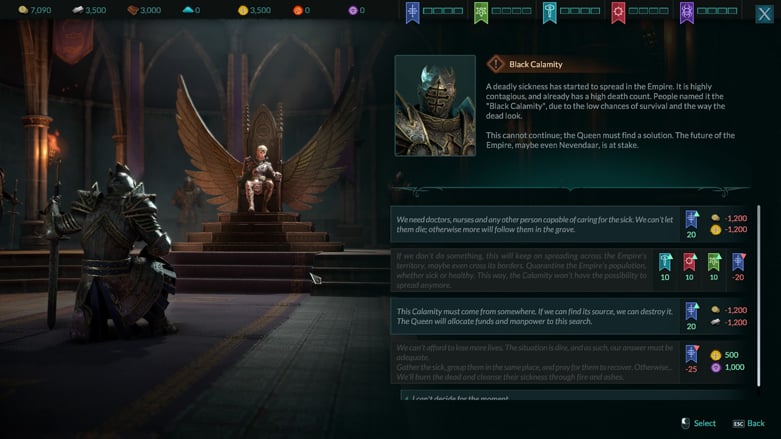
Mechanically, much has remained the same in Disciples: Domination. The game plays as a turn-based battle game where you creep across campaign maps, completing quests and fighting battles as they pop up in your path.
Each combat segment uses a currency called action points, which are split across three different types with different uses. One is exclusively for movement, one is exclusively for abilities, and one can be used for either. Each character in the game has a different assortment of this currency, making their playstyles unique. It’s an interesting system, but it punishes movement hard, especially when a character’s movement resource is used even if they don’t move the full allowed distance in a turn.
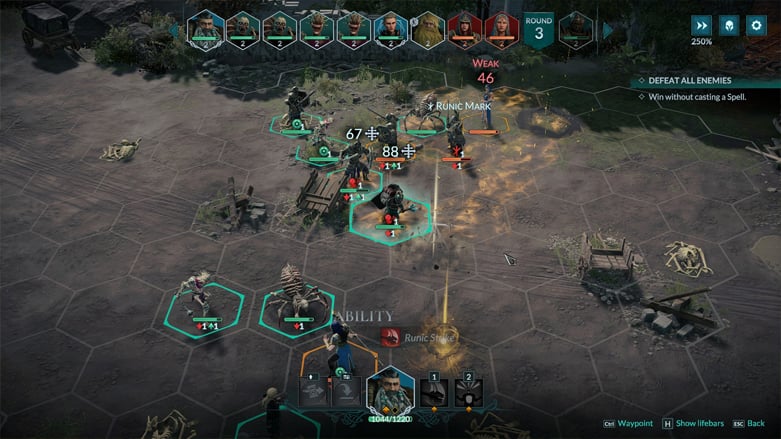
Combat, in general, feels pretty slow. Most units have just two abilities, which generally are a bit underwhelming to use and do little damage against enemies with wide health pools and a lot of defensive abilities. Many of the enemies in the game are ones you yourself can recruit, which is cool in theory, but it quickly leads to a sort of tedious loop as you fight with or against the same characters over and over again. The game starts to feel kind of tedious as early as the first chapter.
The game uses a castle upgrade system that can quickly make the game really grindy, as you chase down materials needed to make simple decisions or upgrade buildings to get the units you want. This system itself reminds me of a lot of mobile games, which is not a compliment.
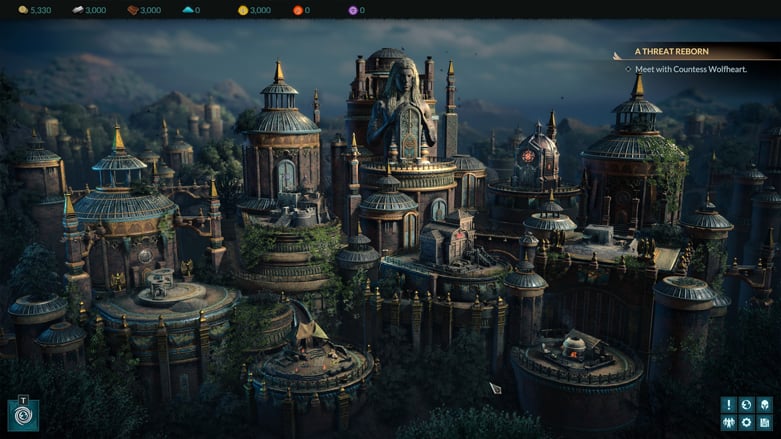
Unique to other games in the genre, Disciples: Domination does not have you play with a party purely comprised of unique named characters, but instead has you recruit expendable and upgradeable soldiers from several different factions, each with their own small troop tree to unlock. Avyanna herself is a highly flexible unit with access to a host of powerful spells and different classes, with the necromancer Witch class being my favorite.
Changes to Avyanna as a character are perhaps the biggest departures made from Disciples: Liberation. The first title saw Avyanna grow into a powerful queen and allowed players to develop her personality as they saw fit, even if it meant turning her into a ruthless anti-hero bordering on villainy. In Disciples: Domination, her personality is static, and she is written and acted in such a way that paints the picture of a young, bubbly, and naive hero rather than the hardened queen the first game would have you believe she became. The character doesn’t feel as though she’s grown at all, and in fact feels like an odd departure from who she was by the end of the first game.
When I say Avyanna’s character changes are the biggest departure from the original, I mean it. The game’s mechanics, spells, and unit roster are a near-complete reskin of what was available in Disciples: Liberation, with even fewer units to play with. The game plays so similarly that it could very well have been considered a graphically enhanced expansion rather than an entirely new game.
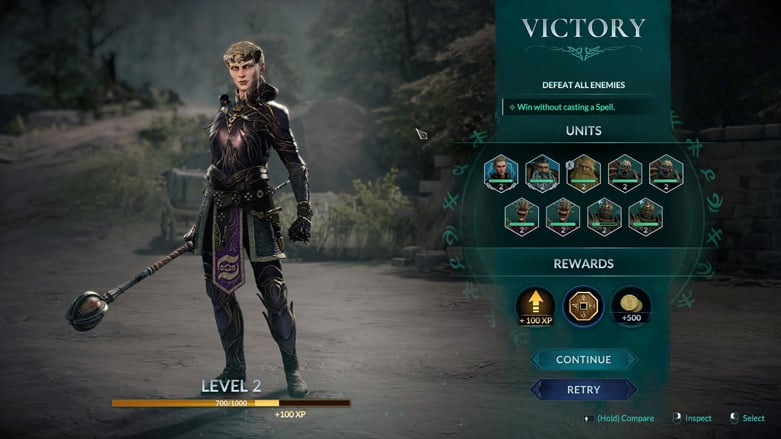
The biggest thing to draw in returning players would be the new story and writing, which honestly is kind of hit or miss, and more often misses. I unfortunately found myself skipping through dialogue pretty early on, which I really hate to do in story-rich games.
Disciples: Domination is something of an oddity of a sequel, existing in this strange middle ground of potential audiences. For newcomers to the series, Disciples: Domination could be interesting, showing off some unique mechanics that are solid in a vacuum. For returning fans, however, the game simply doesn’t do a lot differently, and in fact cuts down on the content from the original. It begs the question of why Disciples: Domination was a sequel in the first place, instead of simply serving as a standalone title within the universe of this franchise, and it makes me wonder why anyone should play this sequel over the game that came before.
As it stands, Disciples: Domination simply doesn’t add enough to justify its existence as a sequel. Fans of the game that came before are likely to be disappointed by the lack of changes, and even more so by the few things that have changed. While the title may be more appealing for newcomers, it still has its problems, and I’m left wondering what justification players would have picking up Disciples: Domination rather than just playing the game that came before. It’s a lot better.
The Final Word
Disciples: Domination can feel slow, tedious, and grindy at times, but fun can still be had in its unique party recruitment mechanic and highly customizable player character. However, it doesn’t change enough from the game that came before to justify its existence as a sequel, and may even feel like a disappointing departure for returning fans.
Try Hard Guides was provided a Steam code for this PC review of Disciples: Domination. Find more detailed looks at popular and upcoming titles on our Game Reviews page! Disciples: Domination is available on Steam, Xbox, and PlayStation.

Comments