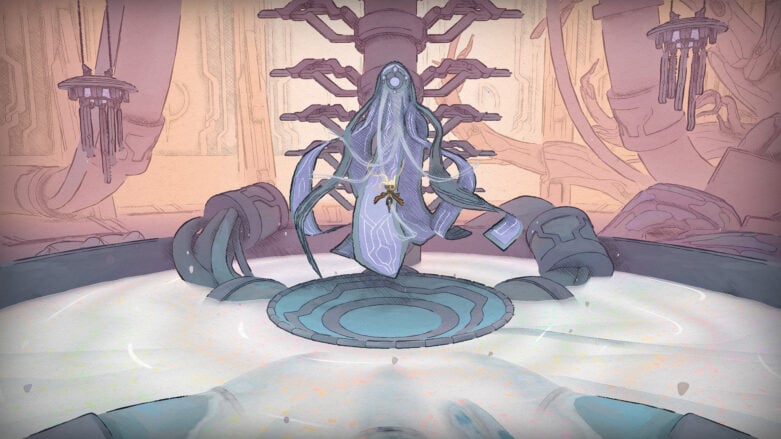
Who doesn’t love robots? The fictional ones, at the very least. If Wall-E and the beloved Yes Man of New Vegas fame haven’t given you a soft spot for humanized robotic characters and the excellent stories they can tell, well, you’re probably not someone I’d want to hang out with.
MIO: Memories in Orbit is one such story, taking place on the Vessel, a massive “ark” filled with mechanical beings, many of which have gone rogue. As the titular MIO, a machine of a rare and unique design, it’s up to you to restore the facility to working order and discover what drove it into the depths of mechanized madness in the first place.
If the way I’ve chosen to start this review isn’t evidence enough, one of my absolute favorite parts of MIO: Memories in Orbit is the game’s characters. Robots all, the game’s cast of both hostile and friendly machines makes for a surprisingly personality-filled bunch. The developers and artists behind the characters clearly have a keen talent for implying emotion without the use of human features, mainly through animation. For as expressive and human as these droids feel, they also have a unique bug-flavored design philosophy, mimicking fireflies, centipedes, and other insects without ever betraying that clearly robotic look.
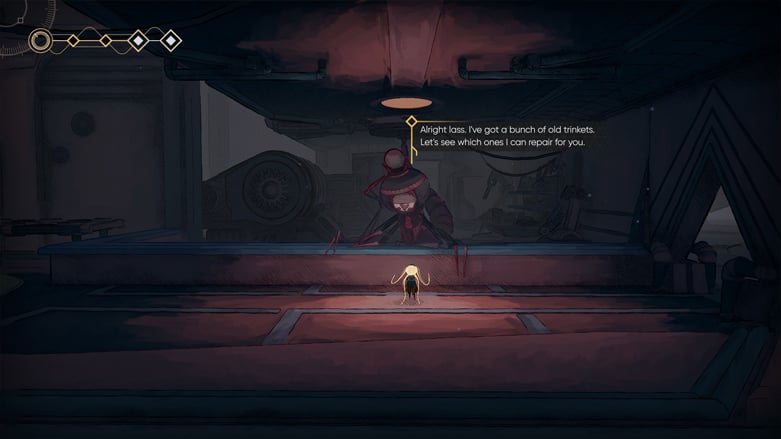
My praise for the game’s robotic companions aside, it can really take a lot to impress me in a Metroidvania title. If you’ve read my past reviews, I’ve noted that the genre has a habit of producing some incredible art and is often used as a vessel for great storytelling. However, I feel as though games in the genre often do little to actually reinvent or challenge the mechanical norms, with some game design tropes being grandfathered into the genre and very few developers feeling the call to challenge them.
MIO: Memories in Orbit is certainly no weaker than its genre cousins when it comes to storytelling and art. The game’s tale of a technological superstation falling apart, and the machines connected to it having a physical, emotional, and almost religious connection to its inner mechanisms, is really interesting and definitely engaged me with very little effort.
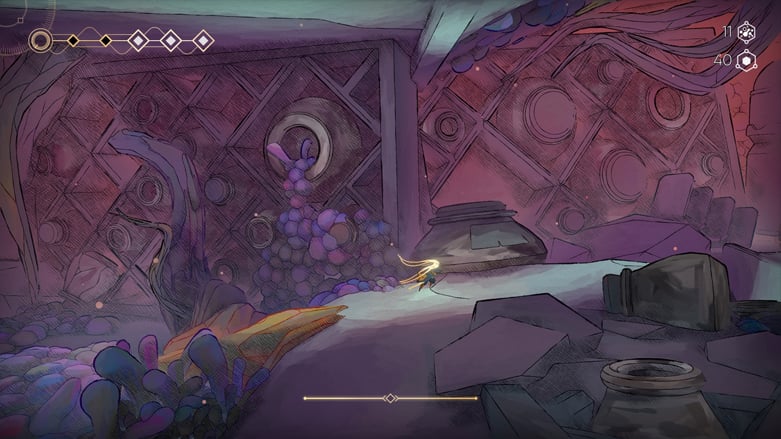
The artwork blends 3D and 2D with a really delightful cel-shading style that I never got tired of looking at. The look of being on a dilapidated, hostile space station is seamlessly blended into the game’s platforming as you navigate busted pipes and fallen rubble. The game does a good job of keeping things immersive, with the platforms looking like they are really part of the environment, without being too focused on aesthetics to the point where you can’t tell what you can or can’t jump on. I also felt like the game’s use of color was great, with each zone feeling unique and sporting its own palette.
That being said, I found myself surprisingly invested in the gameplay of MIO: Memories in Orbit, the area in this genre I usually find the weakest. I chalk this up mostly to the game’s strong platforming, which incorporates a good sense of movement with the game’s solid double-jumping and grappling mechanics. The different levels incorporate their own twists on the platforming, too, and I was particularly fond of the game’s icy segments, which use a lot of momentum to give the player tons of speed and make use of super-far slide jumps in its platforming DNA.
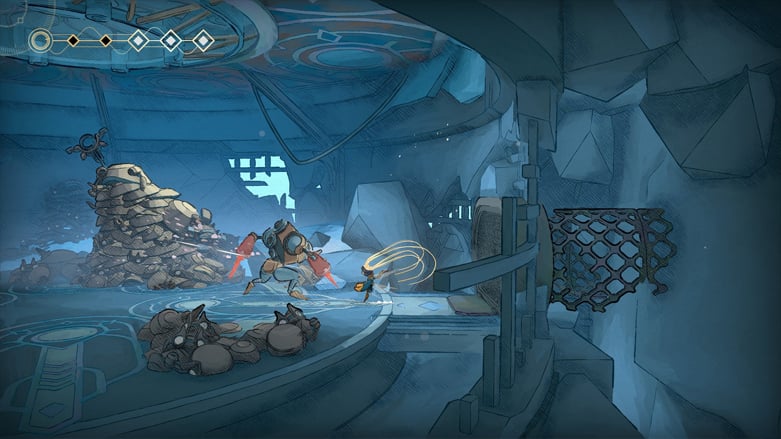
Ironically, MIO: Memories in Orbit does away with a lot of systems Metroidvania fans have come to know, which can make the game feel very different from the genre veteran. The game doesn’t feature checkpoints, sending you back to the hub or start of the game on each death and expecting you to retrace your steps. Upgrades are also limited, but this runback mechanic is one that I feel genre fans are going to be the most upset with.
Surprisingly, it didn’t bother me much, despite how much I usually dislike runbacks in these games; the platforming was fast and the paths short enough that I could retrace my steps with relative ease. That being said, I definitely would have chosen checkpoints over no checkpoints if given the choice.
MIO: Memories in Orbit is a game that seems to demand patience, and for some, that can come off as unnecessarily difficult. The currency used for upgrades is completely lost on death (though losing it progresses the story in a unique way), the combat is rather basic, and permanent health loss paired with paid healing can make MIO: Memories in Orbit feel a bit alien and punishing to genre fans.

If you ask me, it’s a title that really wants you to appreciate the world around you and the solid platforming. It wants you to find the quickest ways back and forth from your hub, take your time with enemies, and take the world in as you experience it, even if you do it over and over, and over again. If you vibe with MIO: Memories in Orbit and take your time with it, you’re going to have a good time. If you’re challenging yourself to rush to the ending, you might find the experience more punishing than it is enjoyable.
The Final Word
MIO: Memories in Orbit demands patience, offering a serene and strange world to explore, great characters to meet, and some of the better platforming mechanics I’ve played with. It lacks a lot of familiar genre mechanics, which can make it feel punishing for some, especially those who want to get through the game fast. If you find that you enjoy taking your time in MIO: Memories in Orbit, then you’ll have a lot of fun.
Try Hard Guides was provided a Steam code for this PC review of MIO: Memories in Orbit. Find more detailed looks at popular and upcoming titles on our Game Reviews page! MIO: Memories in Orbit is available on Steam, Xbox, PlayStation, and Nintendo Switch.

Comments