
Franchised horror games aren’t in a great place right now. Perhaps trying to build on the proven success of Dead by Daylight and its numerous horror franchise guest stars, many famous horror franchises that translate into video games these days do so through live-service asymmetrical multiplayer games. Friday the 13th: The Game, Halloween: The Game, Evil Dead: The Game: you get the idea. If we ignore the history of developer mismanagement these games have, we can see they inevitably fail because trying to build the Dead by Daylight live-service formula around a single franchise simply doesn’t work. Beyond that, players have grown tired of getting invested in these games, being disappointed by how they are managed by developers, and then having to drop them when the games die out. This repeated cycle has given horror games based on existing movie franchises a bad reputation among players.
It caught my attention, and the attention of horror gamers everywhere, when the Hellraiser game was announced and revealed that it would be doing something different, stepping away from the multiplayer trend and instead delivering a single-player, story-based experience. Still, I went into the game with low expectations after my hype for Halloween: The Game kind of bit me in the foot.
What I ended up getting was the best horror game I’ve played all year, and something that could easily contend for one of the best horror games of all time.
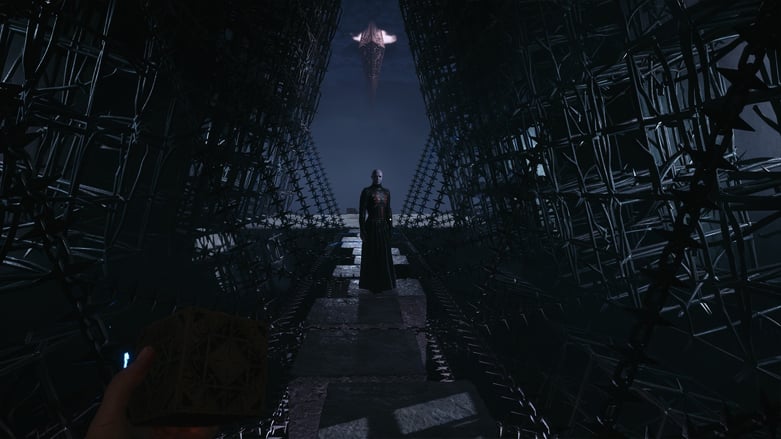
Clive Barker’s Hellraiser: Revival wears the original author’s name with pride, and after less than an hour of gameplay, it’s easy to see why.
Hellraiser: Revival isn’t like other horror games. It delivers the vision of a truly twisted, uncomfortably sadistic story with zero punches pulled.
Said story is absolutely wonderful: sadistic, disgusting, and uncomfortable. It follows our protagonist, Aidan Lynch, as he attempts to rescue his girlfriend from the Cenobites after she unknowingly solves the Genesis Configuration. In the process, Lynch is abducted by a cult of depraved, Cenobite-worshipping maniacs who hope to one day join their ranks. Armed with nothing but determination, lots of guns, and the lamented Genesis Configuration itself, Lynch carves a bloody path between two worlds as he uncovers a twisted prophecy and comes to terms with his own deepest, most uncomfortable truths.
If you can’t tell from that description, Hellraiser: Revival is absolutely jam-packed with gore, torture, and sexual terror. It uses these themes unapologetically, throwing gimp-suited monsters and cultists who threaten bodily harm in creative and often incredibly disturbing ways. It deserves something of a content warning for unknowing players who want to check the game out: Hellraiser: Revival is full of sexual content, and it is never pleasant or comedic. It is always played to disturb you and make you feel uncomfortable, pairing it alongside gore, murder, and grisly torture and body mutilation, sometimes consensual and often not.
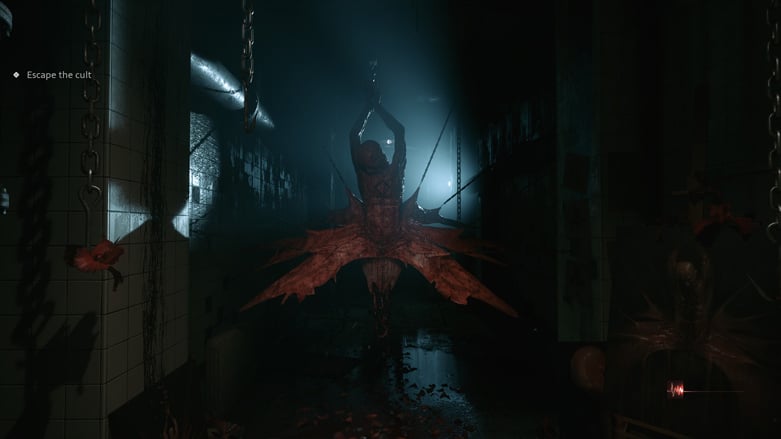
The themes of chasing pleasure, overindulgence, and persona-shattering consequences are spot-on for Hellraiser as a franchise, and I can’t stress enough how grateful I am that the game doesn’t shy away from them. Hellraiser: Revival might be the goriest, most disturbing horror game I’ve ever played, never pulling its punches when it shows you a grotesque scene or drowns you in equally grotesque subject matter. It made me uncomfortable in the best way, something I can’t say about a lot of horror games out there.
The story is not just disturbing in its content, but genuinely well written and engaging, avoiding a lot of character tropes that horror games fall into and genuinely having something to say. Again, I can understand why Clive Barker’s name is proudly presented at the beginning of this title.

Mechanically, Hellraiser: Revival plays much like the Resident Evil series, particularly emulating the formula of Resident Evil 7 and Resident Evil Village, or the “Ethan Winters” saga. You move through thoughtfully designed levels, unlocking doors to progress and gathering ammo and crafting items to survive the horrors blocking your path, whether cultists, monsters in the form of failed ascendants, or a few really good boss fights. The game occasionally pulls you out of our world and into that of the Labyrinth, switching the gameplay from combat to puzzle-solving, dangerous trap puzzles, and even a few intense chase sequences.
The game deviates from the typical Resident Evil formula by introducing pain-fueled powers via the Genesis Configuration and a more straightforward introduction of armored enemies. The former allows you to manipulate the environment by flinging debris at enemies, dousing them in flames, or tearing them apart with chains, Cenobite style, and is a very fun addition to the formula. Your ability to use these powers recharges as you inflict pain on enemies, which is just the most Hellraiser magic system I’ve ever heard of.
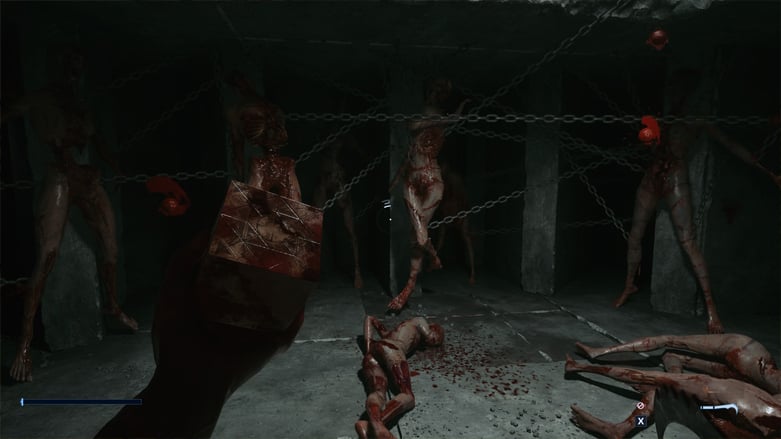
Armored enemies add variety to combat, creating tougher foes in metal plate armor that you must break before you can damage them. To play into this system, melee weapons are split into two categories: sharp and blunt, with sharp weapons being strong against flesh and blunt weapons being strong against armor. Since melee weapons break, this adds another resource to manage throughout the game, so you need to use the right weapons at the right time. While fun, my only complaint with this system is that it can lead to some seriously difficult encounters, where said difficulty comes from your luck, or lack thereof, looting the right weapons with the game’s random loot spawning system. If you only have a sharp weapon and enter an area full of armored enemies, you’ll lose a lot of ammo and weapon durability, whereas a blunt weapon would make things much easier.
The biggest praise I can give Hellraiser: Revival, as a horror game fan and a professional game critic, is simply admitting that I played through nearly the entire game in one eleven-hour sitting. It is an exquisite horror game, one that stands among the best, and it gives me hope for horror movie franchises in the gaming space once more. Absolutely, one hundred percent, give the game a try. You’d be denying yourself the ultimate pleasure if you don’t.
The Final Word
Clive Barker’s Hellraiser: Revival gives me new hope for horror movie franchises in the video game space, and truly is a superb single-player horror game that stands alongside the best in its genre. The story is exquisite, the gameplay is solid, and the imagery is visceral, never pulling its punches to deliver a truly terrifying horror gaming experience.
Try Hard Guides was provided with a Steam code for this PC review of Clive Barker’s Hellraiser: Revival. Find more detailed looks at popular and upcoming titles on our Game Reviews page! Clive Barker’s Hellraiser: Revival is available on Steam, Xbox, and PlayStation.

Comments