I love the roguelike genre. It isn’t simply that the gameplay loop is particularly exciting and engaging; in my tenure as a game reviewer, I’ve had the opportunity to play some of the most creative and visually impressive games I’ve ever seen, the vast majority of which come from this genre. Something about the genre tends to attract developers with a very unique creative vision, not just on the mechanical side of things, but in the artistic and overall creative direction these games follow.
Lootbound is no exception, and I quickly found myself obsessed with what this game had to offer.
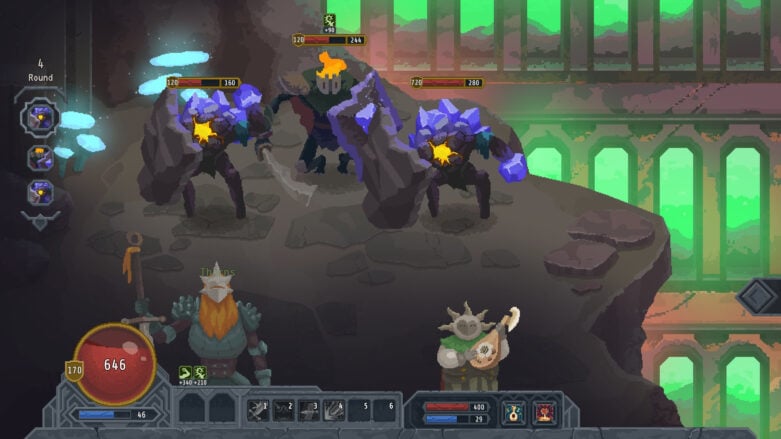
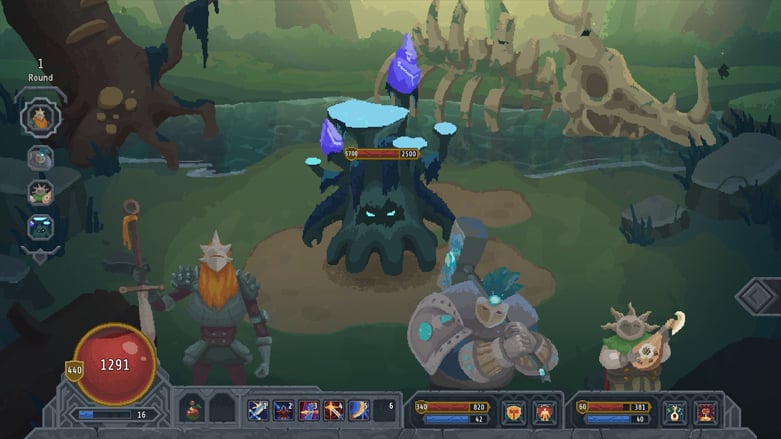
Lootbound plays as a roguelike with turn-based combat. Each battle sees you and a small party you assemble facing off against increasingly difficult enemies as you path your way towards the final boss, with each battle rewarding you with the game’s titular focus and the main form of progression: loot.
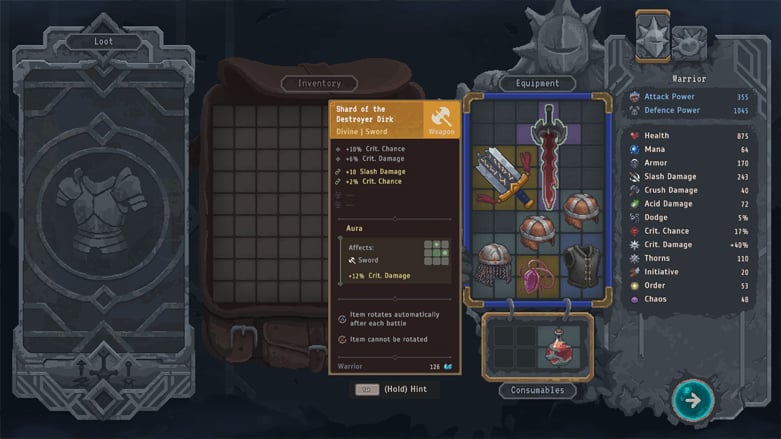
See, Lootbound primarily uses the items you gather from each encounter to improve your character’s statistics and uses a grid-based inventory system to balance it. You must play ‘loot Tetris‘ with the gear you collect both to make use of the items and to maximize their benefits. The most powerful items give buffs to specific item types in adjacent squares, so picking the right place for your loot is incredibly important.
The “loot Tetris” element is a unique way to balance the power economy of a roguelike, as instead of hard-limiting how many buffs you can get, you’re instead given unlimited potential so long as you can make said potential fit into the spaces provided. Buffs can also be made directly to your stats at certain map locations, and this is done through D&D-style D20 rolls, which I think also balances your ability to simply collect statistical improvements.
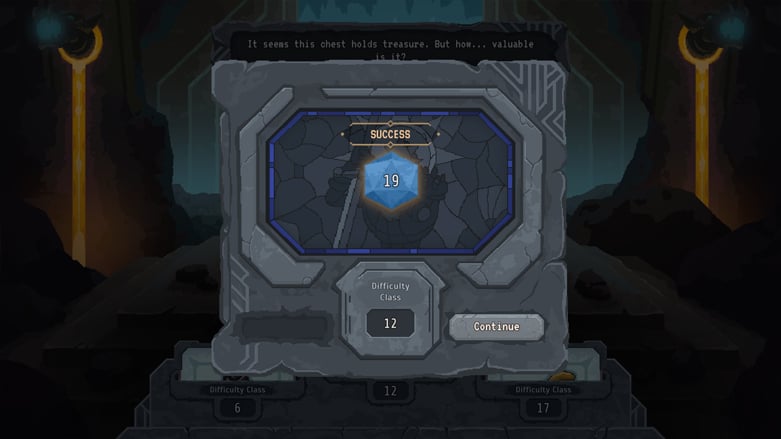
Speaking of, while I usually don’t like roguelikes where the only buffs are statistical, I think it works a lot better in a turn-based game. The game also gives you new abilities to unlock and makes clever use of the different stats you collect, with each individual stat also feeling very relevant to the battle in its own way. Tiny improvements also make big differences to each statistic, which is something you notice most in damage.
Damage is divided into four types: slashing, which deals double its amount to health; crushing, to armor; acid, which ignores armor completely; and base, which has no special properties. Paired with this system, of course, is your health and armor, with armor being a flat amount of damage you take before your health can be damaged, and health, I think, being pretty self-explanatory. Armor resets between each encounter. All four damage types are collected as individual numbers that contribute to your main attack, which means you can mix and match and make use of all of them at the same time.
I know it’s pretty basic, but I grew really fond of this system as I was playing. It was a small but meaningful way to differentiate enemies and character builds. It felt really meaningful to stack slashing, or equally split my items between crushing and slashing bonuses, or to focus hard on the smaller but more meaningful numbers from acid. Alongside the other statistics in the game, every small improvement felt important, which made all of your gear feel valuable.
This was less the case with companions, however; the mechanics of which I am still not sure. See, it would seem that companions attack enemy health directly by default, so I wasn’t sure if it was worth it to give them weapons that improved crushing or acidic damage. It also wasn’t clear how other statistics worked on my allies, with one example being “Order,” which reads as “improves healing.” It was unclear if this meant that my healing allies would heal me more if they had it, or if I should instead stack the stat on myself to get more healing from their healing abilities.
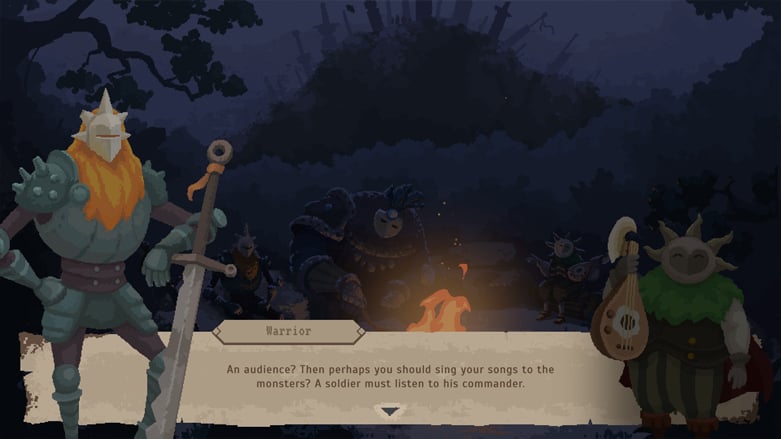
Finally, and this probably goes without saying, but I really loved the art, world, and characters of Lootbound. A dark fantasy world is portrayed beautifully through incredible pixel art with great character designs, especially on enemies. The game is rather light on animation or visual effects from attacks, but that never kept it from feeling very alive and animated. The characters I quickly fell in love with, especially through their short but charged interactions at campfires. Do yourself a favor and take the bard with you as frequently as possible when playing the warrior, as their dynamic is fun and interesting and was one of the highlights of my playthrough.
Simply put, Lootbound is great. It combines roguelike progression, the hunger for collecting powerful loot drops in dark, dangerous, and damp dungeons, and the best parts of turn-based combat. Its mechanics are simple but highly flexible when it comes to player expression, and the game handles pre-run upgrades really well, which only enhances the replayability. If you’re a fan of the roguelike genre, I fully expect Lootbound to be a title that you pick up, enjoy, and continue to enjoy for a long while.
The Final Word
Lootbound highly impressed me with its simple yet expressive mechanics and its loot-focused, turn-based roguelike structure. Paired with its incredible art, vivid world, and interesting characters, and you have a game that is sure to stick with you long after you’ve beaten it. Lootbound is an experience that you’ll struggle to let go… much like that legendary but under-leveled piece of gear you’re hanging on to.
Try Hard Guides was provided with a Steam code for this PC review of Lootbound. Find more detailed looks at popular and upcoming titles on our Game Reviews page! Lootbound is available on Steam.

Comments