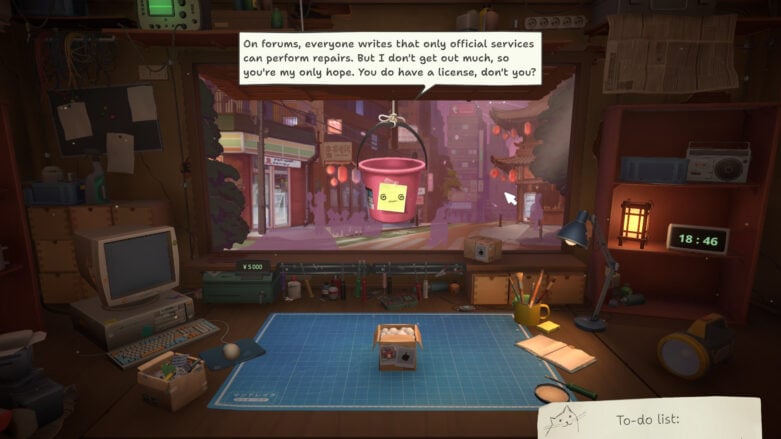
I love the most hyper-specific, obscenely accurate simulation games targeted at lives or careers I’ve never even imagined myself having. You can only assume how I felt, then, when I opened up ReStory: Chill Electronics Repairs, a game all about being a small, one-man electronics repair shop in Tokyo during the early 2000s. That is indeed very specific, and I was thrilled to see how accurately the game portrays this dream-to-be as I played through it.
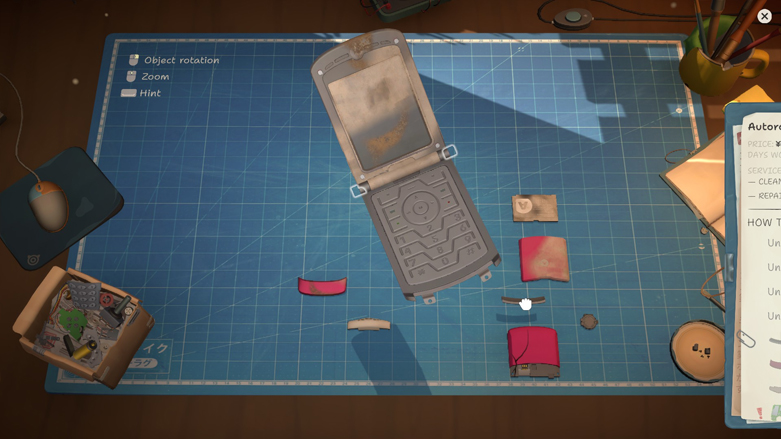
In ReStory: Chill Electronics Repairs, you’ll try your hand at cleaning and repairing countless gizmos and gadgets you’d find in the incredibly unique era that was the early 2000s. Atari game controllers and Motorola flip phones find their way into your shop via legally distinct near-naming conventions, and it’s up to you to fix them with nothing more than a screwdriver, an old chugging computer, and as many cans of air duster as you can afford.
You can probably imagine it already, but the gameplay loop in ReStory: Chill Electronics Repairs consists of you getting an order, disassembling the electronic device you are given to diagnose the problem, and then repairing and reassembling the device to receive your payment. Sometimes, an object just needs to be cleaned, which is done by dragging your mouse over specific parts using a cleaning tool before reassembling them. Other times, real repairs have to be made, which are easy to diagnose as you’re taking the object apart.
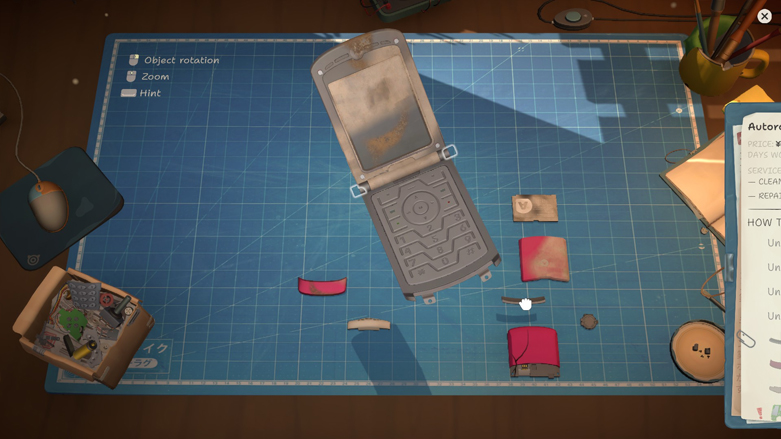
I wish more went into the repairing process; a bit of soldering or wiring would be really fun in a game like this. Instead, if a part is broken, your job is to use your computer to order a replacement and then reassemble the object using it. While the process of disassembling and reassembling is fun, I was a bit disappointed by how lacking in the “repair” area the game seemed to be. The most skilled labor you actually do throughout the whole process is unscrewing tiny screws and not losing them in the process.
While hacking does eventually become part of the game, it comes in very late game and just isn’t as satisfying as the examples I listed.
Still, as repetitive as the process was, I found myself quickly drifting away into the cycle of taking and completing orders, watching my yen count get higher and higher, and observing how quickly I started to deconstruct and reassemble the various electronics that came across my desk. The loop was satisfying, made all the more so with the simple addition of licenses, allowing you to unlock new electronics to work on for higher pay after a simple purchase. This incredibly straightforward business tycoon approach made the game addicting and satisfying to play for much longer than it would be without it.
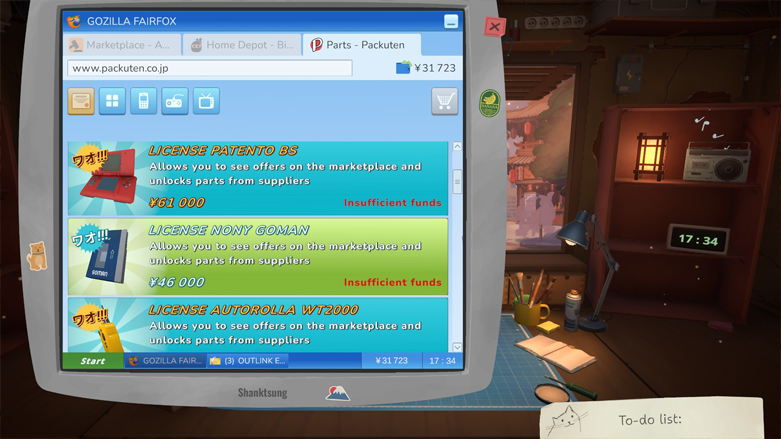
Again, however, I have to repeat that the process is repetitive. Small character interactions make the grind more enjoyable, giving you short breaks from the repetition to appreciate often humorous and character-filled exchanges from your customers. The addition of optional dialogue and choices makes the game world feel a bit more alive, and you feel like more than just an emotionless assembly machine. However, as you start to get into the game, the interactions with characters begin to become further separated, leaving you alone for what can feel like long stretches of time where you do nothing but take and complete online orders, with little to no interactions or breaks in between.
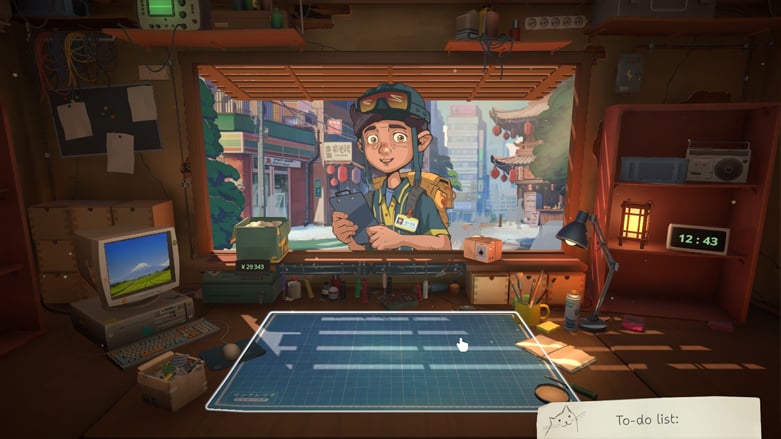
These moments often correspond to your license grind, meaning these orders become all the more repetitive as you work on the same type of electronics over and over again. While this is less of an issue in the late game as you get more licenses and thus more work you can do, the chase for optimal income means taking the highest-paying jobs, which often means working on the latest thing you unlocked, once again, over and over again until you can disassemble it in your sleep.
The gameplay loop is fun, but in long play sessions it starts to overstay its welcome, making it best for short gaming sessions followed by a break. Doing so will give you an itch to go back and engage with the game’s unique simulation, but anything longer than, say, an hour in the game starts to feel a bit tedious. Unfortunately, without more complexity to the actual core mechanics, this is an issue I see most players having, and because of it, I imagine many won’t stick around for longer playthroughs.
All that being said, ReStory: Chill Electronics Repairs successfully simulates a rare but satisfying fantasy, giving you the experience of running a small electronics repair shop in 2000s Tokyo. The process is fun, albeit repetitive, and could use a bit more depth than what the game provides, but it is still something I enjoyed in short bursts. Short bursts are how I recommend you play this game, as sitting on it too long can make the grind lose its charm and become tedious… much like a real job.
The Final Word
For a simulation title, ReStory: Chill Electronics Repairs is exceptional, giving you a great simulation of a very niche idea in an even more niche setting. That being said, the game’s main mechanic could use more complexity, and the loop can get a bit repetitive and grindy, making the game best enjoyed in short bursts.
Try Hard Guides was provided with a Steam code for this PC review of ReStory: Chill Electronics Repairs. Find more detailed looks at popular and upcoming titles on our Game Reviews page! ReStory: Chill Electronics Repairs is available on Steam.

Comments