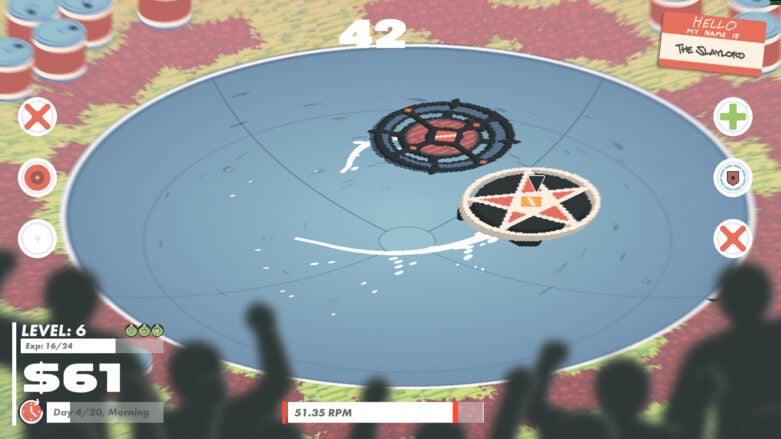
Despite its immense popularity, few games have faithfully recreated the Beyblade experience in modern gaming. While I only very briefly dabbled in the spinning-top battle game as a kid, I could definitely see the appeal: spinning metal discs of destruction at each other and watching them clash and bounce in a dome arena is very satisfying, and it comes as a surprise that there aren’t more games built around that feeling.
Enter Slayblade, an indie title that recreates a Beyblade battle so faithfully it’s kind of shocking that the gameplay is, in fact, in an indie game.
That isn’t to say that the mechanics in Slayblade are incredibly complex. Quite the opposite, the game is pretty simple: you follow a roguelite progression system where you battle strangers to win money and purchase procedurally selected upgrades from the shop. Each battle takes time in a day/night cycle, and you have a set number of days to earn enough money to enter several tournament stages, become the champion, and… find your missing father? The game’s story is a little confusing, but as you’ll soon learn, that’s pretty irrelevant.
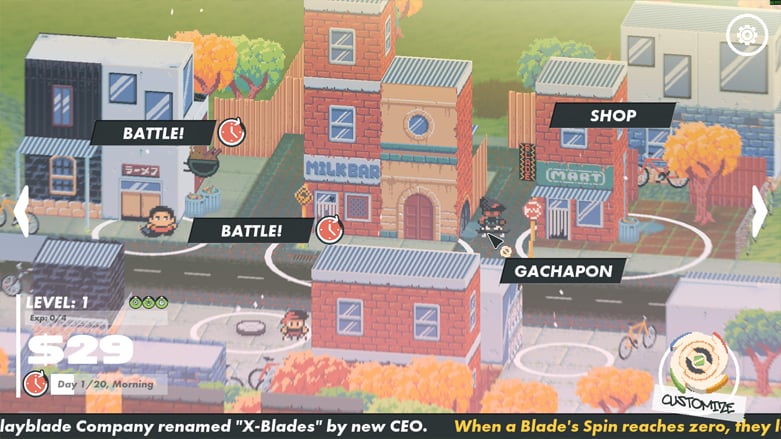
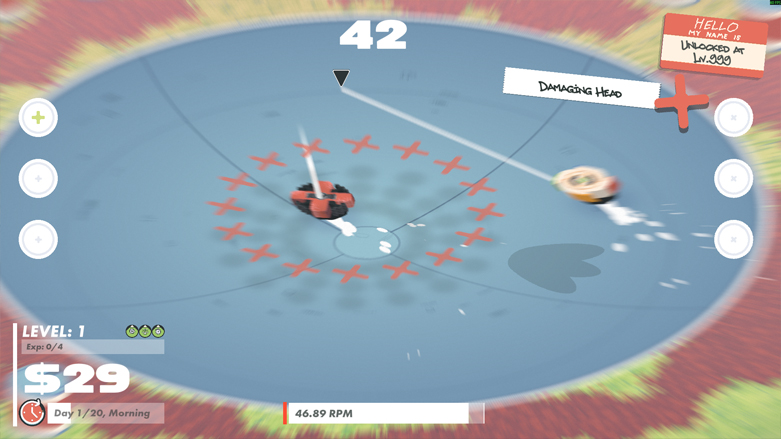
The actual mechanics of these battles are simple: you control your Slayblade with the mouse, using the curved arena to pick up speed while being careful not to go out of bounds. You deal damage by hitting the opponent faster than they hit you, and the battle continues until one blade breaks or goes out of bounds. Different Slayblade parts give different effects, and you can collect powerups mid-fight to gain an edge.
The game is pretty sweet in its simplicity, at least at first. You practically don’t even need a tutorial, and the gameplay is satisfying enough that, when paired with the simple betting mechanics and tournament structure, it compels you to keep playing. If you were ever a Beyblade fan growing up, you’d probably agree that mechanically, this is the best the concept has ever been executed in video game form. The game’s artwork is also pretty nice and is pleasantly sprinkled throughout the experience.
However, once you beat the game in just under 20 minutes, you begin to see the problem.
That’s right: Slayblade took me less than 20 minutes to reach the “You Won!” screen and return to the main menu. The entire story ends once you complete the three-stage tournament, which only requires you to gather about $80 in-game to enter. Considering prizes went from $12 to $32 per fight, this wasn’t a difficult task.
Now, to clarify, the game isn’t completely “over” after that first 20 minutes. You are invited to go back and replay that same tournament to unlock new “episodes.” These episodes, however, are essentially the same game again with a new nothingburger story, and you complete them just as quickly. Plus, if the gameplay starts to feel repetitive for you (which it likely will), there isn’t much incentive to keep playing beyond that first 20 minutes, since very little is offered to spice things up.
Therefore, the replayability in Slayblade relies on you enjoying the game’s main mechanic enough that, with some roguelike twists, you feel inspired to go back and play run after run.
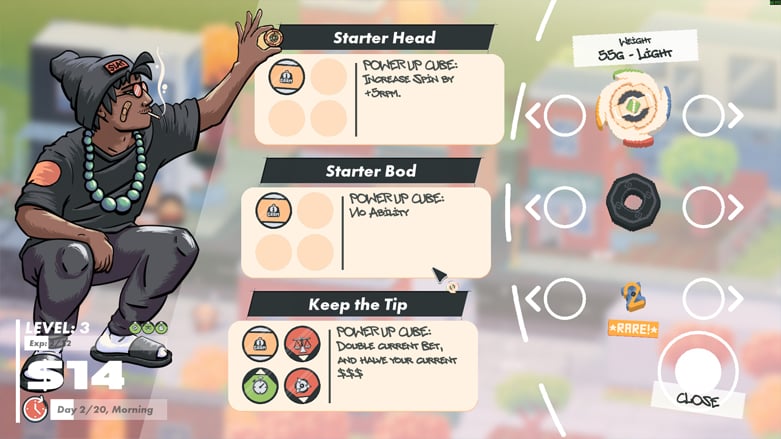
These modifiers mainly come in the way of new parts, which are how you gain access to the powerups you find in the game. In my opinion, most of these powerups are either useless or not very exciting, and you can easily beat a run without any modifiers on your blade. At the same time, you can occasionally pick up a part that tips the game’s balance so far in one direction that you beat it in one go.
There are also mutations you can apply to change your run, and while some are interesting, most are just intrusive additions that kind of ruin it. There are modifiers that add a “random loss” functionality to the game, modifiers that just slow it down, and add hazards to the arena that are mostly just annoying… They really just get in the way more than anything else.
I can say confidently that after the first three or four fights, you sort of grasp everything that the mechanics of Slayblade has to offer. With no real story to unlock and the game’s pool of 60 parts as the only real way to make a run different, the game quickly becomes repetitive. I didn’t feel much incentive to grind through all the episodes, since there was so little story, and the idea of seeing all the new parts didn’t compel me to keep playing.
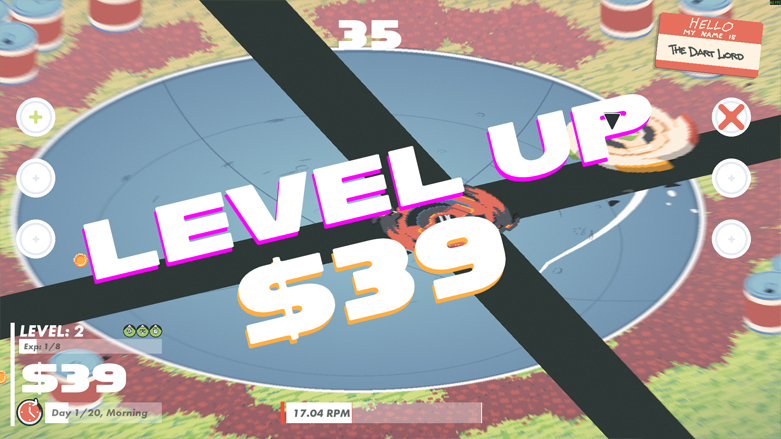
After seeing everything Slayblade had to offer, I felt the game itself wasn’t a huge upgrade from the free demo, which gives you access to maybe 70% of the final product. Still, if you’re dying to play an online version of Beyblade, this game might scratch that itch. While I don’t know if the game quite offers enough content to justify its price tag, $5 isn’t a terrible entry fee. If nothing else, you’ll be able to complete a run or two before the refund window expires, which is reason enough to check it out.
The Final Word
Slayblade was clearly built on a vision, and that vision was executed decently. However, the game left me wanting, feeling unnecessarily short, barren, and repetitive. You quickly grasp everything the game has to offer within the first 20 minutes, and it does little to keep you playing after that.
Try Hard Guides was provided with a Steam code for this PC review of Slayblade. Find more detailed looks at popular and upcoming titles on our Game Reviews page! Slayblade is available on Steam.

Comments