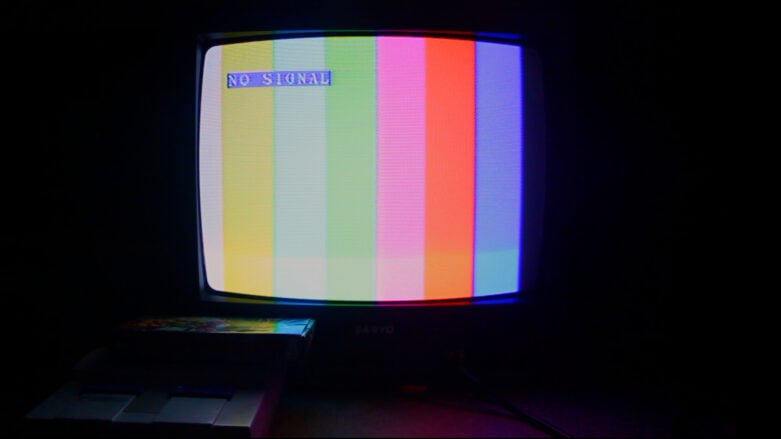
I have a feeling I’ll be meeting my word count for this review just by using the game’s title two or three times.
The Remake of the End of the Greatest RPG of All Time is what I can only describe as an enigma. It is a paradoxical mystery of a game that proudly wears its genre-defying nature on its sleeve. Like some long-forgotten horror that prowls the American deserts at night, The Remake of the End of the Greatest RPG of All Time wears the skin of a classic JRPG to obscure its true nature from sight. It is only when it’s too late that the game reveals its true nature, and you recoil in shock, terrified at the sight before you: Dear God… a puzzle game!
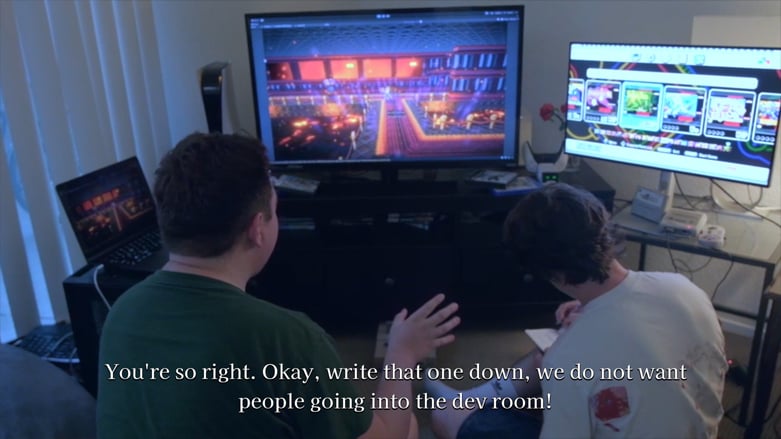
Prose aside, The Remake of the End of the Greatest RPG of All Time is a very thematically clever puzzle game that presents itself from the perspective of a player trying to finish an obscure ’90s JRPG, while referring to the manual and even interacting with an amateur documentary. Except it’s also… not that. The narrative is twisty and swerves, and the game breaks the fourth wall in a very bold way.
At the heart of it all, however, are puzzles that use the fundamentals of old JRPGs as a theming device. The game plays under the guise of a real pixelated RPG, full of battles and quests and a big bad to finish in the end, but the truth is that everything is really just a series of deduction puzzles hidden behind the nostalgic shape of a heroine and her party members.
The best example I can give to you for how this works is every time the game presents you with a “battle.” These instances are presented like a traditional turn-based fight, but they are actually puzzles that essentially require you to enter the right combination or “password.” This “password” is etched via the input of commands from your player character, executed as if you were playing a turn-based fight, into specific combinations that translate into the weaknesses of the enemies.
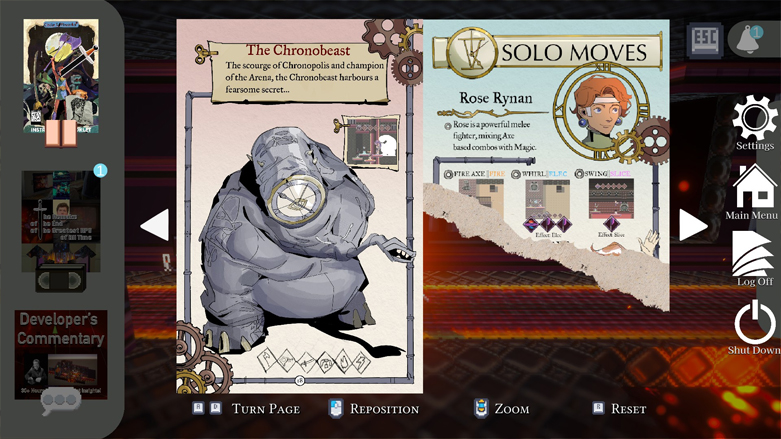
These weaknesses and combinations are found by pulling up the “manual” and reading through the pages, which is one way many of the game’s puzzles are solved. It’s a very involved and immersive approach to puzzle-solving that sells you on the idea that you’re sitting on your couch, staring at a CRT screen and trying to beat that game you rented from Blockbuster before it’s time to take it back.
There are times, however, when this dedication to the “bit” can come at the expense of puzzle-solving. To use the battle puzzles as an example again, the encounters quickly start to feel repetitive. It doesn’t feel so much like you’re solving a problem when every encounter just requires the use of one of a few memorized patterns, without even the strategic depth of actual turn-based combat. The puzzles work best when they require you to delve into seemingly unrelated places for information you’ll use later.
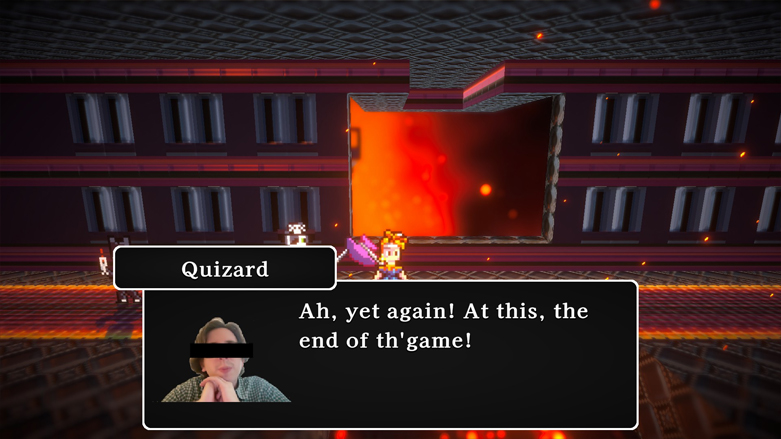
This pattern can also be a little punishing, as the information you need isn’t always in the same room or even adjacent to it. There are secrets and clues that you can absolutely miss, and you won’t know you needed them until a good deal later into the game. This, however, is a little excusable if you consider it to be a parody of old JRPG game design, in which this problem was very much present.
Speaking of which, the game does an incredible job of parodying old JRPGs, from the mechanics to their problems to the genre’s style of storytelling. These parodies are masterful, and the game earned my first audible chuckle when it introduced its token edgy character, the kind who is always my favorite.
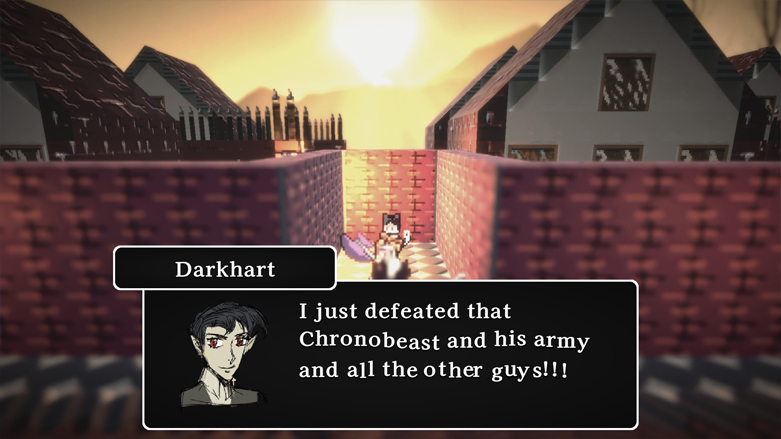
There were moments where I felt like the art direction of The Remake of the End of the Greatest RPG of All Time could have been different. The game is 3D, which I think is necessary for some of the later, more mind-bending and unique shots designed to make you feel like the game itself is breaking or transcending into another universe. I would have loved to see them pull this off starting from a traditional 2D base, however, which would have sold the sensation a lot more for me. That being said, the game definitely doesn’t look bad, and the transitions between a regular video game and the sense that “something isn’t right there, clearly” were always fun.
The Remake of the End of the Greatest RPG of All Time isn’t a long game. You can complete it in one go; in about four to six hours, depending on how good you are at solving the puzzles. In that time, the unique gimmick is sure to charm you, and you will undoubtedly be left feeling as though it was a positive, entertaining experience. That being said, the game has very little, if any, replay value. If you ask me, that’s fine: games can absolutely be a one-and-done experience. However, the current asking price might feel a little bit steep for what you’re getting. I personally recommend you give the game a chance, but I would wait for it to go on sale. That being said, there are definitely much worse ways to spend $18, and the price is a far cry from highway robbery.
The Final Word
The Remake of the End of the Greatest RPG of All Time is an incredible, unique puzzle game using the skin of a ’90s JRPG to deliver a genre-defying experience that treats the fourth wall like it’s made of plaster. Though it’s short and can have its issues at times, the game is incredibly memorable and worth giving a chance yourself.
Try Hard Guides was provided with a Steam code for this PC review of The Remake of the End of the Greatest RPG of All Time. Find more detailed looks at popular and upcoming titles on our Game Reviews page! The Remake of the End of the Greatest RPG of All Time is available on Steam.

Comments