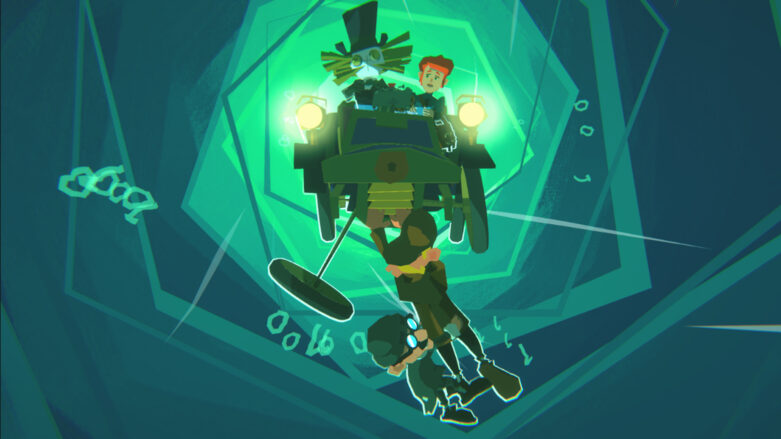
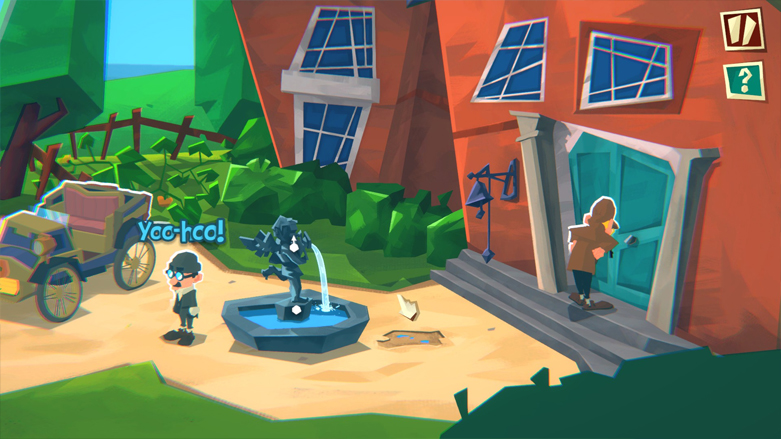
There is No Game returns in Crushed in Time, a very meta title starring Sherlock Holmes and Watson as they (or, more accurately, you) delve deep into the mystery of a botched game development. Clocking in at just under seven hours of gameplay, depending on how good you are at puzzle games, Crushed in Time makes use of a unique mechanical premise and some good humor to deliver a short but sweet experience. That being said, some aspects of the game get less mileage than others, and there are areas where they feel more like gimmicks than important or groundbreaking choices.
Mechanically speaking, Crushed in Time is your typical point-and-click puzzle game, where you solve simple little quandaries by interacting with the environment. Only, in this case, you replace “point and click” with “squash and stretch.”
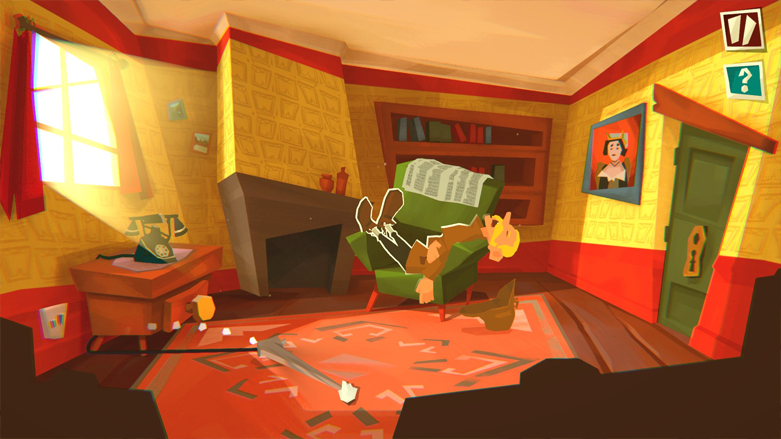
That’s right, Crushed in Time is built completely around its unique mechanic: anything on-screen, including the background or, really, the screen itself, can be grabbed, stretched, and pulled, then released to snap back into place. This mechanic is used in every puzzle, having you stretch out or fling objects around the map, along with some other creative uses for the mechanic, but everything basically boils down to your ability to grab an item and pull it around to your heart’s desire.
Initially, this is a really cool mechanic, and it has some very interesting implementations throughout the game. Some puzzles truly feel like they could not exist without this mechanic in mind. That being said, it doesn’t always quite hit the mark, and a great deal of the puzzles in the game feel as though they wouldn’t really operate any differently if they were just your standard point-and-click interactions. This leads to the mechanic at times feeling like more of a gimmick than a clever concoction. While I understand that making every puzzle uniquely designed around the squash-and-stretch mechanic is a hard, perhaps even impossible, task, I found myself quickly losing interest in the gimmick, occasionally charmed by a clever use, but overall not particularly impressed.
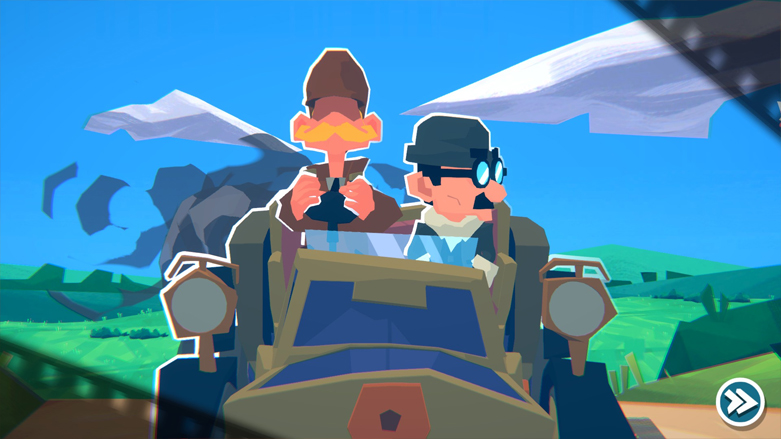
I think this is in part due to the game’s clashing identities. It’s a Sherlock Holmes story. It’s a meta tale about game development. It’s also a game where everything can be squashed and stretched, and that is an important factor that actually plays a part in the universe of the game, considering that characters constantly comment on it. All of these concepts sort of clash together and make you wonder: what does game design have to do with stretching out the environment in real-time? Why does the game design element matter at all? What is Sherlock doing here? The answer is clearly that you’re not supposed to think about it too hard, but everything is so meta to a point where the meta jokes seem to stop working.
That might seem like a nothing criticism, but it was something that weirdly got under my skin as I bounced between levels that had me manipulate the game world of Sherlock and Watson the same way I did the in-universe “real world.” The truth is that this mechanic would have been really clever for a segment or two, but it overstayed its welcome as something the whole game was built around, and it sort of felt flawed in some areas.
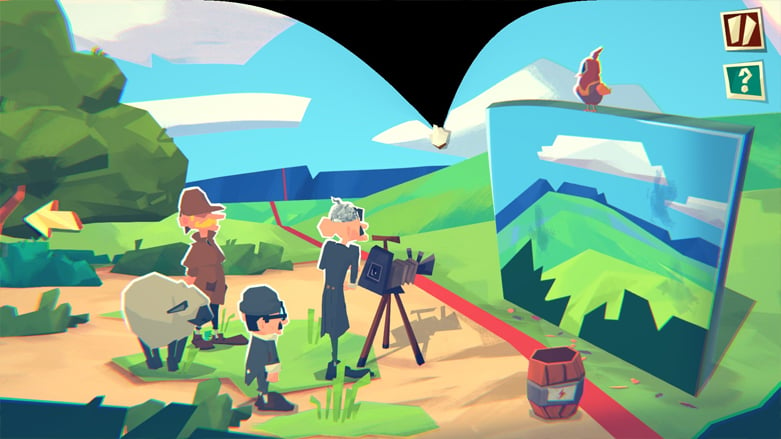
Sherlock and Watson, of course, are carryovers from There is No Game, but they feel far less welcome as a dynamic in Crushed in Time. That is to say that their one-note relationship is just that, one-note: it hardly evolves over the course of the game, and watching them bicker and insult each other sort of loses its charm when it continues to happen over and over again. The humor, as a whole, was pretty good, but again felt rather one-note, mostly built around the stretch mechanic that, again, continued to insist upon itself to the point where its inclusion became more distracting than charming.
The meta-humor also, at times, took away from the experience. In particular, one area of the game, which serves as a mocking criticism of video-game remakes, ended up essentially being a tedious level designed to annoy, and one that went on for far too long. Once again, a lot of the game’s themes feel underdeveloped or outright not explored enough, in particular the game-design element, with so many puzzles and their solutions feeling completely disconnected from the idea that the whole thing is a game being made.
The problems in Crushed in Time stand out more because of how good the rest of the game is. The art is great, the voice acting fantastic, the performance phenomenal (though that might not need to be said for a game of this genre), and the humor, more often than not, hits the mark. There are a lot of great puzzles, some of which really make good use of the game’s core mechanic. Much of the game is solid, even with my criticisms in place, some of which really are, honestly, criticisms I don’t think every other player will share.
The hardest thing Crushed in Time has going for it is that it is a follow-up to a beloved game. If it didn’t have so much to live up to, it would probably rank much higher. That being said, the game is far from bad, and I still think you should give it a shot. I might, however, suggest that you wait for it to go on sale before you do, if you’re still not totally sure about it.
The Final Word
Crushed in Time is a fun puzzle game, with a fun story and great visuals. Many of the puzzles, built around the unique stretch-and-pull mechanic, are fun and cleverly designed, but that mechanic can start to feel gimmicky and lose its charm before too long. It’s unfortunate to say that the game just doesn’t quite live up to There is No Game, but it remains a fun puzzle game regardless.
Try Hard Guides was provided with a Steam code for this PC review of Crushed in Time. Find more detailed looks at popular and upcoming titles on our Game Reviews page! Crushed in Time is available on Steam.

Comments