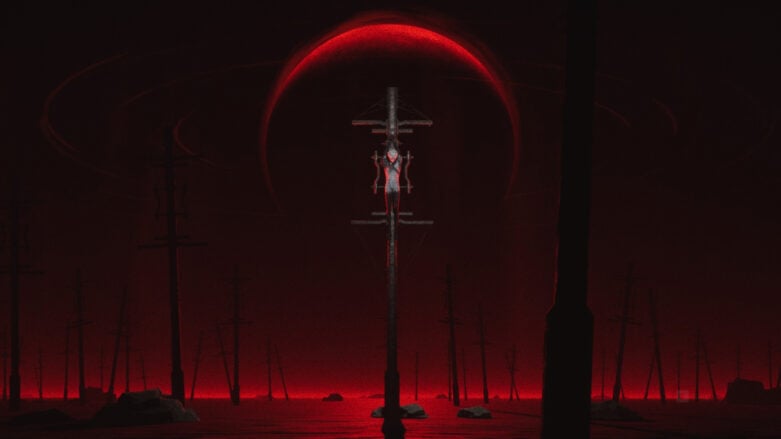
There is a very specific feeling I have felt at several points in my life when engaging with very strange, very unique forms of art. I usually found this feeling when watching older, obscure anime from the 1980s or those made to emulate that era: an odd, almost trance-like sensation where the striking visuals and alien storytelling in front of you leave you speechless, confused yet in awe, feeling almost like a prey animal mesmerized by the glint of a hunter’s fangs. The sights and sounds before you feel like a glimpse into the mind of their mad creator, and you can feel yourself getting lost in that lunacy for as long as the pixels remain on screen.
I found myself feeling that very same feeling while playing Luna Abyss.
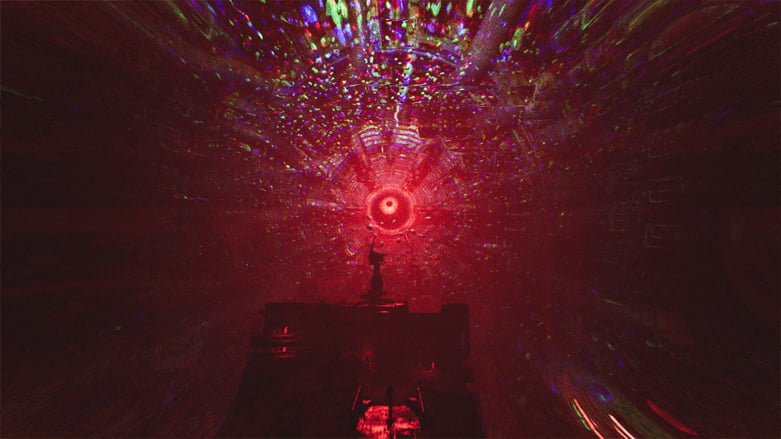
Luna Abyss is a single-player platforming shooter that follows Fawkes, a prisoner sent to serve their sentence on the Red Moon and forced to dive into the Abyss, an infinite labyrinth of space below the moon’s surface. As they do so, they uncover the secrets of its origin, confront ancient beings and concepts they struggle even to comprehend, and shoot everything else in the process.
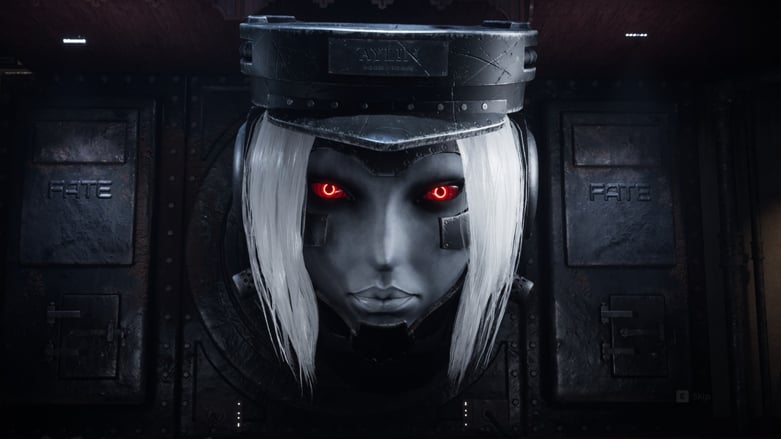
One of the most striking elements of Luna Abyss, and what had me feeling the sensation I touched on in the beginning, is the game’s visuals. Luna Abyss is an absolute tour de force of striking, beautifully directed, and downright haunting visuals and scenery. Environment design is strong, and the cutscenes outright deify Luna Abyss amongst the medium. If the team behind Luna Abyss doesn’t go on to direct animated films, they are, frankly, wasting their talent, because I would love to watch a feature-length production from them.
Visual storytelling is where the game’s narrative is strongest, as the story can slow down in dialogue and become hard to understand. The narrative and the gameplay both suffer from something of a pacing problem, especially when so much of the dialogue is handled in visual novel-like interaction screens where very little happens and, at times, very little is said. The characters can feel a little inconsistent with their motivations at times, and at their worst, can just feel like they’re being used as tools for exposition or to keep the story moving.
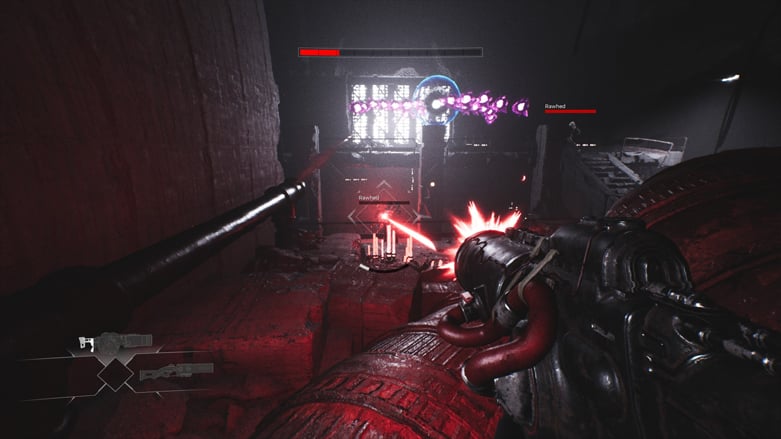
Mechanically speaking, I can see how Luna Abyss might be a little polarizing. The game is a first-person shooter with bullet-hell and light platforming elements: levels are linear in design and lead you through light platforming stages into rooms of enemies and boss fights that you defeat with your small arsenal of guns and limited movement tech. For the sake of comparison, I felt the game played a lot like Bethesda’s DOOM titles, but obviously not a one-for-one copy.
The shooting in Luna Abyss, in my opinion, is really great, but I can see how certain fans of the genre might not like it. Specifically, the game uses an auto-lock system in which, instead of aiming, your gun locks onto one enemy at a time, allowing you to hit them with each shot before moving on to the next. While this removes the skill of aiming, I personally thought it was a pretty good system that allows you to instead focus on dodging the projectile patterns on the screen. It also allows you to engage with the weapon strategy of the game, swapping between your four guns in response to specific buffs or defenses without feeling too overwhelmed with the constant movement, dodging, and weapon counterplay.
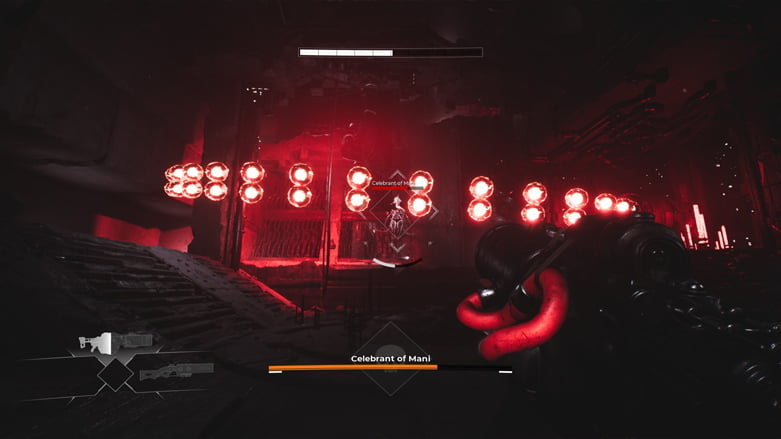
When you pair this with how punchy each shot feels when it connects, and the incredibly satisfying moment of bullet time when you get a kill, I personally think that Luna Abyss has some of the better gunplay in the genre.
The game’s level design is interesting in that it doesn’t use typical pathing rules, where routes are obvious or feel natural. That is to say that navigating the cramped confines of machinery in the Abyss really does feel like you’re forcing your way through an alien craft that isn’t meant to be traversed: You take turns you wouldn’t expect to take and shimmy through vents hidden in awkward corners of the room. While the path forward doesn’t feel instinctual, the game still somehow does a good job of pointing it out to you, so you’re not slowing down trying to find the path you’re supposed to be taking. It’s a subtle but cleverly executed design element that gives the game a very special feeling.
At times, however, especially in the mid-to-late portions of the game, these segments of walking and very limited platforming can become repetitive and boring. It was here that I started to wish that those long, awkwardly paced dialogue segments were removed and instead played here as we walk from point A to B. Let the prolonged talking happen during dead air, and leave the cutscenes as the big cinematic moments between levels.
Luna Abyss is an excellent entry into the genre. Albeit a little short at just around 8 hours, I had a blast with the game, and I definitely think it’s worth the money. Although it has its flaws, it completely outshines the rest of its genre in the areas where it succeeds, and even its more polarizing features can be appreciated. I highly recommend you check out the game and ignore the plethora of negative Steam reviews that literally do nothing but complain about the use of they/them pronouns in the story.
The Final Word
Playing Luna Abyss is like glimpsing into the mind of a mad artist: it is at times beautiful, at times scary, and can certainly be polarizing. While it has its flaws, mainly in pacing, and solid gameplay that can slow down at times and be far too different for genre fans at others, I still think it’s a phenomenal game, and one absolutely worth giving the time of day and losing yourself to.
Try Hard Guides was provided with a Steam code for this PC review of Luna Abyss. Find more detailed looks at popular and upcoming titles on our Game Reviews page! Luna Abyss is available on Steam, Epic Games, Xbox, and PlayStation.

Comments